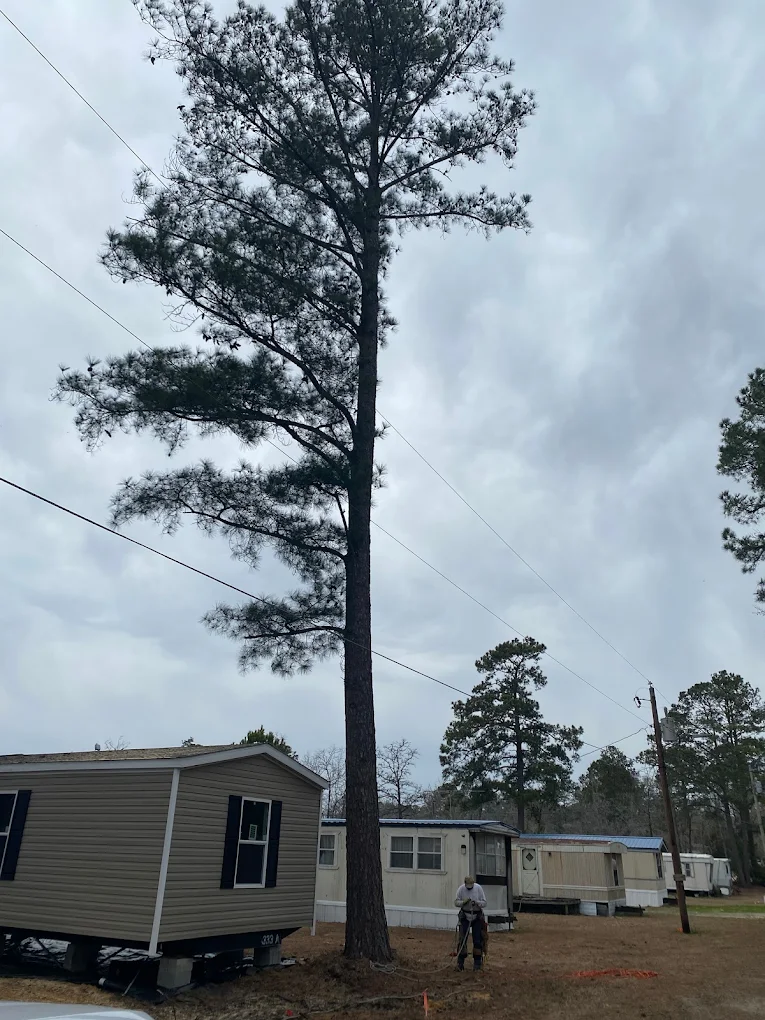
Pine trees are everywhere in Wilmington and coastal North Carolina. Longleaf pines, loblolly pines, and sand pines tower over neighborhoods throughout New Hanover and Brunswick counties. While these trees provide shade, beauty, and wildlife habitat, they can also become serious hazards.
After hurricanes Florence, Dorian, and countless nor'easters, many of our local pines carry hidden damage that makes them ticking time bombs. Here's how to identify a dangerous pine tree before it becomes an emergency.
Warning Signs Your Pine Tree May Be Dangerous
1. Sudden Lean
A pine tree that has always grown straight but suddenly develops a lean is a serious red flag. This usually indicates root failure — the underground anchoring system is compromised.
What to look for:
- Soil heaving or cracking on one side of the tree
- Exposed roots on the opposite side
- The lean developed after a storm or heavy rain
- The tree leans toward your home or a structure
A tree with root failure can fall with little warning, even on a calm day.
2. Dead or Missing Bark
Bark is a tree's protective skin. When bark falls off in large patches or you can see bare wood underneath, the tree is dying from disease or pest damage.
Check for:
- Large areas of smooth, barkless trunk
- Bark that peels away easily when touched
- D-shaped exit holes (signs of bark beetles)
- Sap bleeding or pitch tubes on the trunk
Pine bark beetles are devastating to stressed trees in coastal NC. Once established, they can kill a mature pine in just a few months.
3. Crown Die-Off
Look up at your pine's canopy. A healthy pine should have green needles throughout, with natural shedding only in the interior.
Warning signs:
- Brown or red needles in the top third of the tree
- Sparse needles overall
- Dead branches making up more than 25% of the crown
- No new growth at branch tips in spring
Crown die-off that starts at the top and works down often indicates root problems or internal decay.
4. Mushrooms and Fungal Growth
Mushrooms growing at the base of your pine or on the trunk itself are a sign of internal rot. The fruiting body you see above ground represents extensive decay below.
Be concerned about:
- Shelf fungi (bracket mushrooms) on the trunk
- Mushroom clusters at the base of the tree
- Any fungal growth after storms (moisture promotes rot)
- Soft, punky wood when probed
5. Cracks and Splits
Vertical cracks in the trunk or major branches compromise the tree's structural integrity. Cracks can result from lightning strikes, storm damage, or internal decay.
Look for:
- Vertical cracks running up the trunk
- Splits where branches meet the trunk
- Cracks that have bark falling into them
- Any separation in co-dominant stems (double trunks)
6. Root Zone Problems
Pine tree roots spread 2-3 times wider than the canopy. Anything that damages this zone threatens the tree.
Root zone red flags:
- Recent construction, digging, or grading nearby
- Paving over root zones
- Soil compaction from vehicles
- Standing water that persists for days
7. Storm Damage History
Pine trees that survived hurricanes may carry lasting damage. Twisted or kinked trunks, broken tops, and torn branches create weaknesses that worsen over time.
Post-hurricane concerns:
- Trees that bent significantly but didn't break
- Broken tops that were never removed
- Major branch loss on one side
- Any visible twist in the trunk
Coastal NC Pine Species and Their Risks
Longleaf Pine
- Height: 80-100+ feet
- Risk factors: Tall and exposed to wind, but generally stable with good root systems
- Common problems: Lightning strikes, bark beetles when stressed
Loblolly Pine
- Height: 60-90 feet
- Risk factors: Faster-growing with shallower roots, more prone to windthrow
- Common problems: Storm damage, bark beetles, root rot in wet areas
Sand Pine
- Height: 20-40 feet
- Risk factors: Short-lived and often multi-trunked
- Common problems: Structural weakness, rapid decline
When to Call a Professional
Contact a tree service immediately if you notice:
- Any sudden lean toward structures
- Large cracks in the trunk
- Dead branches over walkways, driveways, or play areas
- Multiple warning signs on the same tree
- Trees within falling distance of your home
Don't wait for storm season to evaluate your trees. A professional assessment now can prevent an emergency later.
Get a Free Assessment
Not sure if your pine tree is dangerous? Upload photos of your tree and get an instant AI-powered assessment. Our system analyzes visible damage, lean, and condition to help you understand the risk.
Get an instant tree removal estimate → treequote.pro
Ramon's Tree Service has safely removed 500+ trees across Wilmington, Leland, and Castle Hayne. We specialize in hazardous tree removal throughout coastal North Carolina. Licensed and insured with $2M coverage.
Need Emergency Service?
If a tree has already fallen or is actively threatening your property, call us directly at (910) 431-6750 for emergency response.