Common Trees in Wilmington NC — Identification Guide (2026)
Most Wilmington properties have some mix of the same eight trees: loblolly pine, live oak, water oak, longleaf pine, crape myrtle, magnolia, dogwood, and red maple. Knowing which ones you have tells you what maintenance to expect, what each costs to trim or remove, and which ones to watch before hurricane season.
Average Tree Removal Pricing
The 8 Trees on Most Wilmington Properties
Why Species Identification Changes Your Maintenance Plan
Homeowner Thought It Was a Live Oak — It Was a Water Oak, Castle Hayne
When Tree Removal Costs Jump Fast
| Situation | Why Cost Increases |
|---|---|
| Crane Required | Expensive equipment + setup time |
| Tree Near Power Lines | Additional safety complexity |
| Emergency Removal | Urgency + danger |
| Limited Access | Slower manual work |
| Storm-Damaged Tree | Higher climbing risk |
📊 Wilmington Pricing Quick Reference
Updated: June 2026 · Source: TreeQuotePro Cape Fear market data
"What kind of tree is this?" is usually the first question a new Wilmington homeowner asks — and it's the right one, because the species determines everything that follows: how it handles hurricanes, what maintenance it needs, what it costs to work on, and whether that lean is normal or a warning.
Here are the eight trees you'll find on most Cape Fear properties and how to tell them apart.
The 8 Trees on Most Wilmington Properties
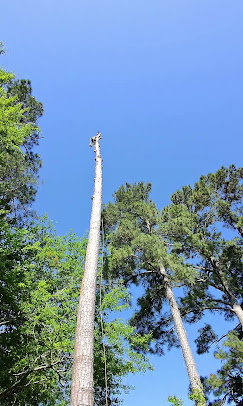
1. Loblolly Pine — the most common tree in the market. How to identify: Tall and straight, often 60–80+ feet, with a long bare trunk and needles clustered at the top third. Needles in bundles of three, 6–9 inches long. Bark in thick, scaly reddish-brown plates. Drops large cones and a heavy layer of needles ("pine straw"). What it means for you: Fast-growing, shallow lateral roots in sandy soil — the species most likely to fail in hurricanes. Annual dead-limb inspection before June is the core maintenance. Removal: $650–$1,900. See our pine guide.
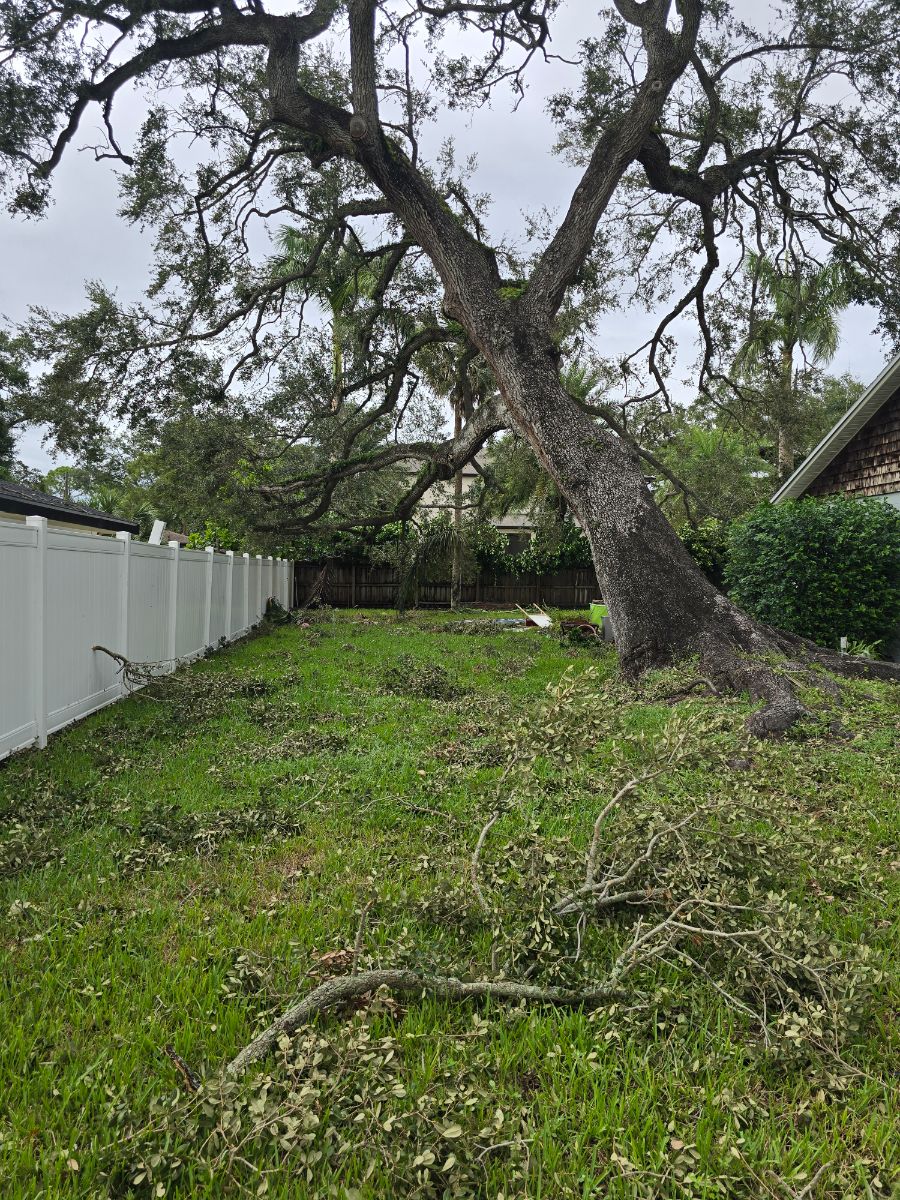
2. Live Oak — the most valuable tree in the market. How to identify: Wide, spreading canopy — often wider than tall — with massive horizontal limbs, sometimes touching the ground. Small, narrow leaves (1–3 inches), dark green on top, staying on the tree most of the year. Often draped in Spanish moss. What it means for you: Hurricane-resistant, extremely dense wood, and irreplaceable — a mature live oak adds more value than any landscaping you can buy. Maintenance is periodic thinning every 3–5 years. Removal (when truly necessary): $1,200–$3,500+. See our live oak guide.
3. Water Oak — the one to watch. How to identify: Easily confused with live oak, but the leaves give it away: variable shapes on the same tree, often spatula-shaped (narrow at the base, wider at the rounded tip). Drops its leaves in winter — live oaks mostly don't. Straighter, more upright form than a live oak's spread. What it means for you: Prone to hidden internal decay that isn't visible from outside — local crews treat water oaks as the highest-risk common species after storms. Any water oak near a structure deserves a closer look. Removal: $700–$2,000. Full guide: water oak removal.
4. Longleaf Pine. How to identify: Similar profile to loblolly but with dramatically longer needles (8–18 inches) in bundles of three, and large cones (6–10 inches). Young trees go through a distinctive "grass stage" looking like a fountain of needles. What it means for you: Slower-growing and generally sturdier than loblolly. Same hurricane-season inspection routine applies.
5. Crape Myrtle. How to identify: Small multi-trunked tree (10–25 feet) with smooth, mottled, peeling bark and showy summer blooms in pink, white, red, or purple. What it means for you: Lowest-risk tree on the property. Prune in February only — summer pruning removes next year's blooms. Removal if ever needed: $250–$700.
6. Southern Magnolia. How to identify: Large glossy evergreen leaves with rusty-brown fuzz underneath; big white fragrant flowers in late spring; dense pyramid shape often branching to the ground. What it means for you: Sturdy and low-maintenance. Drops large leathery leaves year-round — a rake-and-gutter consideration, not a safety one.
7. Flowering Dogwood. How to identify: Small understory tree (15–30 feet) with white or pink spring blooms, distinctive blocky "alligator skin" bark, and red berries in fall. What it means for you: Ornamental value, minimal risk. Susceptible to drought stress and anthracnose — a dogwood dying back is common and inexpensive to remove ($250–$600).
8. Red Maple. How to identify: Classic lobed maple leaves, brilliant red fall color (one of the few reliable fall displays in coastal NC), smooth gray bark when young, red stems and buds. What it means for you: Moderate maintenance. Fast-growing with somewhat brittle wood — keep limbs trimmed away from rooflines.
Why Species Identification Changes Your Maintenance Plan
The same yard with eight trees has eight different risk profiles:
| Species | Hurricane Risk | Annual Attention Needed |
|---|---|---|
| Loblolly pine | High | Dead-limb inspection every spring |
| Water oak | High (hidden) | Basal inspection — fungus, soft wood |
| Red maple | Moderate | Roofline clearance |
| Longleaf pine | Moderate | Spring inspection |
| Live oak | Low | Thinning every 3–5 years |
| Magnolia | Low | None beyond cleanup |
| Dogwood | Minimal | Watch for dieback |
| Crape myrtle | Minimal | February pruning |
Knowing you have two loblollies and a water oak near the house — versus a live oak and a magnolia — is the difference between a property that needs a pre-hurricane-season inspection every year and one that needs a thinning crew once every five.
Still not sure what you have? Upload a photo to treequote.pro — you'll get an estimate for the tree, and the species drives the number. For the full first-year ownership plan, see our Wilmington homeowner guide.
Frequently Asked Questions
What are the most common trees in Wilmington NC? Loblolly pine is the most common tree on Wilmington residential lots, followed by live oak, water oak, longleaf pine, crape myrtle, southern magnolia, flowering dogwood, and red maple. Most properties have some mix of these eight species.
How do I tell a live oak from a water oak in Wilmington? Leaves and shape. Live oaks have small, narrow, uniform leaves that stay on the tree nearly year-round, with a wide spreading canopy often broader than the tree is tall. Water oaks have variable, often spatula-shaped leaves, drop them in winter, and grow more upright. The distinction matters: live oaks are the market's most hurricane-resistant tree; water oaks carry the highest hidden-decay risk.
Which trees are most likely to fall in a hurricane in Wilmington NC? Loblolly pines fail most often — tall, shallow-rooted in sandy soil, with heavy crowns. Water oaks are the second concern due to hidden internal decay. Live oaks and magnolias are the most storm-resistant common species in the market.
What kind of tree do I have if it has long needles and drops big cones? In Wilmington, that's a loblolly pine (needles 6–9 inches, bundles of three) or a longleaf pine (needles 8–18 inches, larger cones). Both need the same care: dead-limb inspection before hurricane season each year.
Which Wilmington trees add the most property value? Mature live oaks add the most value of any tree in the Cape Fear market — they're hurricane-resistant, define the region's most desirable streetscapes, and can't be replaced within a generation. See our full guide on trees and property value.
Identify your tree and get an instant estimate: treequote.pro
TreeQuotePro — Connecting Wilmington homeowners with trusted local tree service. Serving Wilmington, Leland, Ogden, Hampstead, Castle Hayne, and Porters Neck.
More Tree Care Tips Guides →
Know What Your Tree Project Should Cost
Upload a photo of your tree and get a local Wilmington price estimate in under 60 seconds.
✓ No phone calls required · ✓ Free for homeowners · ✓ 90 five-star Google reviews