Are Tree Roots Damaging My Foundation? Signs to Check in Wilmington NC
Cracks near the tree side of the house, doors that stick seasonally, and slab heaving within 15 feet of a large trunk are the signs worth checking. But in Wilmington's sandy coastal soil, tree roots damage foundations differently than most national guides describe — and some of what looks like root damage is actually something else. Here's how to tell the difference.
Average Tree Removal Pricing
The Signs That Point to Roots — and the Ones That Don't
How Roots Actually Damage Foundations in Coastal NC
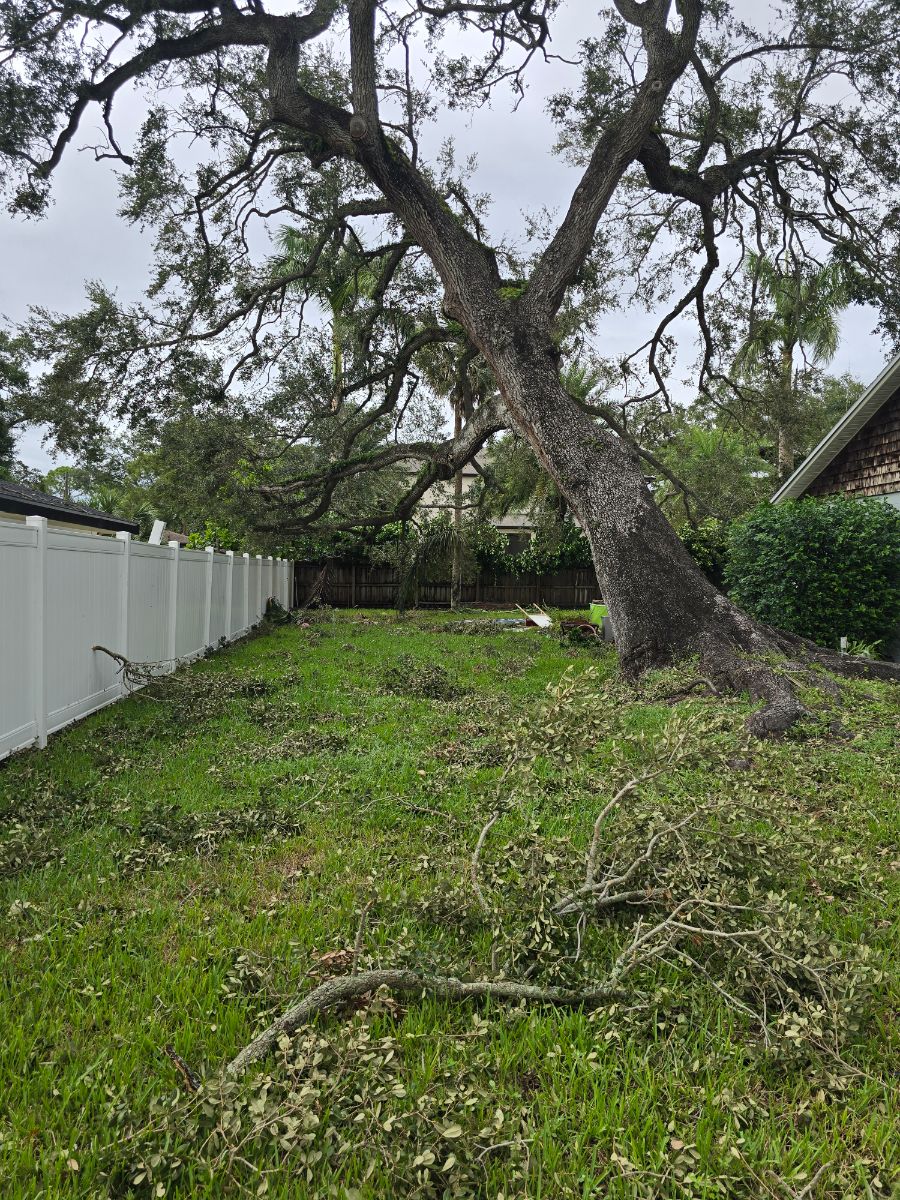
Water Oak 8 Feet From Slab — Cracks in Garage Floor, Ogden
When Tree Removal Costs Jump Fast
| Situation | Why Cost Increases |
|---|---|
| Crane Required | Expensive equipment + setup time |
| Tree Near Power Lines | Additional safety complexity |
| Emergency Removal | Urgency + danger |
| Limited Access | Slower manual work |
| Storm-Damaged Tree | Higher climbing risk |
📊 Wilmington Pricing Quick Reference
Updated: June 2026 · Source: TreeQuotePro Cape Fear market data
You've noticed a crack. Or a door that sticks every summer. Or a corner of the garage slab that doesn't sit flat anymore. And there's a big tree right there.
Is the tree doing it?
Sometimes yes. Often no. And in Wilmington's sandy coastal soil, the way roots actually damage foundations is different from what most national guides describe. Here's how to read what you're seeing.
The Signs That Point to Roots — and the Ones That Don't
Signs that genuinely point to tree roots:
Cracks on the tree side of the house, running toward the trunk. Root-related cracks have a direction. If the crack in your slab, garage floor, or foundation wall is closest to and oriented toward a large tree within 15–20 feet, the tree is a legitimate suspect.
Lifting or heaving — not sinking. Roots push up. A slab section that's raised, a walkway tilting upward near the trunk, a garage floor with one corner higher than the rest — that's the classic root signature. You can often see the same tree doing it to the driveway or sidewalk first. (See our roots lifting driveway guide.)
Doors and windows that stick seasonally — on the tree side. Roots also move moisture. A large tree pulls hundreds of gallons of water from the soil in summer, which can cause soil on that side of the house to shrink in dry months and swell in wet ones. If the sticking follows the seasons and concentrates on the side nearest the tree, the tree is influencing the soil under that part of the foundation.
Visible surface roots heading toward the house. Roots at the surface 10 feet from the foundation are roots that continue underground. The visible portion is the warning.
Signs that usually point to something else:
Uniform settling across the whole house. If cracks and sticking doors appear on multiple sides — including sides with no trees — you're more likely looking at general settling, drainage issues, or construction-related movement. Common in coastal NC, and not a tree problem.
Hairline cracks in new construction. Concrete cures and shrinks. Hairline cracks in a house under 5 years old are usually curing, not roots.
Cracks that appeared suddenly after a storm. More likely related to soil saturation and drainage than gradual root pressure.
Sinking, not lifting. Roots push up; they rarely cause downward settlement directly. A sinking corner usually means a drainage, soil compaction, or water management issue — sometimes worsened by a removed tree no longer drinking the water, but not caused by living roots.
How Roots Actually Damage Foundations in Coastal NC
Two mechanisms — and Wilmington's soil changes which one matters:
Direct root pressure. A root thickens over years and physically lifts or cracks what's above it. In sandy soil this is most common with slabs, garage floors, walkways, and shallow footings — the lighter structures. Large roots rarely crack a properly built modern foundation wall by pressure alone, but slab-on-grade construction (common across Wilmington) is more vulnerable.
Moisture cycling. The bigger factor here. Wilmington's sandy soil drains fast and holds little moisture. A mature loblolly pine or oak within 15 feet of the house creates a wet-dry cycle in the soil under the nearest foundation section — shrinking in drought, swelling in rain. Over years, that differential movement opens cracks and racks door frames. The root never touches the foundation; the moisture swing does the work.
This is why species and distance both matter. Our roots and foundation distance guide covers the safe planting distances — the short version: large species like loblolly pine, live oak, and water oak ideally sit 20–30 feet from the foundation, and Wilmington's sandy soil pushes root spread wider than national guidelines assume.
What to Do — In Order
1. Document what you're seeing. Photograph the cracks, note which doors stick and when, and mark whether anything is lifting versus sinking. Date the photos — progression over months is the most useful evidence.
2. Check the cheaper structures first. Walk the driveway, walkways, and patio between the tree and house. Root heave almost always shows up in hardscape before it reaches the foundation. If the hardscape is clean, the foundation is less likely to be root-affected.
3. Get the right professional for the question. This matters: a tree crew can tell you about the tree; only a structural engineer or foundation specialist can tell you whether the foundation is actually damaged and why. For active cracks, a foundation inspection ($300–$600) is the step that turns guessing into knowing. Be wary of anyone who diagnoses foundation damage and sells the repair in the same visit.
4. If roots are confirmed — address the tree, then the structure. Repairing a foundation while the cause keeps growing is paying twice. Removal of a large tree near a foundation runs $900–$2,500 in Wilmington, plus $200–$500 to grind the stump and major roots below grade. Root barriers are sometimes an option for trees worth saving, but for a large pine or water oak already causing movement within 15 feet, removal is usually the honest answer.
5. Know your numbers before any conversation. Upload a photo to treequote.pro — you'll have a Wilmington-specific removal estimate in 60 seconds, which is useful context whether you're talking to an engineer, an insurance adjuster, or a buyer's inspector.
One Note for Sellers and Buyers
Foundation questions kill deals faster than almost anything else in an inspection report. If you're listing a home with a large tree tight against the house, getting ahead of this — an engineer's letter if there's no damage, or removal if there is — is dramatically cheaper than the credit a spooked buyer will demand. See our guide on trees and property value.
Frequently Asked Questions
How do I know if tree roots are damaging my foundation in Wilmington NC? Look for cracks on the tree side of the house oriented toward the trunk, lifting (not sinking) in slabs and hardscape, doors that stick seasonally on the side nearest the tree, and surface roots heading toward the house. Uniform settling on all sides, hairline cracks in new construction, and sinking corners usually point to causes other than roots.
Can tree roots crack a house foundation in coastal NC? Yes — most commonly through slab heave on slab-on-grade construction and through moisture cycling, where a large tree's water uptake shrinks and swells the sandy soil under the nearest foundation section. Direct root pressure cracking a modern foundation wall is less common but does occur with large trees within 10–15 feet.
Should I remove a tree that's near my foundation in Wilmington? If a large species (loblolly pine, live oak, water oak) is within 15 feet and you're seeing movement — yes, and confirm with a structural engineer before repairing anything. If the tree is close but there's no movement, monitor annually and check the hardscape between tree and house, where root heave appears first.
How much does it cost to remove a tree near a foundation in Wilmington NC? $900–$2,500 for most removals near structures (proximity requires full rigging), plus $200–$500 for stump and root grinding below grade. A structural engineer's foundation inspection runs $300–$600. Get an instant removal estimate at treequote.pro.
Will removing the tree fix my foundation problem? Removal stops the cause — it doesn't reverse existing damage. Confirmed root-related damage typically needs the tree addressed first, then the foundation repaired separately ($2,500–$15,000+ depending on severity). Removing the tree early, when signs first appear in the hardscape, is what keeps the repair on the small end of that range.
Get an instant estimate for the tree near your foundation: treequote.pro
TreeQuotePro — Connecting Wilmington homeowners with trusted local tree service. Serving Wilmington, Leland, Ogden, Hampstead, Castle Hayne, and Porters Neck.
More Tree Care Tips Guides →
Know What Your Tree Project Should Cost
Upload a photo of your tree and get a local Wilmington price estimate in under 60 seconds.
✓ No phone calls required · ✓ Free for homeowners · ✓ 90 five-star Google reviews