Crane Tree Removal in Wilmington NC — When You Need It and What It Costs
Crane tree removal in Wilmington adds $800–$2,500 to the base removal cost, bringing most crane jobs to $2,000–$5,000 or more. Cranes are required when a tree is too large, too close to a structure, or in a yard where conventional equipment can't safely operate.
Average Tree Removal Pricing
Why Crane Removal Costs What It Does in Wilmington
Crane mobilization alone runs $800–$1,500 before a single branch is cut. Add that to a base removal cost and you're looking at $2,500–$5,000 for most residential jobs. Wilmington's tight neighborhood lots, sandy soil that limits truck positioning, and trees that have grown into structures over decades all push crane jobs higher than national averages.
The Wilmington Situations That Almost Always Require a Crane
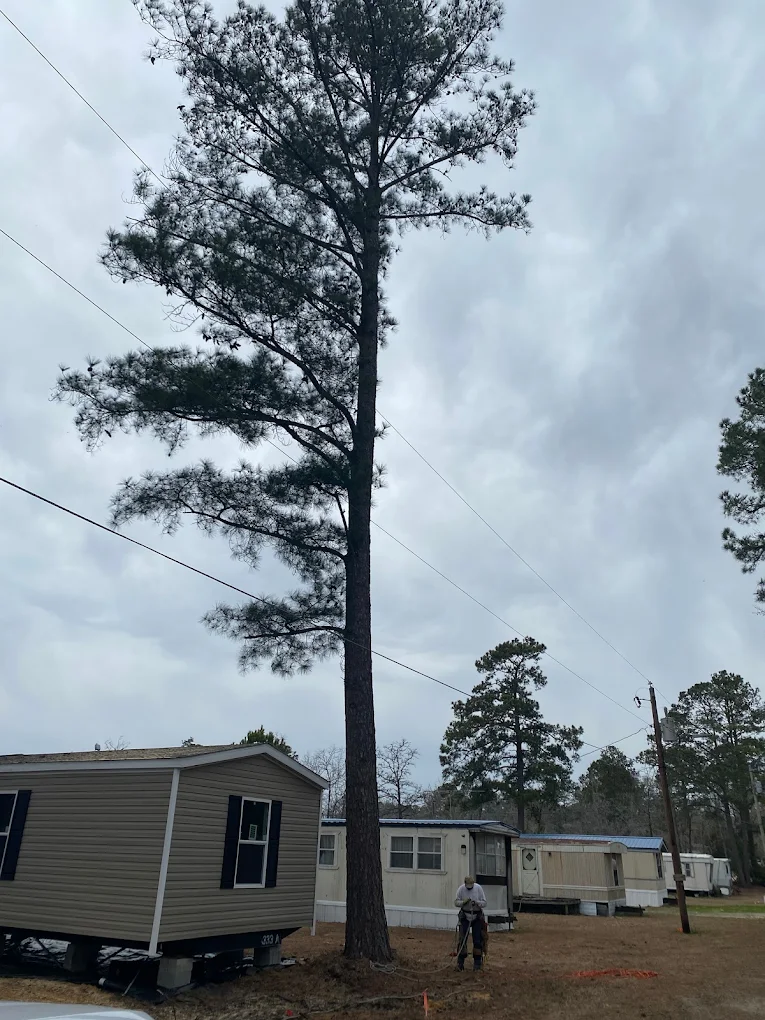
Any tree over 80 feet in a yard with less than 10 feet of side access will almost certainly need crane work. The same applies to any tree — regardless of height — that has grown over a roof, pool, or garage with no safe felling direction. In Landfall, Masonboro, Porters Neck, and older Wilmington neighborhoods, crane jobs are the rule, not the exception.
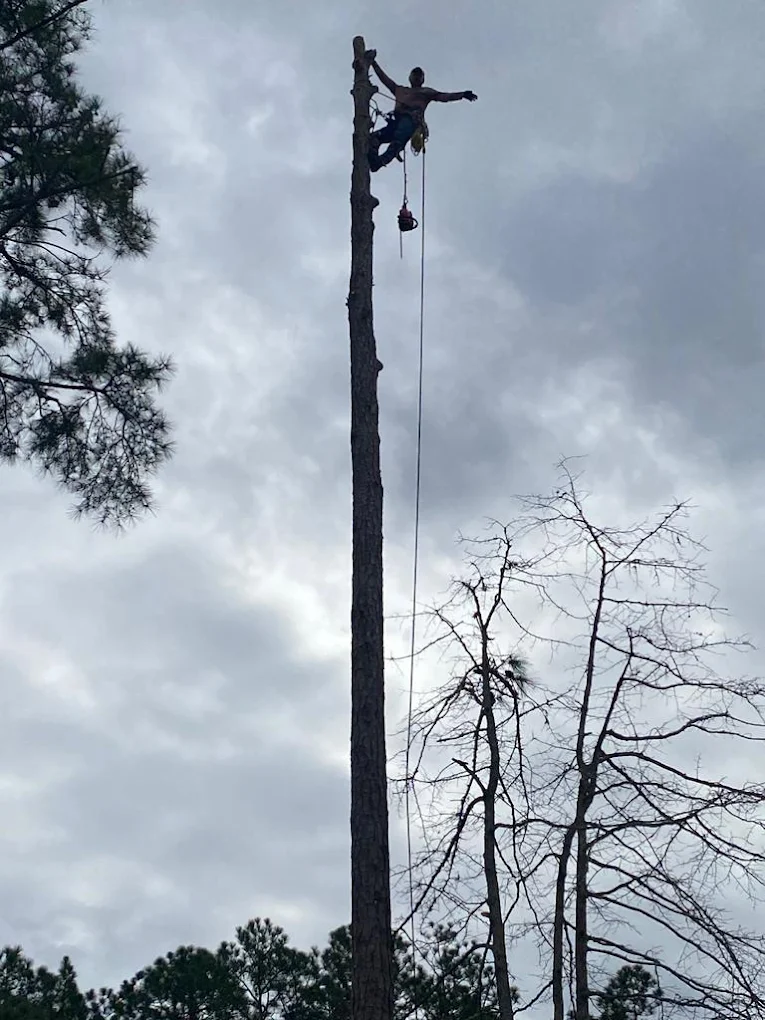
85-Foot Loblolly Pine — Tight Backyard in Masonboro
When Tree Removal Costs Jump Fast
| Situation | Why Cost Increases |
|---|---|
| Crane Required | Expensive equipment + setup time |
| Tree Near Power Lines | Additional safety complexity |
| Emergency Removal | Urgency + danger |
| Limited Access | Slower manual work |
| Storm-Damaged Tree | Higher climbing risk |
📊 Wilmington Pricing Quick Reference
Updated: June 2026 · Source: TreeQuotePro Cape Fear market data
Crane tree removal is the most expensive residential tree work you can schedule — and in Wilmington, it comes up more often than most homeowners expect. Here's exactly when cranes are required, what they cost, and what the job actually looks like.
When Does a Wilmington Tree Removal Require a Crane?
Not every large tree needs a crane. But several specific situations make crane removal not optional — it's the only safe way to do the job.
Tree height over 80 feet with no felling direction. A loblolly pine that reaches 85 or 90 feet in a backyard with fences on three sides and a house behind it cannot be safely felled in any direction. The crane holds sections as they're cut, lowering each piece to the ground without it swinging into structures. Without the crane, that job isn't doable safely — period.
Canopy over the roof or neighbor's property. This is the most common crane trigger in Wilmington. A live oak or large pine that has grown so its canopy is directly over your roof, your neighbor's fence, or a pool leaves no safe drop zone. Rigging alone isn't enough once a tree gets to a certain size. The crane replaces the drop zone.
No side yard access for a bucket truck. Side yard clearance under 8 feet in most Wilmington neighborhoods means a conventional bucket truck can't position properly. That limits crew reach to whatever they can access from the back yard — which on a 70 or 80-foot tree isn't enough without mechanical lift assistance.
Sandy soil can't support heavy equipment positioning. Wilmington's sandy coastal soil — especially after rain — makes footing unreliable for bucket trucks positioned close to a large tree. Cranes are set up on stabilized pads and spread weight differently. For very large trees, this is a safety consideration, not just a preference.
Storm-damaged trees with compromised trunk integrity. A tree that has been partially uprooted or has significant trunk damage can't be climbed safely for top-down sectional removal. A crane allows the crew to work from the outside in, never putting a climber's weight on a structurally uncertain trunk.
What Crane Tree Removal Costs in Wilmington NC
Crane pricing has two components: the crane mobilization/rental fee and the base removal cost for the tree itself.
| Cost Component | Typical Range |
|---|---|
| Crane mobilization and rental | $800 – $2,500 |
| Base tree removal (large tree) | $1,200 – $2,500 |
| Total crane job (good access) | $1,800 – $3,500 |
| Total crane job (tight access) | $2,800 – $6,000+ |
| Emergency crane removal | $3,500 – $7,500+ |
The crane rental rate depends on how long the crane is on-site. Most residential jobs use the crane for 2–4 hours. If the job requires the crane all day or into a second day, expect the upper end of these ranges.
The most common crane job in Wilmington: An 80 to 90-foot loblolly pine in an established neighborhood with one or more fences and less than 10 feet of side yard clearance. Most of those jobs run $2,400–$3,800 all-in.
What Changes the Price Fastest — Crane Job Snapshot
The Wilmington Neighborhoods Where Crane Jobs Are Most Common
Some parts of Wilmington and New Hanover County see crane jobs regularly — not because the trees are exceptional, but because the lots were developed around trees that have since grown into every available space.
Masonboro: Older neighborhood, mature lots, tight side yards. Loblolly pines from the 1970s and 1980s are now 80–100 feet tall and in every direction of every fence line. Crane jobs are standard here.
Porters Neck: Mix of large live oaks and very tall pines. The subdivisions around Porters Neck Plantation and the waterfront areas regularly require crane work for both species. Porters Neck tree removal runs higher than county averages for this reason.
Landfall: High-value lots with mature live oaks. Any tree with canopy over a structure in Landfall essentially requires crane work by default — no crew is going to risk a felling mistake on a multi-million dollar property. Crane jobs here regularly run $3,500–$6,000.
Ogden: Dense residential lots with pine stands that have grown together over decades. A single tree removal often requires crane work because there's no clear drop direction. See Ogden tree removal costs for full pricing in this neighborhood.
Wrightsville Beach approaches: Salt air exposure and sandy soil make trees in this zone structurally unpredictable. Crane use is common even on trees that might otherwise be manageable — the risk calculus changes near high-value beach properties.
What a Crane Tree Removal Actually Looks Like
Most homeowners have never watched a crane removal and aren't sure what to expect. Here's what the day looks like:
Setup (1–2 hours): The crane arrives first and positions on the street or driveway. Outrigger pads are placed to distribute weight. The crane operator and crew chief walk the job and identify the rigging points on the tree — typically starting from the top limbs and working down. The street may need to be blocked temporarily in some neighborhoods.
Removal (2–4 hours): The climber ascends the tree and attaches rigging straps to each section before cutting. The crane holds tension on each piece as it's cut free — controlling the descent rather than letting it fall. Sections are lowered to a staging area away from structures. On an 85-foot tree, this might mean 15–25 separate cuts and lifts.
Cleanup (1–2 hours): All debris is chipped on-site or loaded out. The stump is left in the ground unless grinding was included in the scope. Most crane jobs are complete in 4–6 hours for a single tree.
What You Should Confirm Before a Crane Job
Crane removal has more logistics than standard removal — confirm these items with your contractor before the job starts:
| Item | What to Confirm |
|---|---|
| Crane access route | Where will it park? Is the driveway rated for the weight? |
| Street permit | Required in some Wilmington neighborhoods — ask who pulls it |
| Neighbor notification | Crew may need access to neighbor's property for staging |
| Stump grinding | Usually separate — confirm if it's included |
| Debris removal | All sections and chips removed, or some stays? |
| Utility line clearance | Any lines near the crane swing path? |
Real Wilmington Crane Removal Jobs
Masonboro — 88-foot loblolly, 6 feet from two-story home: No felling direction. Crane staged in street, required temporary lane closure for 4 hours. Full top-down sectional removal. Total cost: $2,950 including debris removal. Stump grinding: $225 additional. This is the most common crane scenario in established Wilmington neighborhoods.
Porters Neck — large live oak, canopy over garage and neighbor's fence line: Crane on-site for a full day. Four-person crew plus crane operator. Canopy had to come down in approximately 30 sections due to weight per piece. Total cost: $4,400. Live oak weight drove this toward the high end — see our live oak removal cost guide for why dense hardwood jobs run higher.
Ogden — two 75-foot pines, shared fence line, tight lot: Two pines taken down in one crane mobilization. Sharing the crane setup across two trees brought the per-tree cost down significantly. Total for both: $3,800 vs. what would have been $4,400–$5,000 if done separately. Multiple trees on one crane day is the best way to offset mobilization cost.
The Most Expensive Crane Mistake Wilmington Homeowners Make
Hiring the cheapest bidder on a crane job without confirming they actually own or have contracted a crane. Some Wilmington tree companies quote crane jobs and then show up without one — planning to "manage with rigging" and hoping the homeowner doesn't notice. If your quote included crane and the crew shows up without one, stop the job.
The second mistake: waiting until a tree has failed or partially fallen before calling for crane work. Emergency crane deployment in Wilmington runs 2–3x the planned price — and after-hours crane operators in coastal NC are in high demand after every storm.
Know what your tree situation requires before the storm season makes the decision for you.
Get an Instant Estimate for Your Crane Tree Job
Upload a photo of your tree and get an AI-powered price range in under two minutes. Ramon and Miguel — our local provider serving Wilmington and surrounding communities with 20+ years experience and 90 five-star Google reviews — will follow up to confirm whether a crane is required and what the total job should cost.
No phone calls. No waiting for a callback.
Find Out If Your Tree Needs a Crane — and What It Should Cost
Upload a photo of your Wilmington tree and get a local price estimate in under 60 seconds.
✓ No phone calls required · ✓ Free for homeowners · ✓ 90 five-star Google reviews
Frequently Asked Questions
How much does crane tree removal cost in Wilmington NC? Crane removal in Wilmington typically runs $1,800–$5,500 for most residential jobs. The crane itself adds $800–$2,500 to the base removal cost. Emergency crane jobs after storm damage run $3,500–$7,500+. Jobs with very large trees, full-day crane use, or multiple structures in the removal zone push toward the higher end.
Does every large tree removal in Wilmington require a crane? No — many large tree removals are done with bucket trucks and climber-based sectional cutting. A crane is specifically required when there's no safe felling direction, no equipment access to get a bucket truck in position, or when the tree is over a structure in a way that makes hand rigging alone insufficient. Your contractor should explain the reasoning if a crane is proposed.
How long does a crane tree removal take? Most single-tree crane jobs run 4–6 hours from crane setup to final debris cleanup. Very large trees or trees with canopies over multiple structures can take a full day. Jobs scheduled across two days are uncommon but happen for the most complex removals.
Can I bundle multiple trees into one crane mobilization? Yes — and this is the best way to reduce per-tree cost on crane jobs. If you have two or three trees that individually require crane work, scheduling them together shares the mobilization cost across all jobs. On a $1,200 crane mobilization fee, that's $400–$600 saved per tree.
What neighborhoods in Wilmington most commonly need crane removal? Masonboro, Porters Neck, Landfall, and Ogden see the highest frequency of crane removal jobs in New Hanover County. These neighborhoods have the combination of mature trees and tight established lots that drives crane use. Older sections of Wrightsville Beach approaches and neighborhoods near Masonboro Sound also see regular crane work.
Is emergency crane removal covered by homeowners insurance in Wilmington? Only if a tree has already fallen and caused structural damage to a covered structure. Proactive removal — even when a tree is clearly a risk — is generally considered preventative maintenance and is not covered. Document your tree's condition thoroughly with photos if you believe it's a risk, and consult your insurer before assuming coverage applies.
See also:
- Tree Removal Cost in Wilmington NC (2026 Guide)
- Live Oak Removal Cost in Wilmington NC
- Pine Tree Removal Cost in Wilmington NC
- Tree Removal Cost in Ogden NC
- Tree Removal Cost in Porters Neck NC
Follow us on Facebook for Wilmington tree pricing guides: TreeQuotePro on Facebook
Get an instant tree removal estimate: treequote.pro
TreeQuotePro — Connecting Wilmington homeowners with trusted local tree service. Serving Wilmington, Leland, Ogden, Hampstead, Castle Hayne, and Porters Neck.
More Cost Guides Guides →
See What YOUR Tree Costs
Upload a photo and get an instant estimate based on these exact pricing ranges.
✓ No phone calls required · ✓ Free for homeowners · ✓ 90 five-star Google reviews