Does Homeowners Insurance Cover Tree Removal in NC? (What's Covered and What Isn't)
North Carolina homeowners insurance typically covers tree removal only when a tree falls and damages a covered structure due to a covered peril like wind or a storm. It does not cover preventative removal, trees that fall in an open yard, or trees that fell due to neglect. Here's exactly what the rules are — and where Wilmington homeowners get burned.
Average Tree Removal Pricing
The NC Insurance Rules Most Wilmington Homeowners Don't Know Until It's Too Late
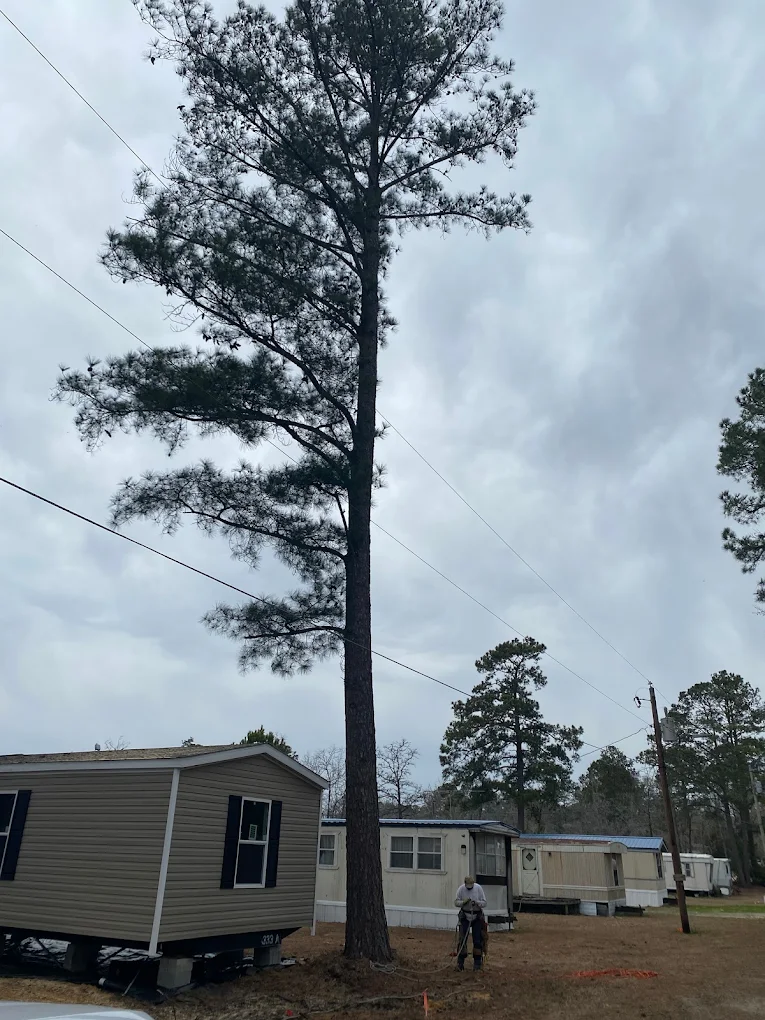
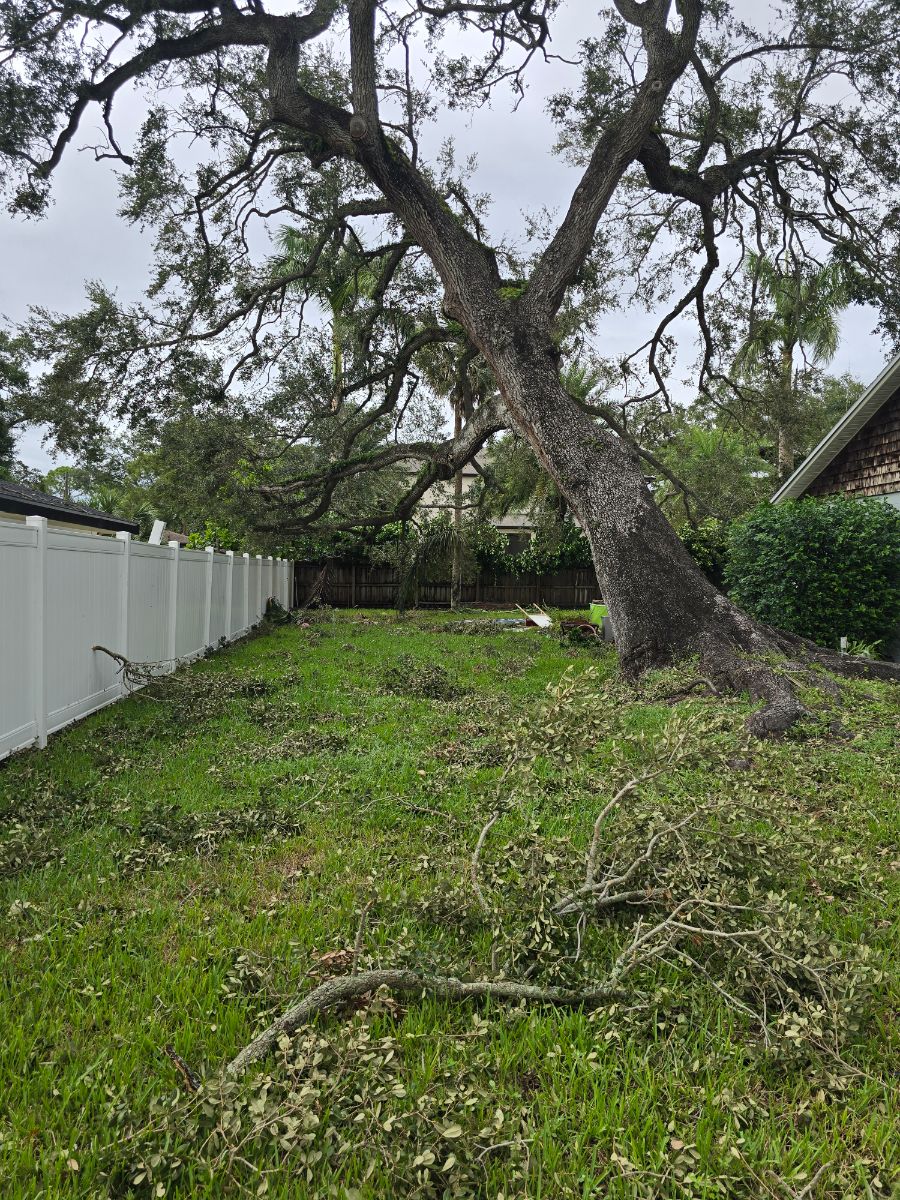
The Negligence Trap — Why Knowing About a Hazardous Tree Changes Everything
Wilmington Homeowner — Pine Fell on Garage During Isaias
When Tree Removal Costs Jump Fast
| Situation | Why Cost Increases |
|---|---|
| Crane Required | Expensive equipment + setup time |
| Tree Near Power Lines | Additional safety complexity |
| Emergency Removal | Urgency + danger |
| Limited Access | Slower manual work |
| Storm-Damaged Tree | Higher climbing risk |
📊 Wilmington Pricing Quick Reference
Updated: June 2026 · Source: TreeQuotePro Cape Fear market data
I want to be direct about something before we get into the details: most Wilmington homeowners assume their insurance will cover tree removal after a storm. Sometimes it does. Often it doesn't. And the gap between what homeowners expect and what their policy actually covers is one of the most expensive surprises in the tree business.
After Florence, Dorian, and Isaias, I watched this play out dozens of times. Homeowners who did everything right got covered. Homeowners who had ignored a problem tree — or who had a tree fall in the yard without hitting anything — paid out of pocket for everything.
Here's the honest breakdown of how NC homeowners insurance actually handles tree removal.
What North Carolina Homeowners Insurance Actually Covers
North Carolina has two primary homeowners insurance policy types that affect how tree removal is handled:
HO-3 (most common): Covers tree removal up to $500 per tree and $1,000 total when a tree falls due to a covered peril and damages a covered structure.
HE-7 (less common, more comprehensive): Covers up to $1,000 per tree when a tree falls and damages a covered structure.
The key phrase in both: damages a covered structure. That's the trigger.
| Situation | Covered? | Typical Payout |
|---|---|---|
| Tree fell on house due to wind/storm | ✅ Yes | Up to $500–$1,000 removal + repair costs |
| Tree fell on attached garage due to storm | ✅ Yes | Same as above |
| Tree fell on fence due to storm | ✅ Usually | Depends on policy |
| Tree blocks driveway or mobility ramp | ✅ Yes | Limited debris removal |
| Tree fell in yard, didn't hit anything | ❌ No | $0 |
| Preventative removal of hazardous tree | ❌ No | $0 |
| Tree fell due to rot, disease, or neglect | ❌ No | $0 |
| Tree fell on car | ❌ No (auto insurance) | Covered by comprehensive auto |
| Neighbor's tree fell on your house | ✅ Yes | Your policy covers your structure |
The NC Insurance Rules Most Homeowners Don't Know
Rule 1: The tree has to hit something covered. A 70-foot pine that falls in your backyard and lands in the grass — nowhere near any structure — is your problem to deal with and your cost to remove. Most homeowners are genuinely surprised by this. The tree fell in a storm. The storm is a covered peril. But the tree didn't damage a covered structure, so removal isn't covered. You're looking at $800–$1,500 out of pocket on most standard removal jobs.
Rule 2: Your deductible still applies. Even when a claim is covered, your deductible comes off the top. A $1,000 deductible on a $2,500 tree removal and repair claim means you're paying $1,000 before insurance contributes anything. Many Wilmington homeowners find the net insurance payout barely moves the needle on smaller jobs.
Rule 3: Coverage limits are lower than most people think. The HO-3 policy standard limit is $500 per tree and $1,000 total. If a large live oak removal costs $3,500 and the roof repair costs $8,000, insurance may cover $1,000 of the removal and some portion of the repair — but you could still have thousands in out-of-pocket costs after your deductible.
Rule 4: Floods aren't covered by standard homeowners insurance. After Florence caused widespread flooding in Wilmington and Brunswick County, homeowners with standard HO-3 policies discovered that flood-related tree damage wasn't covered. Flood coverage requires a separate NFIP policy. This is particularly relevant in lower-lying areas of Castle Hayne, along the Cape Fear River corridor, and in flood-prone parts of Leland.
The Negligence Trap
This is the rule that matters most for Wilmington homeowners with a tree they've been meaning to deal with.
If your insurance company's adjuster determines that you knew a tree was hazardous — dead, severely leaning, visibly decayed — and you failed to address it, they may deny the claim entirely or reduce the payout substantially.
The word "negligence" is the key. An insurer doesn't have to prove that you definitely knew. They have to show that a reasonable homeowner should have known the tree was a hazard.
What qualifies as notice in their eyes:
- A previous claim involving the same tree
- Documentation that a neighbor complained about the tree
- The tree was visibly dead or severely leaning before the event
- A previous contractor or arborist noted the tree as hazardous
This creates a specific situation for coastal NC homeowners: every tree that survived Florence, Dorian, or Isaias that was visibly stressed after those storms is now potentially subject to a negligence argument if it fails and causes damage.
The practical implication: if you know a tree is a problem and you don't address it, you may be paying for everything out of pocket when it eventually comes down.
This is why proactive removal before hurricane season isn't just smart — it's the only way to maintain your insurance coverage on those specific trees.
What to Do When a Tree Falls on Your Property
If a tree has fallen and caused damage, the sequence matters:
Step 1 — Document everything before touching anything. Photos, video, multiple angles. Your adjuster cannot process a claim on damage they can't see. Do not let a crew start cleanup before you have thorough documentation.
Step 2 — Call your insurance company immediately. Start the claim before any removal work begins. Some policies require prior authorization for removal costs to be reimbursed.
Step 3 — Get an emergency tarp on any roof penetration. If the tree came through your roof, cover the opening immediately to prevent water damage. Many emergency tree crews offer tarping as part of their service — ask when you call.
Step 4 — Get an estimate in writing. When you call for emergency removal, get the quote in writing before work begins. Your insurer will want documentation of removal costs.
Step 5 — Don't accept the first cleanup offer. After major storms, out-of-state companies come into Wilmington offering fast service at inflated prices. After Florence, one Florida company paid $38,000 in restitution to Wilmington homeowners for price gouging during the state of emergency. Know what a fair price looks like before you agree to anything.
What Changes Coverage Fastest — Insurance Snapshot
The Most Important Insurance Decision You Can Make Right Now
Proactive tree removal costs $800–$1,800 for most Wilmington jobs. Your insurance deductible alone is probably $1,000. If a tree you knew was hazardous falls on your house, you're paying the deductible plus the portion insurance doesn't cover plus whatever the insurer denies due to negligence — and you still have to pay for the removal on top of the repairs.
Removing a problem tree now costs less than your deductible on the claim you'd file after it falls. That's the real math. Upload a photo to treequote.pro and find out what proactive removal costs before the storm makes the decision for you.
Frequently Asked Questions
Does homeowners insurance cover tree removal in North Carolina? Only in specific situations. NC homeowners insurance (HO-3) covers tree removal up to $500 per tree/$1,000 total when a tree falls due to a covered peril like wind or storm and damages a covered structure. It does not cover trees that fall in the yard without hitting anything, preventative removal, or trees that fell due to neglect or known hazards.
What if my neighbor's tree falls on my house in Wilmington? Your own homeowners insurance covers damage to your structure regardless of which tree caused it. You can pursue your neighbor's insurance if their negligence caused the tree to fail — for example, if the tree was visibly dead or hazardous and they failed to address it. See our full guide on neighbor tree liability in Wilmington.
What's the difference between HO-3 and HE-7 insurance in NC for tree removal? HO-3 is the standard policy — covers up to $500 per tree and $1,000 total for removal when a tree damages a covered structure. HE-7 provides up to $1,000 per tree. Review your policy declarations page or call your agent to confirm which policy you have and what your specific limits are.
Will insurance cover removal of a tree that's still standing but leaning toward my house? No. Preventative removal of a hazardous tree is never covered by standard homeowners insurance regardless of how dangerous the tree appears. That's your cost — but it's almost always significantly less than the deductible and out-of-pocket costs after the tree falls and causes damage.
What should I do immediately after a tree falls on my house in Wilmington? Document everything with photos before any cleanup. Call your insurer to start the claim before removal begins. Get emergency tarping on any roof penetration immediately. Get a written estimate before authorizing any work. Do not accept inflated post-storm pricing from out-of-state companies — know the fair local rates before agreeing to anything.
Follow us on Facebook for Wilmington tree pricing and insurance guides: TreeQuotePro on Facebook
Get an instant estimate for proactive tree removal: treequote.pro
TreeQuotePro — Connecting Wilmington homeowners with trusted local tree service. Serving Wilmington, Leland, Ogden, Hampstead, Castle Hayne, and Porters Neck.
More Insurance & Liability Guides →
Know What Your Tree Project Should Cost
Upload a photo of your tree and get a local Wilmington price estimate in under 60 seconds.
✓ No phone calls required · ✓ Free for homeowners · ✓ 90 five-star Google reviews