Signs a Tree Needs to Be Removed in Wilmington NC (2026 Guide)
There's a difference between a tree that looks bad and a tree that needs to come down. In Wilmington's coastal market — where sandy soil weakens roots, salt air accelerates decay, and hurricane season runs June through November — the signs that actually matter are structural, not cosmetic. Here's exactly what to look for.
Average Tree Removal Pricing
8 Signs Your Tree Needs to Be Removed in Wilmington NC
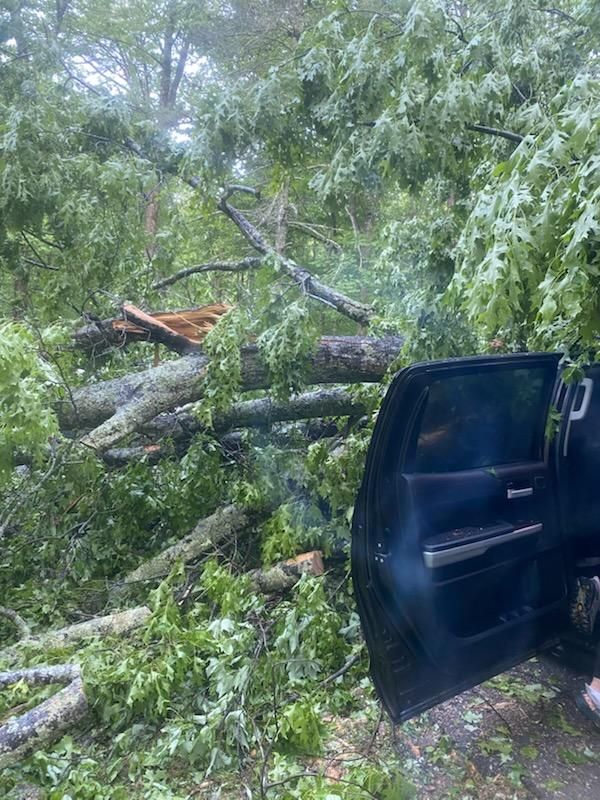
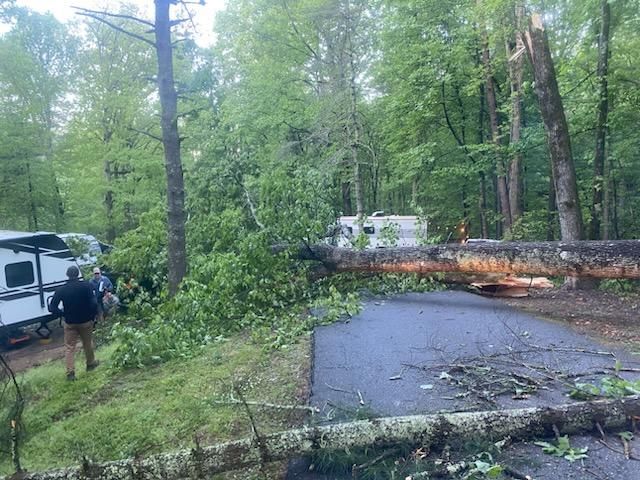
The Wilmington Complication — Why These Signs Are More Urgent Here
Live Oak — Masonboro Homeowner Noticed Lean Getting Worse Each Season
When Tree Removal Costs Jump Fast
| Situation | Why Cost Increases |
|---|---|
| Crane Required | Expensive equipment + setup time |
| Tree Near Power Lines | Additional safety complexity |
| Emergency Removal | Urgency + danger |
| Limited Access | Slower manual work |
| Storm-Damaged Tree | Higher climbing risk |
📊 Wilmington Pricing Quick Reference
Updated: June 2026 · Source: TreeQuotePro Cape Fear market data
Most homeowners don't ask "does this tree need to come down?" until something forces the question — a storm, a neighbor's comment, or a branch that lands somewhere it shouldn't.
By that point the conversation has shifted from proactive planning to reactive damage control.
I've been doing tree work in Wilmington for over 20 years. The trees that cost homeowners the most money aren't the ones that obviously needed to go — those get dealt with. It's the ones that needed to go two years ago, before the lean got worse, before Florence compromised the root ball, before the canopy grew another 10 feet over the roofline.
Here's what to look for on your property right now.
8 Signs a Tree Needs to Be Removed
These aren't ranked by frequency — they're ranked by urgency. Start at the top.
1. The tree is leaning toward a structure and the lean is getting worse
A slight lean is normal on many trees. A lean that's visibly progressing from one season to the next is not. Look at photos of your tree from a year ago if you have them. Compare.
In Wilmington's sandy coastal soil, root anchoring is weaker than in the clay-based soils of inland NC. A tree that starts leaning here doesn't naturally self-correct — it continues. The question isn't whether it will eventually come down in that direction. The question is whether you want to control when and how.
A leaning tree over a structure is the single most urgent removal situation in coastal NC. Don't wait for a named storm to make the decision for you.
2. Large dead limbs in the canopy — especially over structures
Dead limbs fall without warning in any wind, not just hurricanes. A broken branch on the ground after a calm night means dead wood is cycling through your canopy.
Look up into the canopy from multiple angles. Dead limbs have no leaves when surrounding branches are fully leafed out, show gray or bare bark, and hang at slightly odd angles from healthy branches. In live oaks near the ICWW — Porters Neck, Masonboro, Wrightsville Beach area — salt air exposure creates significantly more hidden deadwood than the same tree five miles inland.
One or two dead limbs can be addressed with trimming. Dead wood throughout the entire canopy means the tree itself is failing.
3. Mushrooms or fungal growth at the base
This is the warning sign most homeowners walk past without registering. Mushrooms or shelf fungus at the root flare or on the lower trunk mean internal decay is already established — not beginning, already underway. By the time fungal growth is visible externally, the internal rot has been building for a season or more.
Wilmington's humid coastal climate accelerates fungal growth compared to drier inland areas. A tree showing mushrooms at the base in June may be structurally compromised before August.
This is a removal situation. Not a "watch it" situation.
4. Bark falling away in large sections revealing cracked, dry wood underneath
Some peeling is species-normal — river birch and sycamore peel naturally. Most Wilmington trees don't. If bark is sloughing off in large sheets on a loblolly pine or water oak and revealing dry, cracked, or discolored wood underneath, the tree's vascular system is compromised.
Test the exposed wood with a screwdriver or sharp stick. If it penetrates easily — soft, crumbling, or hollow — the structural integrity is gone. Remove it.
5. Significant trunk damage — cracks, splits, or hollow sections
Run your hand along the trunk. Look for vertical cracks that run deep rather than surface-level bark checks. Press on sections that look unusual. A hollow-sounding trunk when knocked on is a serious structural concern.
Large V-shaped crotches — where the trunk splits into two major leaders — are another failure point. If that split shows cracks or bark inclusion running into it, the union is weak and can fail in high wind without warning.
6. Root damage, heaving soil, or exposed root ball on one side
Walk slowly around the base of every large tree on your property. Look at the soil. If the ground is raised or cracked on one side of the tree — particularly the opposite side from a lean — the root ball is shifting. That's a tree that has already begun to fail underground.
After Florence and Dorian, many Wilmington properties have trees whose root systems were partially undermined by flood saturation and never recovered. The tree grew back normally for a season or two. The root system didn't. These trees are now more vulnerable than they appear.
7. The tree is dead or more than 50% of the canopy has died
A fully dead tree should come down before the next storm, not after. Dead wood becomes brittle and unpredictable — sections can fail at any point, in any wind condition, without the gradual warning signs a living tree gives.
A tree that's more than half dead — significant live canopy remaining but major structural dieback throughout — is in the same category. The living portion doesn't stabilize what's already dead. Both conditions warrant removal, and both are urgent heading into hurricane season.
8. The tree is growing into infrastructure it can never be trimmed away from
Some trees end up in positions where continued growth is incompatible with the property — roots actively lifting a driveway or approaching a foundation, canopy that will grow back over a roofline within one season of every trim, or a trunk that's now closer than 10 feet to a structure with no safe growth direction.
Trimming buys time. When the position of the tree means trimming is a permanent recurring cost with no long-term resolution, removal is the honest economic answer.
The Wilmington Complication — Why These Signs Are More Urgent Here
Every sign on this list is more urgent in coastal NC than it would be in Charlotte, Raleigh, or anywhere inland. Three reasons:
Sandy soil weakens root anchoring. Wilmington's coastal soil has far less grip than the clay-based soils of inland NC. A tree with any root compromise here is more vulnerable to wind failure than the same condition in a different geology.
Hurricane exposure is real. A tree that might survive a decade of mild wind events in an inland market can fail in the first named storm to hit the Cape Fear coast. The question isn't whether Wilmington gets hit — it's when. Florence, Dorian, and Isaias hit within two years of each other. Planning assumes another storm is coming.
Salt air accelerates hidden damage. Properties within a mile of the ICWW or the Atlantic experience chronic salt exposure that weakens wood fiber over years. Trees in these areas — Porters Neck, Masonboro, Wrightsville Beach, Ogden — show more hidden deadwood and internal decay than their appearance suggests. What looks like a healthy canopy from the street often isn't.
When to Trim Instead of Remove
Removal isn't always the answer. Some situations call for trimming first:
- Dead limbs in an otherwise healthy canopy — trimming removes the hazard without taking the tree
- Branches growing toward a roofline on a structurally sound tree — crown elevation or reduction
- Live oak with a wide canopy over a pool — crown reduction can dramatically reduce risk without full removal
The tree is a candidate for trimming when the trunk and root system are sound and the problem is branch position or deadwood in the canopy.
The tree is a candidate for removal when the structural integrity of the trunk or root system is compromised — or when the tree's position makes trimming a temporary fix that doesn't address the underlying problem.
When you're unsure which situation you're in, the first question to answer is cost. Upload a photo to treequote.pro and get a Wilmington-specific estimate in 60 seconds. Knowing what removal would cost often clarifies the decision — and occasionally reveals that the tree you've been worried about is more affordable to address than you assumed.
What Removal Costs When Signs Are Present
When warning signs are present — lean, dead wood, fungal growth, root compromise — expect to pay 20–40% above standard removal pricing. The reason is straightforward: compromised trees require more careful rigging throughout. A tree with a structural problem isn't a tree you can plan a clean natural fall direction on. Every section gets controlled.
| Tree Size | Standard Removal | With Warning Signs Present |
|---|---|---|
| Small (under 30 ft) | $350 – $650 | $450 – $850 |
| Medium (30–60 ft) | $650 – $1,200 | $850 – $1,600 |
| Large (60–80 ft) | $1,200 – $1,900 | $1,500 – $2,500 |
Get an accurate estimate for your specific situation at treequote.pro before calling anyone.
Frequently Asked Questions
How do I know if a tree needs to be removed in Wilmington NC? The most urgent signs are a lean that's getting progressively worse toward a structure, mushrooms or fungal growth at the base, large dead limbs throughout the canopy, significant trunk cracks or hollow sections, and soil heaving near the root base. In Wilmington's coastal environment — sandy soil, hurricane exposure, salt air — these signs are more urgent than they would be in inland NC. If you're seeing two or more of these on the same tree near a structure, get a removal estimate before hurricane season tests it.
Is it better to trim a tree or remove it in Wilmington NC? Trim when the trunk and root system are structurally sound and the problem is branch position or deadwood in the canopy. Remove when the structural integrity of the trunk or root system is compromised, when the tree is dead or mostly dead, or when the tree's position makes trimming a recurring cost with no long-term resolution. A tree near a structure with a progressive lean is a removal situation regardless of how healthy the canopy looks.
How much does it cost to remove a tree with warning signs in Wilmington NC? Trees with structural concerns — lean, root compromise, fungal growth, significant deadwood — typically cost 20–40% more than standard removal. The compromised structure requires more careful rigging and slower, more controlled work throughout. A medium tree (30–60 ft) with warning signs runs $850–$1,600 in the Wilmington market. Get an instant estimate at treequote.pro.
What trees are most commonly removed in Wilmington NC? Loblolly pine is the most common removal in the Cape Fear market — fast-growing, tall, shallow-rooted in sandy coastal soil, and vulnerable to root failure after repeated storm saturation. Live oak removals are the most expensive due to wood density and canopy spread. Water oak is the most dangerous species in the market — it carries significant hidden internal decay that isn't visible from the outside.
How long can I wait after noticing warning signs before removing a tree in Wilmington NC? Hurricane season runs June 1 through November 30. If you're seeing active warning signs — progressive lean, mushrooms at the base, major dead limbs over a structure — the answer is before the next storm, not after. Proactive removal at standard rates is significantly cheaper than emergency removal after a storm, and emergency removal after a storm is significantly cheaper than emergency removal plus structure repair. Don't wait.
Get an instant estimate before calling anyone: treequote.pro
Follow us on Facebook: TreeQuotePro on Facebook
TreeQuotePro — Connecting Wilmington homeowners with trusted local tree service. Serving Wilmington, Leland, Ogden, Hampstead, Castle Hayne, and Porters Neck.
More Tree Care Tips Guides →
Know What Your Tree Project Should Cost
Upload a photo of your tree and get a local Wilmington price estimate in under 60 seconds.
✓ No phone calls required · ✓ Free for homeowners · ✓ 90 five-star Google reviews