Tree Removal Cost in Castle Hayne NC (2026 Guide)
Tree removal in Castle Hayne typically runs $400–$1,600 for standard residential jobs — often slightly below Wilmington pricing because larger lots mean better equipment access. But the community's mix of old farmland trees, fast-growing water oaks, and the Cape Fear River floodplain creates specific removal challenges worth understanding before you get your first quote.
Average Tree Removal Pricing
What Makes Castle Hayne Tree Removal Different From the Rest of Wilmington
The Cape Fear Floodplain Factor — What It Does to Trees in Castle Hayne
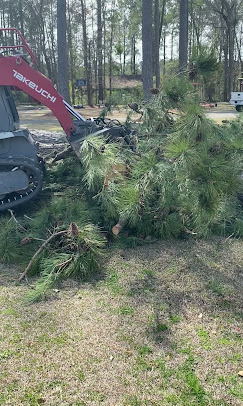
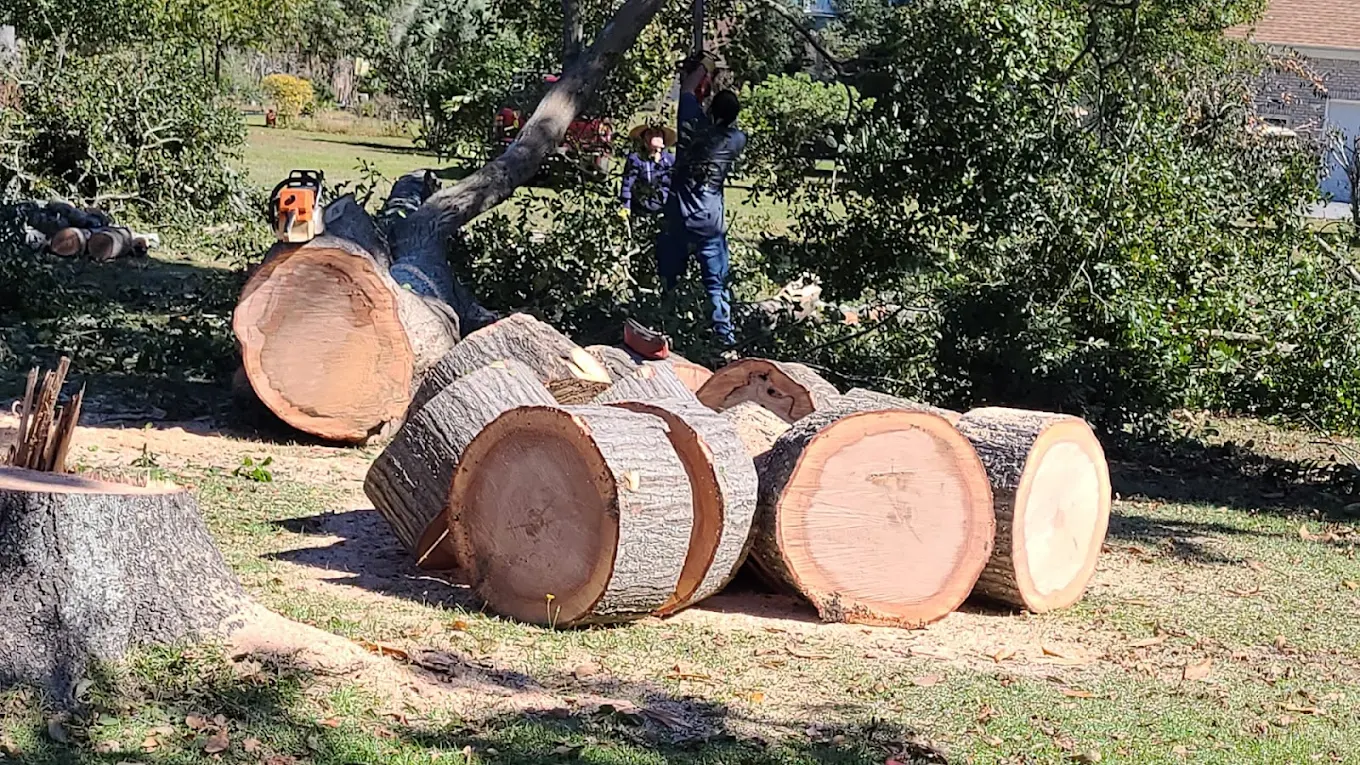
60-ft Water Oak Over Detached Garage — Castle Hayne Road Area
When Tree Removal Costs Jump Fast
| Situation | Why Cost Increases |
|---|---|
| Crane Required | Expensive equipment + setup time |
| Tree Near Power Lines | Additional safety complexity |
| Emergency Removal | Urgency + danger |
| Limited Access | Slower manual work |
| Storm-Damaged Tree | Higher climbing risk |
📊 Wilmington Pricing Quick Reference
Updated: June 2026 · Source: TreeQuotePro Cape Fear market data
Castle Hayne sits just north of Wilmington proper along the Cape Fear River, and if you live here you know it has a different character than the subdivisions of Leland or the tight neighborhoods of Masonboro. Larger lots. More rural character. Old farmland trees that have been growing for decades before any house was built nearby.
I've done work out here over the years. The jobs are often more accessible than Wilmington proper — bigger lots, more room to maneuver equipment — but the trees themselves tell a different story. Fast-growing water oaks, sweet gums spreading into structures, and the occasional massive hardwood from a previous farm property create their own set of challenges.
Here's what tree removal actually costs in Castle Hayne in 2026.
What Tree Removal Costs in Castle Hayne NC
Castle Hayne pricing generally runs slightly below Wilmington's average — better equipment access on larger lots means lower labor costs on most jobs. But tree size and species can push prices above the Wilmington average on complex jobs.
| Tree Size | Height Reference | Estimated Cost |
|---|---|---|
| Small | Under 30 ft — as tall as a one-story house | $280 – $580 |
| Medium | 30–60 ft — two to five stories | $550 – $1,100 |
| Large | 60–80 ft — taller than a telephone pole | $1,000 – $1,800 |
| Very Large | 80 ft+ | $1,600 – $3,200+ |
Most Castle Hayne residential jobs — a standard water oak or loblolly pine on an accessible lot — run $600 to $1,200.
What Makes Castle Hayne Tree Removal Different
Castle Hayne has a distinct character that shapes how tree removal jobs play out here.
Larger lots mean better access — and lower labor costs. The defining advantage of Castle Hayne lots compared to tighter Wilmington neighborhoods is space. When equipment can reach the tree efficiently, job times drop and so does cost. A removal that would be a half-day rigging job in a tight Masonboro backyard might be a 2-hour job on a Castle Hayne property with room to work.
Old farmland trees are bigger and more complex. The trees that concern me most in Castle Hayne aren't the newer planted ones — they're the old hardwoods that predate the development. A water oak that was standing when a property was still farmland may have a trunk diameter of 36 inches or more and a canopy spreading 50 feet. These are substantial removal projects regardless of access.
Water oaks dominate and they grow fast. Castle Hayne's coastal plain setting gives trees a strong start — fertile soil, steady moisture, and humid conditions support growth throughout the year. Water oaks, loblolly pines, and sweet gums expand quickly, leading to crowded canopies, roots reaching where they're not wanted, and branches extending farther over structures than expected. A water oak that looked manageable five years ago can be a serious situation today.
Sweet gums are the most underestimated tree in Castle Hayne. Sweet gums grow aggressively in the fertile bottomland soil here. They're not as tall as loblolly pines but they spread wide, their root systems are invasive, and their spiky seed pods are a continuous nuisance. Sweet gum removal is straightforward — but stump grinding is more complex due to aggressive surface root spread. Budget for root chasing if you have a sweet gum near lawn or hardscape.
The Cape Fear Floodplain Factor
Castle Hayne's proximity to the Cape Fear River creates conditions that affect trees in ways that don't apply to higher-ground Wilmington neighborhoods.
Saturated soil after flooding. Parts of Castle Hayne flood periodically, and even properties that don't flood sit on soil that stays saturated longer after heavy rain than inland areas. Trees in periodically saturated soil develop shallower root systems — which means less anchoring and higher storm failure risk despite looking structurally sound.
Floodplain species grow faster and fail faster. Water oaks and sweet gums thrive in moist conditions and grow aggressively — but the same conditions that accelerate growth also accelerate internal decay in stressed trees. A water oak showing early decline in Castle Hayne can progress to full structural failure faster than the same tree in drier conditions.
Post-Florence legacy damage. The Cape Fear River corridor took significant flooding from Florence in 2018. Trees along the river lowlands experienced root saturation and soil displacement that doesn't show on the surface. If you have large trees in lower areas of your Castle Hayne property that survived Florence, they may be carrying more structural compromise than is visible from the ground.
Lot Clearing in Castle Hayne
Castle Hayne sees more lot clearing projects than most Wilmington-area communities — new construction on previously wooded parcels, agricultural land being converted to residential use, and larger properties being subdivided.
Lot clearing pricing in Castle Hayne:
| Project Size | Estimated Cost |
|---|---|
| Small clearing (under 0.25 acre) | $1,500 – $3,500 |
| Medium clearing (0.25–0.5 acre) | $3,000 – $7,000 |
| Large clearing (0.5–1 acre) | $6,000 – $15,000+ |
| Per tree on clearing projects | $150 – $400 depending on size |
Lot clearing costs in Castle Hayne benefit from equipment efficiency — larger parcels mean the crew can work with heavy equipment rather than hand climbing every tree. If you're planning a lot clearing project, get quotes from companies with dedicated clearing equipment, not just residential tree crews.
What Changes Price Fastest — Castle Hayne Snapshot
The Most Important Thing to Know About Trees in Castle Hayne
The open lots in Castle Hayne give a false sense of security about large trees. Homeowners here often assume that because the tree has room to fall without hitting anything, it's not urgent. But a water oak failing in a Castle Hayne yard still fails — and when it does, it rarely falls in the convenient direction.
The floodplain soil conditions here mean root systems on older trees are often more compromised than they appear. A 60-foot water oak that "looks fine" on a lot that flooded in 2018 may have significantly less root anchoring than the same tree on higher ground.
Get an assessment before hurricane season. Upload a photo to treequote.pro for a starting estimate in two minutes — no phone call required.
Frequently Asked Questions
How much does tree removal cost in Castle Hayne NC? Tree removal in Castle Hayne typically runs $280–$580 for small trees, $550–$1,100 for medium trees, and $1,000–$1,800 for large trees. Most standard residential jobs fall in the $600–$1,200 range — often slightly below Wilmington pricing due to better equipment access on larger lots.
What trees are most common in Castle Hayne NC? Water oak, loblolly pine, and sweet gum are the most common species on Castle Hayne residential properties. Water oaks dominate older lots and floodplain-adjacent properties. Loblolly pines are prevalent throughout. Sweet gums grow aggressively in the fertile bottomland soil.
Is tree removal cheaper in Castle Hayne than Wilmington? Often yes — larger lots with better equipment access reduce labor time on most jobs. However, old farmland hardwoods with large trunk diameters and floodplain trees with compromised root systems can push Castle Hayne jobs above the Wilmington average.
Do I need a permit to remove a tree in Castle Hayne NC? Castle Hayne falls within New Hanover County's jurisdiction. For most residential lots, no permit is required for standard tree removal on private property. Check with New Hanover County Development Services if you're uncertain about protected trees or utility easements on your specific lot.
What is lot clearing in Castle Hayne and what does it cost? Lot clearing involves removing multiple trees from a larger parcel — typically for new construction, agricultural conversion, or property development. Castle Hayne's larger lot sizes and open character make it well-suited for clearing projects using heavy equipment. Expect $1,500–$3,500 for small parcels under a quarter acre, scaling to $6,000–$15,000+ for larger clearing projects.
Follow us on Facebook for New Hanover County tree pricing guides: TreeQuotePro on Facebook
Get an instant estimate for your Castle Hayne tree: treequote.pro
TreeQuotePro — Connecting Wilmington homeowners with trusted local tree service. Serving Wilmington, Leland, Ogden, Hampstead, Castle Hayne, and Porters Neck.
More Cost Guides Guides →
See What YOUR Tree Costs
Upload a photo and get an instant estimate based on these exact pricing ranges.
✓ No phone calls required · ✓ Free for homeowners · ✓ 90 five-star Google reviews