Tree Removal Cost in Masonboro NC (2026 Guide)
Tree removal in Masonboro typically runs $600–$2,200 for standard residential jobs — above the Wilmington average. Masonboro's older lots, mature pine and oak canopy, proximity to the Intracoastal Waterway, and tight neighborhood access consistently drive costs higher than newer Wilmington communities.
Average Tree Removal Pricing
What Makes Masonboro Tree Jobs More Complex Than Most Wilmington Neighborhoods
The Intracoastal Factor — What Salt Air Does to Masonboro Trees Over Time
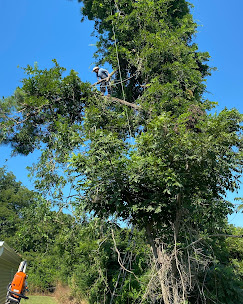
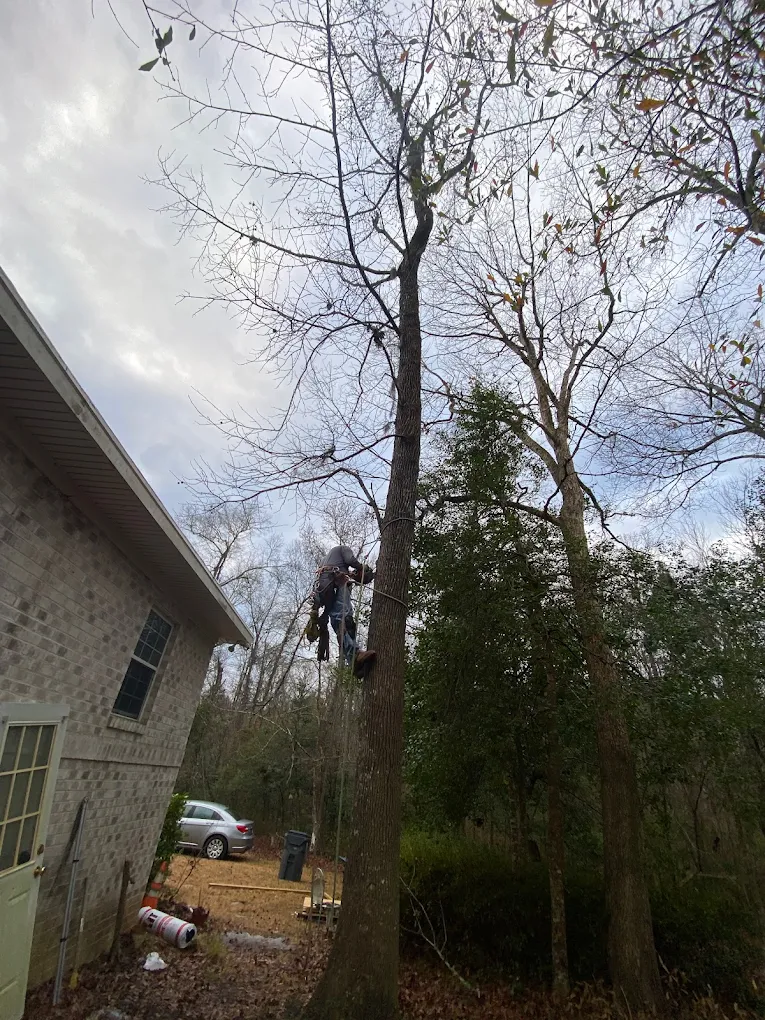
70-ft Loblolly Pine Over Screened Porch — Masonboro Loop Road Area
When Tree Removal Costs Jump Fast
| Situation | Why Cost Increases |
|---|---|
| Crane Required | Expensive equipment + setup time |
| Tree Near Power Lines | Additional safety complexity |
| Emergency Removal | Urgency + danger |
| Limited Access | Slower manual work |
| Storm-Damaged Tree | Higher climbing risk |
📊 Wilmington Pricing Quick Reference
Updated: June 2026 · Source: TreeQuotePro Cape Fear market data
I've been climbing trees in this area for over 20 years and Masonboro generates some of the most complex residential jobs in the Wilmington market. Not because the trees are the tallest — though plenty of them are. It's the combination that makes it difficult: older lots, mature canopies that have grown into structures over decades, tight access between homes, and the salt air stress that comes with being this close to the Intracoastal Waterway.
Masonboro Forest features pine, oak, and magnolia trees on lots a third of an acre or larger. Those lots felt spacious when the homes were built. After 20 or 30 years of tree growth, a lot of them feel a lot tighter.
Here's what tree removal actually costs in Masonboro in 2026.
What Tree Removal Costs in Masonboro NC
Masonboro pricing runs above the Wilmington average of $532 for most jobs. The neighborhood's character — older lots with mature trees, tight residential spacing, and coastal exposure — creates consistent complexity that shows up in quotes.
| Tree Size | Height Reference | Estimated Cost |
|---|---|---|
| Small | Under 30 ft — as tall as a one-story house | $350 – $650 |
| Medium | 30–60 ft — two to five stories | $650 – $1,300 |
| Large | 60–80 ft — taller than a telephone pole | $1,200 – $2,200 |
| Complex near structure | Any size, zero drop zone | $2,000 – $4,500+ |
Most Masonboro residential jobs — a mature pine or oak in a standard established backyard — run $900 to $1,800. That's 30–40% above what you'd expect in a newer neighborhood with similar tree sizes.
What Makes Masonboro Tree Jobs More Complex
Decades of growth into tight spaces. Masonboro's homes were built primarily in the late 1990s and early 2000s. The pines and oaks planted with those homes — or inherited from the previous landscape — have had 20+ years to grow toward fences, porches, rooflines, and neighbor's property. Trees that were planted at a safe distance no longer are.
Narrow side yards. The lot layouts in Masonboro create specific access challenges. Many properties have side yard clearances of 8–12 feet between structures. Getting a chipper truck anywhere near the backyard often requires navigating through that gap — and sometimes it's not possible. When equipment has to stay on the street, debris hand-carry distance adds significantly to crew time.
Established landscaping blocks access. The mature landscaping that makes Masonboro attractive — established shrubbery, privacy plantings, ornamental trees — also blocks equipment access to the target tree. Crews frequently spend as much time protecting existing landscaping during removal as they do on the removal itself.
Ponds throughout the neighborhood. Several Masonboro properties back up to community ponds. A tree falling or dropping sections near a pond edge requires additional caution and rigging precision — crews can't let heavy sections slide toward the water.
The Intracoastal Factor
Masonboro sits less than 2 miles from the Intracoastal Waterway, and that proximity shows in the trees.
Salt air from the ICWW creates chronic wood stress that inland trees don't experience. Over years, salt deposits accumulate in leaf tissue and wood cells, weakening branch structure and accelerating deadwood development in the upper canopy. A Masonboro pine or oak that looks healthy from the ground routinely has significantly more dead material in the upper crown than a comparable tree in Ogden or Castle Hayne.
This affects removal jobs in two ways. First, dead sections in the upper canopy have to be worked more carefully — brittle dead wood doesn't behave like live wood under a chainsaw or rigging tension. Second, the overall structural integrity of salt-stressed trees is lower than their appearance suggests, which changes how crews approach rigging and section work.
After Florence, Dorian, and Isaias, Masonboro trees that "survived" accumulated additional stress on top of the chronic salt air exposure. If you have a large tree in Masonboro that hasn't been assessed since the last major hurricane, that's the conversation to have before this June 1.
Real Masonboro Tree Removal Jobs
Standard lot, 65-ft loblolly, good side yard access: Good access by Masonboro standards. Crew could position within 40 feet of the tree. 3-person crew, 3.5 hours. Final cost: $1,350 including cleanup. This is the lower end of the Masonboro range — accessible jobs on manageable lots.
Pond-adjacent lot, 75-ft pine, sections couldn't drop toward water: One-directional rigging throughout. All sections lowered away from the pond edge. Extra hour of setup and rigging compared to an equivalent open-yard job. Final cost: $1,950.
Masonboro Forest subdivision, live oak over screened porch: The most common expensive job in this neighborhood. Dense canopy, tight access, sections over porch requiring full rigging. Quote range from three companies: $2,100–$2,800. Final cost: $2,350. This is toward the high end for residential Masonboro work — live oak plus structure proximity is the worst-case combination.
What Changes Price Fastest — Masonboro Snapshot
The Most Expensive Mistake in Masonboro
The most expensive mistake I see in Masonboro is homeowners assuming a tree is fine because it looks fine from the street. The combination of salt air stress and hurricane exposure creates a specific failure profile here — trees that hold on remarkably long and then fail suddenly, usually during the first significant wind event after they've passed their structural threshold.
If you have a large pine or live oak in your Masonboro yard that's been growing toward your house for the past decade and hasn't been assessed since Florence — get eyes on it before June 1. Upload a photo to treequote.pro for a starting estimate in two minutes.
Frequently Asked Questions
How much does tree removal cost in Masonboro NC? Tree removal in Masonboro typically runs $650–$2,200 for standard residential jobs — above Wilmington's average due to older lots, mature trees, tight access, and ICWW salt air stress. Complex jobs near structures or ponds can reach $4,500.
Why is tree removal more expensive in Masonboro than other Wilmington neighborhoods? Older established lots with mature trees that have grown into structures, tight side yard access that limits equipment positioning, pond-adjacent properties requiring one-directional rigging, and chronic salt air stress from ICWW proximity all contribute to higher complexity and cost.
What tree species are most common in Masonboro? Loblolly pine and live oak dominate most Masonboro lots. Magnolia trees are also common throughout the neighborhood. The combination of pine height and live oak density and spread creates a specific removal challenge profile distinct from other Wilmington communities.
Do I need a permit to remove a tree in Masonboro NC? Masonboro falls within New Hanover County. For most residential lots, no permit is required for standard tree removal on private property. Confirm with New Hanover County Development Services if you have questions about specific trees or easements.
Follow us on Facebook for Wilmington area tree pricing guides: TreeQuotePro on Facebook
Get an instant estimate for your Masonboro tree: treequote.pro
TreeQuotePro — Connecting Wilmington homeowners with trusted local tree service. Serving Wilmington, Leland, Ogden, Hampstead, Castle Hayne, and Porters Neck.
More Cost Guides Guides →
See What YOUR Tree Costs
Upload a photo and get an instant estimate based on these exact pricing ranges.
✓ No phone calls required · ✓ Free for homeowners · ✓ 90 five-star Google reviews