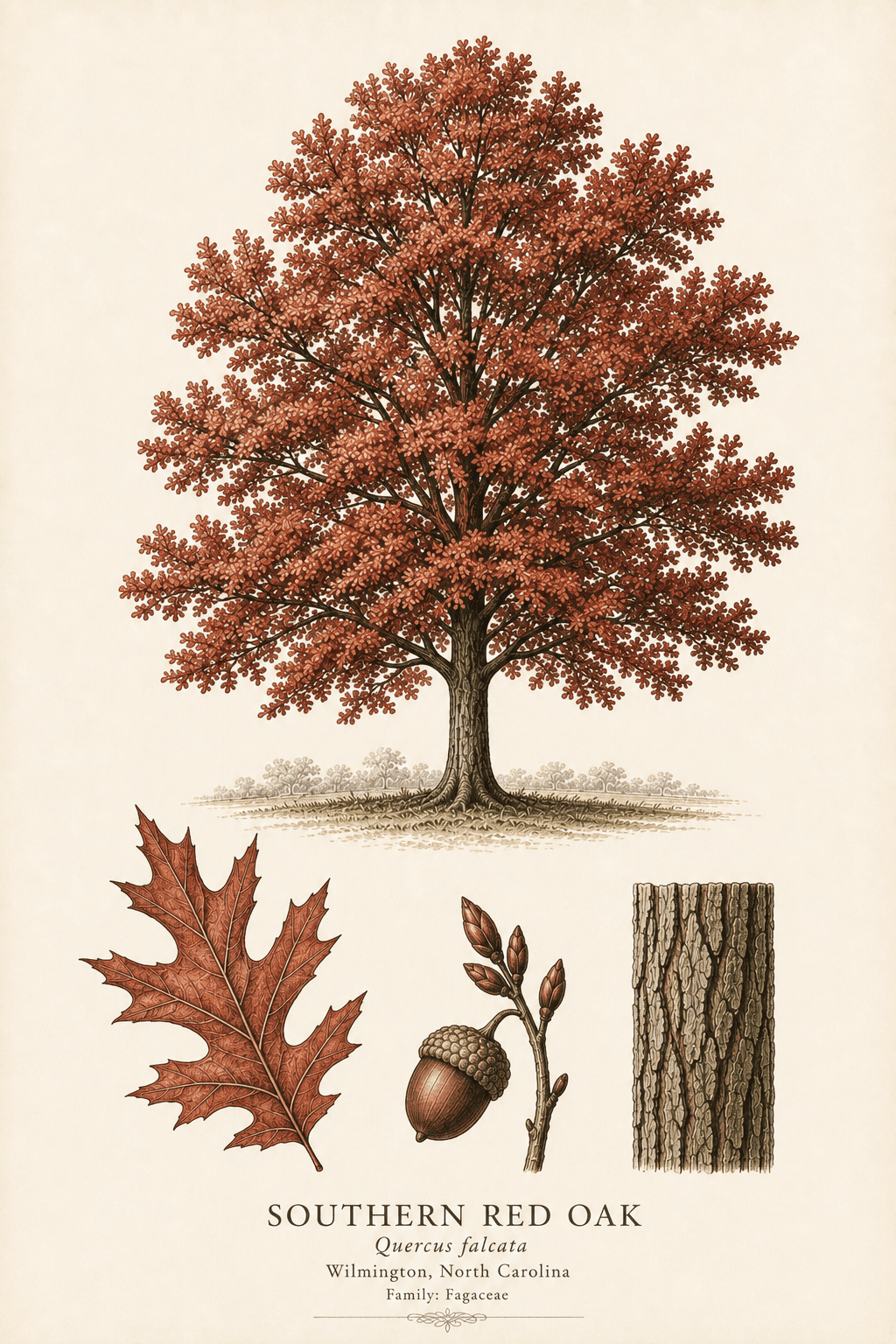
Quercus falcata · botanical plate
SPECIES INTELLIGENCE · WILMINGTON NC
Southern Red Oak Removal Cost in Wilmington, NC
Quercus falcata
Family: Fagaceae
A bold canopy tree that turns the Wilmington uplands brilliant red every autumn — and commands a premium for removal at maturity.
REMOVAL COST
High
HOMEOWNER VERDICT
Usually worth keeping
A bold canopy shade tree with brilliant autumn color — worth keeping when healthy.
TREE INTELLIGENCE SNAPSHOT
REMOVAL COST
High
HURRICANE RISK
Moderate
SHADE VALUE
High
MAINTENANCE
Moderate
PROPERTY IMPACT
Moderate
How to Identify This Tree
- ·
Deeply lobed leaves with sharp pointed tips
- ·
Rusty red fall color
- ·
C-shaped sinuses between leaf lobes
Deeply lobed leaves with pointed tips and distinctive C-shaped sinuses; rusty-red fall color; medium-sized acorns; gray-brown furrowed bark on mature specimens
Strong shade canopy
Brilliant rusty-red fall color
Native upland species
Long-lived when healthy
What Does It Cost to Remove a Southern Red Oak in Wilmington?
Small (under 30 ft)
$430–$790
Medium (30–60 ft)
$790–$1,460
Large (60–80 ft)
$1,460–$2,300
Very Large / near structure
$2,300–$4,200+
Why This Species Costs What It Costs
- 1.
Heavy deeply-lobed leaves create massive debris volume — cleanup load is significantly higher than trunk diameter suggests
- 2.
Mature specimens develop large buttressed root flares that prevent ground equipment from approaching the base
- 3.
Dense wood increases cutting resistance and makes each section heavier to rig and lower
- 4.
Iron chlorosis common in coastal soils causes structural stress and hidden weakening that requires conservative sectional removal
Ranges reflect Cape Fear regional pricing. Final cost depends on access, condition, and site factors.
Hurricane Season Risk
Wind Resistance
Moderate — better than water oak but significantly below live oak and longleaf pine
Common Failures
Crown failures when stressed by iron chlorosis or root damage; whole-tree toppling in saturated soil
Storm Behavior
Prone to crown failures under wind load when chlorotic; generally performs better than water oak in direct storm events
BEST SEASON TO REMOVE — Any season; summer removal avoids oak wilt transmission risk
Caring for Your Southern Red Oak: Trimming & Hurricane Prep
BEST TIME TO TRIM
December–February. Avoid pruning April through June when the oak wilt vector is most active in North Carolina.
HURRICANE PREP
Thinning and dead-wood removal before June reduces storm failure risk for this species.
SEASONAL PRICING
Booking before hurricane season (before June) typically means better availability and pricing than peak-season demand.
WHAT YOU SHOULD ACTUALLY DO
Inspect annually
Avoid pruning April–June (oak wilt risk)
Watch for iron chlorosis (yellowing leaves)
Remove deadwood before storm season
Signs Your Southern Red Oak Should Be Removed
Iron chlorosis visibly weakening the tree
Crown dieback over 40%
Large limbs over a structure
Not sure? Upload a photo for a free assessment →
Common Questions About Southern Red Oak in Wilmington
Estimate Your Southern Red Oak Job
Estimated Range
$950 – $1,200
Estimated range for Tree Removal · medium tree · Wilmington
Confidence: High · Based on Cape Fear market data
Estimate based on Cape Fear regional pricing data. Final cost confirmed after provider assessment.
Want an estimate based on YOUR actual tree? Upload a photo →
Get a photo-based estimate for your Southern Red Oak
Upload a photo and our AI analyzes the actual tree — not just a range by size.
Upload a Photo →Ramon and Miguel · 90 five-star Google reviews · Wilmington, NC