How Close Can Tree Roots Be to Your House Foundation? (Wilmington NC Guide)
For large trees like loblolly pines and live oaks, roots should be no closer than 20–30 feet from your foundation. In Wilmington's sandy coastal soil, roots spread wider and shallower than they would in inland NC — which means the safe distance rules are more aggressive here than the national guidelines suggest.
Average Tree Removal Pricing
Safe Root Distances by Tree Species in Wilmington NC
Why Wilmington's Coastal Soil Changes Everything
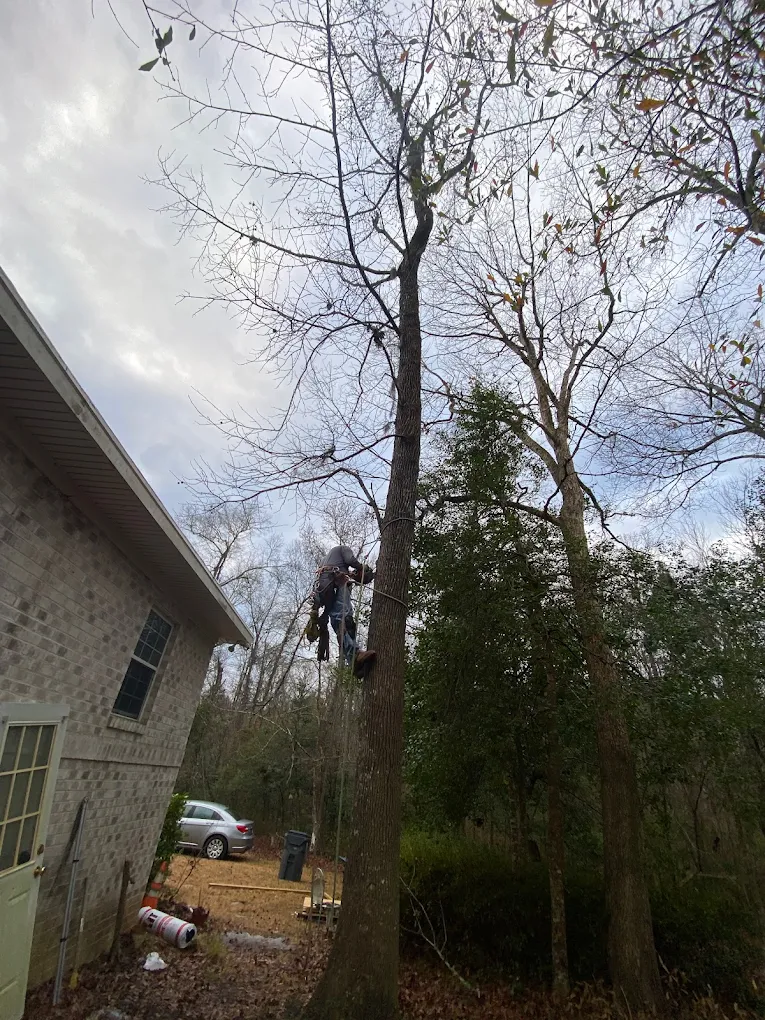
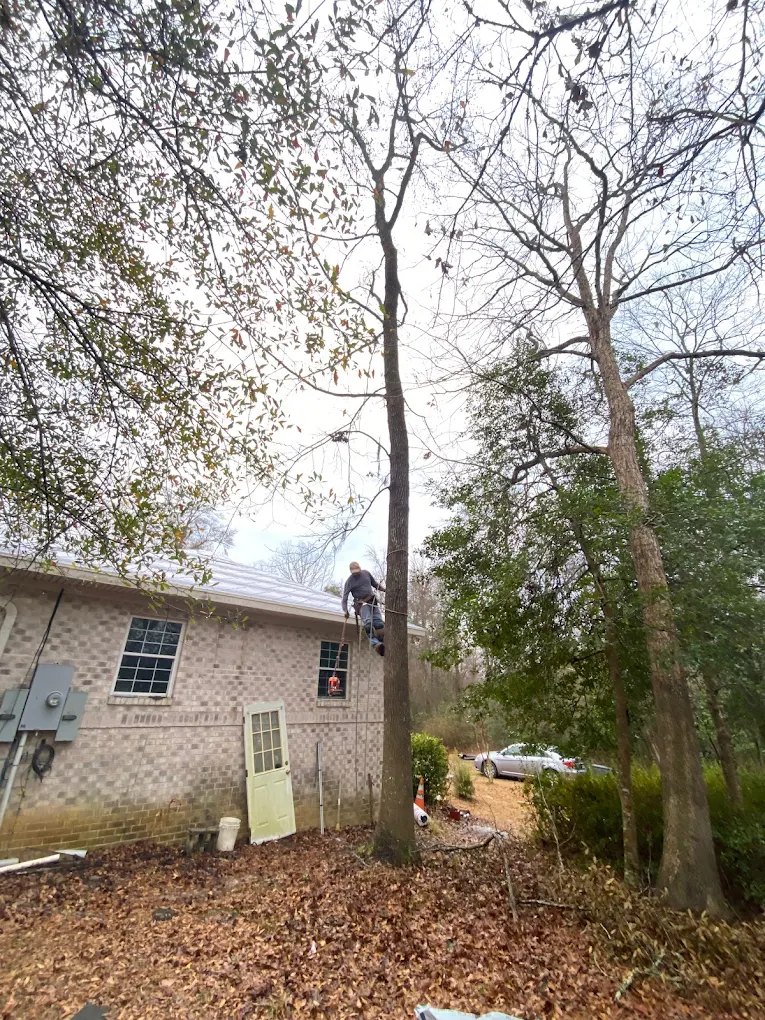
Loblolly Pine, 18 Feet From Foundation — Masonboro Homeowner
When Tree Removal Costs Jump Fast
| Situation | Why Cost Increases |
|---|---|
| Crane Required | Expensive equipment + setup time |
| Tree Near Power Lines | Additional safety complexity |
| Emergency Removal | Urgency + danger |
| Limited Access | Slower manual work |
| Storm-Damaged Tree | Higher climbing risk |
📊 Wilmington Pricing Quick Reference
Updated: June 2026 · Source: TreeQuotePro Cape Fear market data
Most homeowners don't think about tree roots until something forces the conversation — a crack in the foundation, a door that suddenly won't close properly, a driveway section that's lifted at an odd angle. By the time roots are causing visible structural symptoms, the situation has usually been developing for years.
I've been doing tree work in Wilmington for over 20 years. The foundation question comes up constantly — and the honest answer is more nuanced than the simple distance charts you'll find online, especially in coastal NC.
The Quick Answer — Safe Root Distances
For most trees, roots extend 2–3 times the height of the tree in all directions. A 60-foot loblolly pine has roots potentially reaching 120–180 feet from the trunk. The active, damaging roots near a foundation are typically within 20–30 feet of the base.
General safe planting distances from a foundation:
- Small trees (under 25 ft at maturity): 6–10 feet minimum
- Medium trees (25–50 ft): 15–20 feet minimum
- Large trees (50–80 ft): 20–30 feet minimum
- Very large trees (80 ft+): 30–50 feet minimum
The problem: most Wilmington homeowners didn't plant their trees. They inherited mature trees that were already growing when they bought the property — often already inside these distances.
Safe Distances by Tree Species in Wilmington NC
| Tree Species | Minimum Safe Distance | Risk Level Near Foundation |
|---|---|---|
| Loblolly Pine | 20–30 ft | Moderate — roots spread wide but not highly invasive |
| Live Oak | 20–25 ft | Moderate — large but generally not foundation-invasive |
| Water Oak | 15–20 ft | High — aggressive root spread, often has hidden decay |
| Sweet Gum | 15–20 ft | High — wide shallow roots, very aggressive |
| Willow (any) | 50 ft minimum | Very High — most aggressive root system in coastal NC |
| Magnolia | 10–15 ft | Moderate — large tree but less invasive root system |
| Crape Myrtle | 5–8 ft | Low — safe for most foundation situations |
| Dogwood | 6–10 ft | Low — generally safe near structures |
Why Wilmington's Coastal Soil Changes Everything
The safe distance guidelines you find online were written for average American soil conditions — primarily clay-based soils that give roots significant resistance and keep them growing deeper.
Wilmington's sandy coastal soil behaves completely differently.
Sandy soil = wider, shallower roots. In clay, roots push downward because the soil provides resistance and holds moisture at depth. In sandy coastal soil, moisture drains quickly and there's far less resistance. Roots spread horizontally — wide and shallow — seeking the moisture that stays near the surface. This means a loblolly pine in Wilmington's sandy soil has a significantly wider surface root spread than the same tree in Raleigh's clay.
Storm saturation shifts root systems. After Florence, Dorian, and Isaias, the repeated cycles of soil saturation followed by rapid drainage changed how root systems orient in many Wilmington properties. Trees that were growing normally before 2018 may have root systems that shifted toward structures during periods of heavy soil saturation.
ICWW and flood-prone lots amplify this. Properties near Smith Creek in Ogden, the Cape Fear River floodplain in Castle Hayne, and low-lying sections of Leland and Brunswick County have soil that stays waterlogged longer after storms. In these conditions, roots consistently seek higher-oxygen surface soil — meaning they spread shallower and wider than average, and often toward structures.
Warning Signs Roots Are Affecting Your Foundation
These signs don't always mean roots are the cause — but they warrant investigation when combined with known tree proximity.
Foundation and structural:
- Cracks in foundation walls, particularly horizontal cracks or stair-step cracks in brick
- Doors or windows that previously closed smoothly now stick or won't fully close
- Visible gaps between the foundation and siding or between walls and ceiling
Driveway and hardscape:
- Raised or buckled sections of driveway, sidewalk, or patio — particularly if a tree is within 10–15 feet
- Roots visibly lifting concrete or asphalt are past the warning sign stage — they're causing active damage
Plumbing:
- Recurring drain backups or slow drains — roots invade clay sewer pipes through joints and cracks
- Unexplained wet spots in the yard above known pipe runs
- Tree roots and clay sewer pipes in Wilmington's older neighborhoods are a known problem
What To Do If Roots Are Too Close
Step 1 — Assessment first. Not all root proximity causes damage. A tree 15 feet from your foundation may have roots running parallel to it, not toward it. A professional can assess the direction and depth of root spread before you make a removal decision. Don't skip this step.
Step 2 — Root barrier installation. For trees you want to keep, a root barrier — a physical underground barrier that redirects roots away from the structure — can stop the problem from progressing. Cost: $300–$800 depending on barrier length and installation depth. Works best when roots haven't yet caused visible damage.
Step 3 — Strategic root pruning. Cutting surface roots that are heading toward the foundation can redirect growth, but must be done carefully — cutting too many roots can destabilize the tree itself. Best done by a professional who can assess which roots are structural and which are expendable.
Step 4 — Removal. When the tree is within striking distance of the foundation, when roots have already caused visible damage, or when the tree is structurally compromised on top of the proximity issue — removal is the honest long-term answer. See our tree removal cost guide for Wilmington for what that costs.
Step 5 — Stump grinding is critical near foundations. A stump left in place after removal continues to affect soil structure as the root system decays. Near a foundation, this ongoing decomposition can cause uneven settling. Stump grinding within a few feet of a foundation is not optional — it's essential.
What Removal Costs When a Tree Is Too Close to the Foundation
Trees within 10–20 feet of a foundation are complex removals — every section has to be rigged and lowered with precision. Expect to pay 25–40% above a standard removal of the same tree in an open yard.
| Tree Size | Near Foundation Range | Open Yard Comparison |
|---|---|---|
| Small (under 30 ft) | $500 – $900 | $300 – $650 |
| Medium (30–60 ft) | $900 – $1,800 | $600 – $1,200 |
| Large (60–80 ft) | $1,600 – $2,800 | $1,100 – $1,900 |
Compare that to foundation repair from root damage: $2,000–$15,000+ depending on severity. The removal is almost always the less expensive option by a significant margin.
The Most Expensive Foundation Mistake in Wilmington
The most expensive mistake I see is homeowners who notice a tree getting close to the house, decide to watch it for another year, and end up dealing with both the removal and the foundation repair. The tree that costs $1,400 to remove today costs that plus $6,000 in foundation work if it gets another 3 years to grow.
If you have a large tree within 20 feet of your foundation and you're not sure whether roots are a problem — that's the question to answer now, not later. Upload a photo to treequote.pro and get a starting estimate in two minutes.
Frequently Asked Questions
How close is too close for a tree to a house foundation in NC? For large trees like loblolly pines and live oaks, roots should be no closer than 20–30 feet from your foundation. In Wilmington's sandy coastal soil, this distance is more critical than national guidelines suggest — roots spread wider and shallower than in clay-based inland NC soils. Small ornamental trees like crape myrtles can be as close as 5–8 feet safely.
Can tree roots damage a concrete foundation in Wilmington NC? Tree roots don't typically crack solid concrete foundations directly — but they can exploit existing cracks, cause heaving in older homes with shallower foundations, and significantly affect soil structure as they grow and eventually decay. Clay sewer pipes in older Wilmington neighborhoods are at higher risk than foundations, as roots invade pipe joints seeking moisture.
What trees are safe to plant near a house in coastal North Carolina? Crape myrtles (5–8 ft minimum), dogwoods (6–10 ft), and smaller ornamentals are generally safe near structures. Avoid willows of any species within 50 feet of a foundation — they have the most aggressive root systems in coastal NC. Sweet gums, water oaks, and loblolly pines should all be 20+ feet from any structure.
How much does it cost to remove a tree that is too close to a foundation in Wilmington? Expect to pay 25–40% above standard removal pricing due to rigging complexity. A medium tree (30–60 ft) near a foundation runs $900–$1,800 in Wilmington. A large tree (60–80 ft) runs $1,600–$2,800. Stump grinding is particularly important after removal near a foundation — budget $200–$500 additional. Get an instant estimate at treequote.pro before calling anyone.
Internal links:
- Leaning tree near your house
- Tree removal cost in Wilmington
- Stump grinding in Wilmington
- Tree roots lifting your driveway
Get an instant estimate: treequote.pro
Follow us on Facebook: TreeQuotePro on Facebook
TreeQuotePro — Connecting Wilmington homeowners with trusted local tree service. Serving Wilmington, Leland, Ogden, Hampstead, Castle Hayne, and Porters Neck.
More Tree Care Tips Guides →
Know What Your Tree Project Should Cost
Upload a photo of your tree and get a local Wilmington price estimate in under 60 seconds.
✓ No phone calls required · ✓ Free for homeowners · ✓ 90 five-star Google reviews