Most Hurricane-Resistant Trees for Cape Fear NC (2026 Guide)
Live oak is the gold standard for hurricane-resistant trees in Cape Fear NC — and after 20+ years of post-storm work across Wilmington, the field data backs it up completely.
Average Tree Removal Pricing
Why Live Oak Is the Gold Standard for Hurricane-Resistant Trees in Cape Fear NC
Live oak's low, spreading canopy and deep lateral root system let wind pass through rather than catch it like a sail. In Wilmington's sandy coastal soil, that root architecture is critical — water oaks and loblolly pines lack the same anchoring spread, which is exactly why Ramon and Miguel see them on the ground after every major storm.
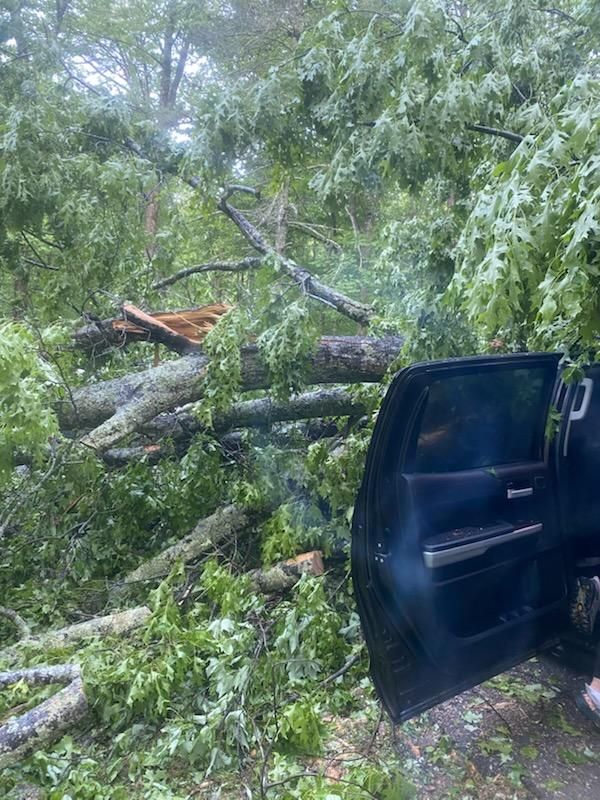
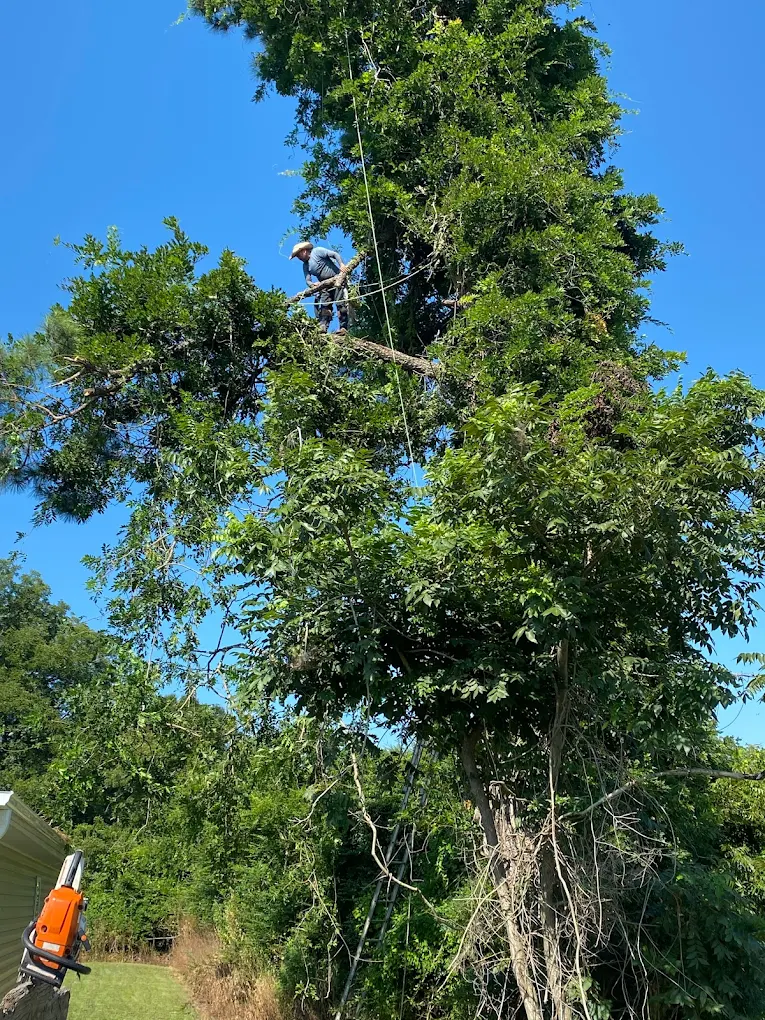
Storm Season and Coastal Risk in the Cape Fear Region
Cape Fear sits directly in the crosshairs of Atlantic hurricane tracks, and the sandy, water-table-close soils in neighborhoods like Ogden and Castle Hayne give roots less grip than inland clay. Species that tolerate occasional saturation without losing structural integrity — live oak, longleaf pine, bald cypress — consistently outperform fast-growing alternatives when the wind speeds climb above 80 mph.
Water oak removal before storm season — Masonboro Loop Road
When Tree Removal Costs Jump Fast
| Situation | Why Cost Increases |
|---|---|
| Crane Required | Expensive equipment + setup time |
| Tree Near Power Lines | Additional safety complexity |
| Emergency Removal | Urgency + danger |
| Limited Access | Slower manual work |
| Storm-Damaged Tree | Higher climbing risk |
📊 Wilmington Pricing Quick Reference
Updated: June 2026 · Source: TreeQuotePro Cape Fear market data
Hurricane-Resistant Trees Cape Fear NC: What Survives and What Doesn't (2026 Guide)
After 20+ years of post-storm work across Wilmington, Leland, and the Cape Fear region, I've walked hundreds of yards the morning after a hurricane. The pattern is always the same — certain trees are standing, certain trees are not. This guide is built on that field experience, not just textbook data. If you're deciding what to plant or what to remove before storm season, the table below gives you a starting cost reference for the removals that matter most.
| Tree Situation | Estimated Cost Range |
|---|---|
| Remove failing water oak (40–60 ft) | $800 – $1,600 |
| Remove leaning loblolly pine (60–80 ft) | $1,200 – $2,400 |
| Emergency storm debris clearing (per tree) | $500 – $1,800 |
| Stump grinding after removal | $150 – $350 |
For context on what drives these numbers after a named storm, see our breakdown of hurricane tree damage in Wilmington NC.
The Hurricane-Resistant Trees Cape Fear NC Homeowners Should Know
Not all trees are equal when a Cat 2 or Cat 3 makes landfall near Wrightsville Beach. Here are the species that consistently perform.
Live Oak — The Undisputed Champion
Live oak (Quercus virginiana) is the tree I point to every single time. Its broad, low-spreading canopy is aerodynamic by nature — wind moves through and around it rather than slamming a vertical column of foliage. More importantly, the root system fans out wide and low, gripping sandy Cape Fear soil in a way that upright-rooted species simply cannot match.
In Landfall and Porters Neck, I have watched mature live oaks come through direct wind events with nothing more than minor limb loss. The same storm took down water oaks and loblolly pines three lots away. If you're choosing one hurricane-resistant tree for Cape Fear NC, this is it.
If a live oak on your property has structural concerns — cavities, included bark, root damage from construction — don't assume it will hold. Get it assessed. You can review live oak removal costs in Wilmington NC to understand what proactive removal runs versus emergency work after a storm.
Longleaf Pine vs. Loblolly Pine
This is where homeowners get into trouble. Longleaf pine (Pinus palustris) has a deep taproot and genuinely earns its place among storm resistant trees in Wilmington NC. Loblolly pine (Pinus taeda) grows faster, gets planted everywhere, and has a much shallower root system — especially in the high water table soils of Castle Hayne and Ogden.
After Hurricane Florence and Dorian, the majority of pine failures Ramon and Miguel responded to were loblolly. If you have large loblolly pines within striking distance of your roof, storm season is the wrong time to find out how shallow those roots actually are.
Bald Cypress and Water Oak — Know the Difference
Bald cypress handles saturation beautifully and holds well in storms when properly sited away from structures. Water oak is a different story. It's a fast grower, common throughout Wilmington neighborhoods, and also one of the earliest species to develop internal decay. A water oak that looks fine from the street can be hollow at the core. Our common Wilmington NC tree identification guide can help you tell them apart before you make planting or removal decisions.
Dogwood in Sheltered Positions
Flowering dogwood (Cornus florida) is not a front-line storm tree, but in sheltered positions — courtyards, interior lots, leeward sides of larger trees — it performs reasonably well. Its small stature and flexible branching mean it bends rather than breaks. Don't plant it as a standalone specimen exposed to open wind, and don't expect it to anchor anything. Plant it as part of a layered landscape where larger trees take the first blow.
Hurricane-Resistant Trees Cape Fear NC: What to Plant vs. What to Remove
The best time to address tree risk is before you're reacting to a storm. Here's the simple framework Ramon and Miguel use when advising Wilmington homeowners:
Plant:
- Live oak (long-term investment, 50+ year canopy)
- Longleaf pine (native, deep-rooted, fire and storm adapted)
- Bald cypress (wet areas, excellent storm record)
- Sabal palm (surprisingly resilient, flexible trunk absorbs wind energy)
Assess and potentially remove:
- Large loblolly pines near rooflines
- Mature water oaks (especially any with crown dieback, lean, or soft bark)
- Bradford pear (notoriously weak branch unions, not a best tree for hurricane zone NC)
- Leyland cypress (shallow roots, massive wind sail surface)
Use our hurricane season tree checklist for Wilmington NC to walk your property systematically before June.
Frequently Asked Questions
What are the best hurricane-resistant trees for Cape Fear NC? Live oak leads the list by a wide margin, followed by longleaf pine, bald cypress, and sabal palm. These species share deep or spreading root systems and growth forms that don't catch wind like a sail. They've earned that reputation through actual storm performance in the Cape Fear region, not just lab testing.
Why do water oaks fail so often in Wilmington storms? Water oaks grow quickly and look healthy on the exterior well after internal decay has begun. They also have a relatively upright root structure that doesn't anchor as effectively in sandy coastal soil. After every major storm, water oaks make up a disproportionate share of the trees Ramon and Miguel remove from rooftops and fences throughout Wilmington.
How far in advance should I remove a high-risk tree before hurricane season? Ideally, address any known risk trees by April — before peak season demand drives up wait times and before the first named storms appear on the forecast. Emergency removals after a storm typically cost significantly more than planned work, and contractor availability drops fast once a major storm makes landfall.
Can I plant trees that will actually help protect my home from storm wind? Yes. A well-placed windbreak of live oaks or longleaf pines on the windward side of a property can reduce wind pressure on structures. The key is proper spacing and allowing time for root establishment — newly planted trees don't provide storm protection for at least five to seven years. Think of it as a long-term investment in your property's resilience.
If a tree on your property has you worried heading into storm season, don't wait until a watch is posted. Ramon and Miguel bring 90 five-star Google reviews and 20+ years of Cape Fear field experience to every assessment. Get a no-pressure quote today at treequote.pro and know what you're dealing with before the next storm makes the decision for you.
TreeQuotePro — Connecting Wilmington homeowners with trusted local tree service. Serving Wilmington, Leland, Ogden, Hampstead, Castle Hayne, and Porters Neck.
More Cost Guides Guides →
See What YOUR Tree Costs
Upload a photo and get an instant estimate based on these exact pricing ranges.
✓ No phone calls required · ✓ Free for homeowners · ✓ 90 five-star Google reviews