Selling a House With a Dead or Dangerous Tree in Wilmington NC (2026)
A dead or hazardous tree on your Wilmington property can stall a sale, trigger appraisal flags, or kill buyer financing. Here's how to weigh removal costs against price reductions before you list.
By Delano, TreeQuotePro · Price ranges come from photo estimates and local job data. How we price
Average Tree Removal Pricing
Why a Dead Tree Affects Your Wilmington Home Sale
Wilmington's sandy coastal soil gives large trees a shallow root base, making dead specimens far more unstable than they'd be in the Piedmont. Buyers, appraisers, and lenders all respond differently to a dead tree depending on proximity to the structure — one leaning toward the roofline is a different conversation than one standing in the back corner of a half-acre lot.
Storm Season and Coastal Risk in the Cape Fear Region
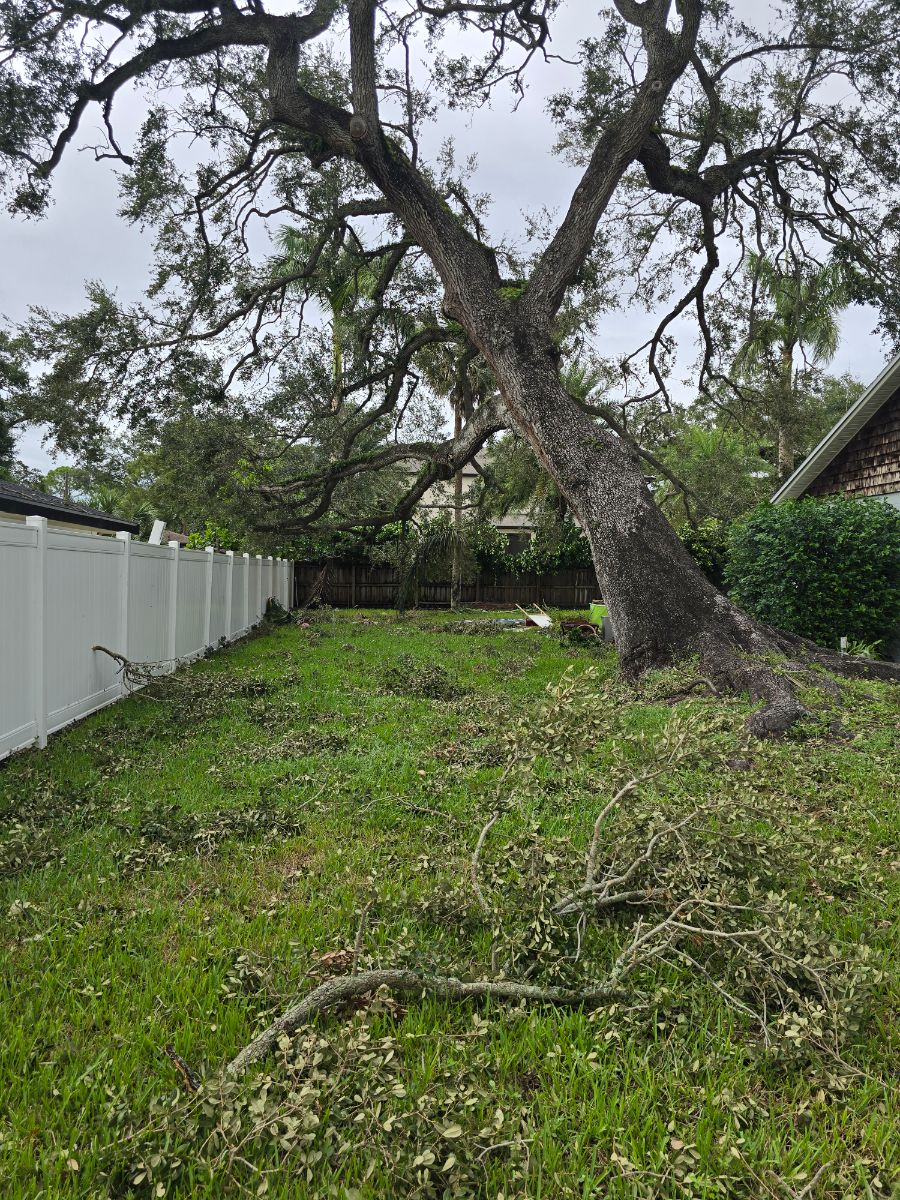
Listing a home in Wilmington's active hurricane corridor with a dead or structurally compromised tree is a harder sell than in most markets. After Florence and Dorian, buyers here have seen what a dead oak can do to a roof, and some lenders will flag obvious hazard trees as a condition of financing — especially on FHA and VA loans.
Example: Dead water oak leaning toward roof — Ogden
Illustrative example based on typical Cape Fear pricing, not a specific customer's job.
When Tree Removal Costs Jump Fast
| Situation | Why Cost Increases |
|---|---|
| Crane Required | Expensive equipment + setup time |
| Tree Near Power Lines | Additional safety complexity |
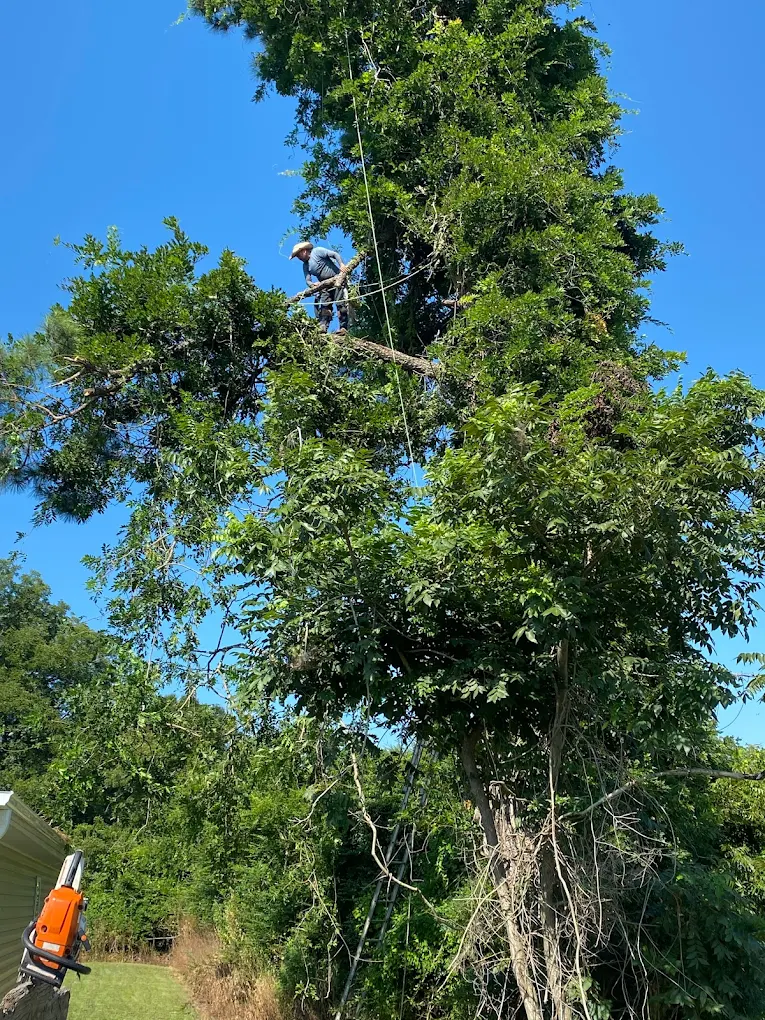
| Emergency Removal | Urgency + danger |
| Limited Access | Slower manual work |
| Storm-Damaged Tree | Higher climbing risk |
📊 Wilmington Pricing Quick Reference
Updated: June 2026 · Source: TreeQuotePro Cape Fear market data
Selling House With Dead Tree NC: What Wilmington Sellers Need to Know (2026)
If you're selling house with dead tree nc conditions on your property, you're facing a decision that can affect your listing price, your appraisal, and whether the sale closes at all. In Wilmington and the Cape Fear region, dead and hazardous trees come up in nearly every other home inspection report — the combination of sandy soil, mature water oaks, and back-to-back hurricane seasons means sellers deal with this constantly. Here's the practical breakdown on what to do before you list.
Dead Tree Removal Cost Snapshot
| Tree Size or Situation | Estimated Cost Range |
|---|---|
| Small dead tree (under 30 ft) | $300 – $700 |
| Medium dead tree (30–60 ft) | $700 – $1,500 |
| Large dead tree (60–80 ft) | $1,500 – $3,000 |
| Hazard tree near structure (crane required) | $2,000 – $4,500 |
| Stump grinding (add-on) | $100 – $350 |
For full dead tree removal pricing in our area, see our guide on dead tree removal cost in Wilmington NC.
NC Disclosure Rules and Selling House With Dead Tree NC
North Carolina uses a mandatory residential property disclosure form. Sellers are required to disclose known material defects — and a dead or structurally hazardous tree that poses a risk to structures, utilities, or neighboring property almost certainly qualifies. Failing to disclose a hazard tree you were aware of can expose you to post-closing liability.
That doesn't mean every dead tree needs a line on the disclosure form. A small dead cherry in a back corner that poses no risk to structures is a different situation than a 70-foot dead water oak leaning toward the master bedroom. When in doubt, disclose. That's not legal advice — that's practical seller protection.
The question of do I have to remove dead tree before selling doesn't have a single answer in NC. The law doesn't mandate pre-sale removal. But your buyer's lender might.
How a Hazardous Tree Affects Appraisal and Financing
This is where sellers often get blindsided. FHA and VA appraisers are specifically trained to flag safety hazards — and a dead tree visibly leaning toward or overhanging a structure is exactly the kind of item that generates a repair condition. When that happens, the lender won't release funds until the hazard is resolved. That puts you in the position of either removing the tree on the buyer's timeline or renegotiating the deal.
Conventional appraisals are slightly less prescriptive, but an appraiser noting a "hazardous tree condition" can still affect the final valuation. If you're curious how trees — living and dead — factor into Wilmington home values more broadly, our post on trees and property value in Wilmington NC covers that angle in depth.
Remove Before Listing or Credit the Buyer?
This is the real math question sellers ask. Here's how to think through it:
Remove before listing: You control the outcome, the timeline, and the quality of the work. You also eliminate the item from the inspection report entirely, which reduces negotiating leverage for the buyer. A tree that would have cost $800 – $1,500 to remove doesn't become a $3,000 buyer credit demand during due diligence.
Credit the buyer instead: This works in a strong seller's market or when removal is genuinely complex and you'd rather let the buyer manage it. The risk is that buyers almost always inflate credit demands beyond actual cost. A removal that Ramon and Miguel would handle for $1,200 – $1,800 becomes a $3,500 credit request from a nervous buyer who got one overpriced quote.
The math in practice: Most sellers in the Landfall, Porters Neck, and Masonboro markets come out ahead by removing the tree before listing. The cost is controlled, the inspection report is cleaner, and the listing photos don't feature a dead tree in the yard.
Identifying Selling House With Dead Tree NC Warning Signs
Not every dead-looking tree is fully dead — and not every dead tree is an immediate hazard. Knowing what you're dealing with before you list matters. Our guide on signs a tree needs to be removed in Wilmington walks through the specific indicators: bark slippage, crown dieback, fungal growth at the base, and lean direction relative to structures.
Ramon and Miguel have 20+ years of Cape Fear field experience and 90 five-star Google reviews from Wilmington homeowners. They can walk your property before listing and give you a clear picture of what buyers and inspectors will see.
What Tree Disclosure NC Home Sale Situations Actually Look Like
The tree disclosure NC home sale conversation usually surfaces in one of three ways: the seller discloses it upfront, the inspector flags it during due diligence, or the appraiser conditions the loan on removal. The first scenario gives you the most control. The second gives you moderate control. The third puts the timeline entirely in the buyer's hands.
For general tree removal pricing context across different species and sizes, our Wilmington tree removal cost guide for 2026 is a good reference.
Frequently Asked Questions
Do I have to remove a dead tree before selling my house in NC? NC law doesn't require pre-sale removal, but your buyer's lender — particularly on FHA or VA loans — may condition financing on removal of a hazard tree. Removing it before listing eliminates that uncertainty and keeps the deal on your timeline.
Does a dead tree have to be disclosed in a NC home sale? If the dead tree poses a known risk to structures, utilities, or neighboring property, it likely qualifies as a material defect under NC's disclosure requirements. Disclose anything you're uncertain about — it's the safer position for sellers.
How much does it cost to remove a dead tree in Wilmington before listing? Most dead tree removals in the Wilmington area run $300 – $3,000 depending on size, location, and whether crane access is needed. Add $100 – $350 for stump grinding. See our full breakdown of dead tree removal costs in Wilmington NC.
Will a dead tree hurt my home's appraised value? A hazard tree near a structure can result in an appraisal condition, which effectively ties up the loan until the issue is resolved. Even without a formal condition, an appraiser may note the hazard and adjust value downward. Removing it before the appraisal is almost always the cleaner outcome.
Can I just offer a buyer credit instead of removing the tree? You can, but buyers typically demand credits that exceed actual removal cost — sometimes by double. If the job is straightforward, removing it yourself with a trusted local provider gives you cost control that a credit negotiation won't.
Ready to get a clear picture of what that dead tree will actually cost to remove before your listing goes live? Get a free estimate at treequote.pro and see why Wilmington sellers trust Ramon and Miguel to handle hazard trees before closing day.
TreeQuotePro — Connecting Wilmington homeowners with trusted local tree service. Serving Wilmington, Leland, Ogden, Hampstead, Castle Hayne, and Porters Neck.
More Cost Guides Guides →
See What YOUR Tree Costs
Upload a photo and get an instant estimate based on these exact pricing ranges.
✓ No phone calls required · ✓ Free for homeowners · ✓ 90 five-star Google reviews