Dead Tree Removal Cost in Wilmington NC (2026 Guide)
Dead tree removal in Wilmington typically costs $400–$1,800 — often 20–40% more than removing a healthy tree of the same size. Dead wood is unpredictable, brittle, and dangerous to work on. The longer you wait, the worse it gets.
Average Tree Removal Pricing
Why Dead Trees Cost More to Remove Than Live Trees
Dead wood doesn't behave like live wood under a chainsaw. Brittle sections snap without warning under vibration or rigging tension. The upper trunk loses structural integrity first — and it's the furthest from the ground and hardest to control. Root systems continue decaying after the tree dies, so a tree that looked stable last month may have shifted underground. Hollow sections from beetle damage or fungal decay hide inside trunks that look solid from the outside. Every one of these factors means slower cuts, more rigging, and more crew time on every section.
How to Tell If Your Tree Is Dead — And Why It Matters Right Now
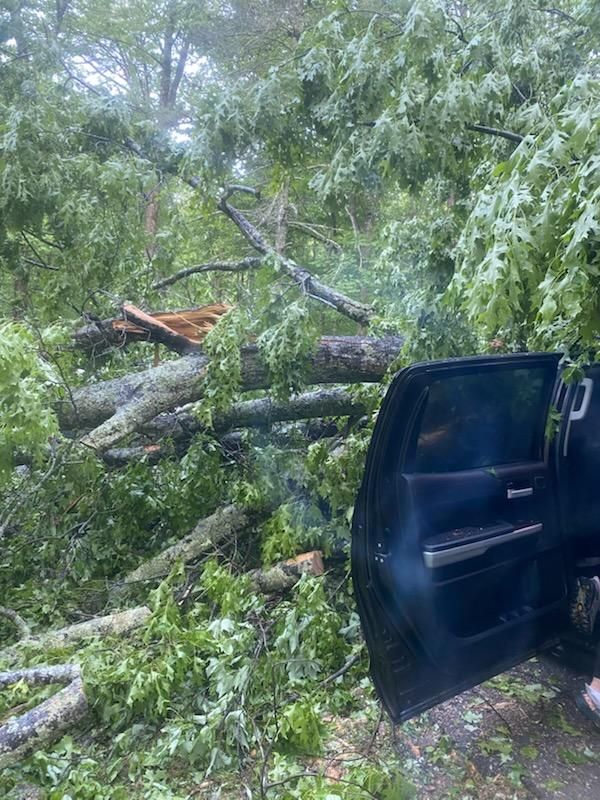
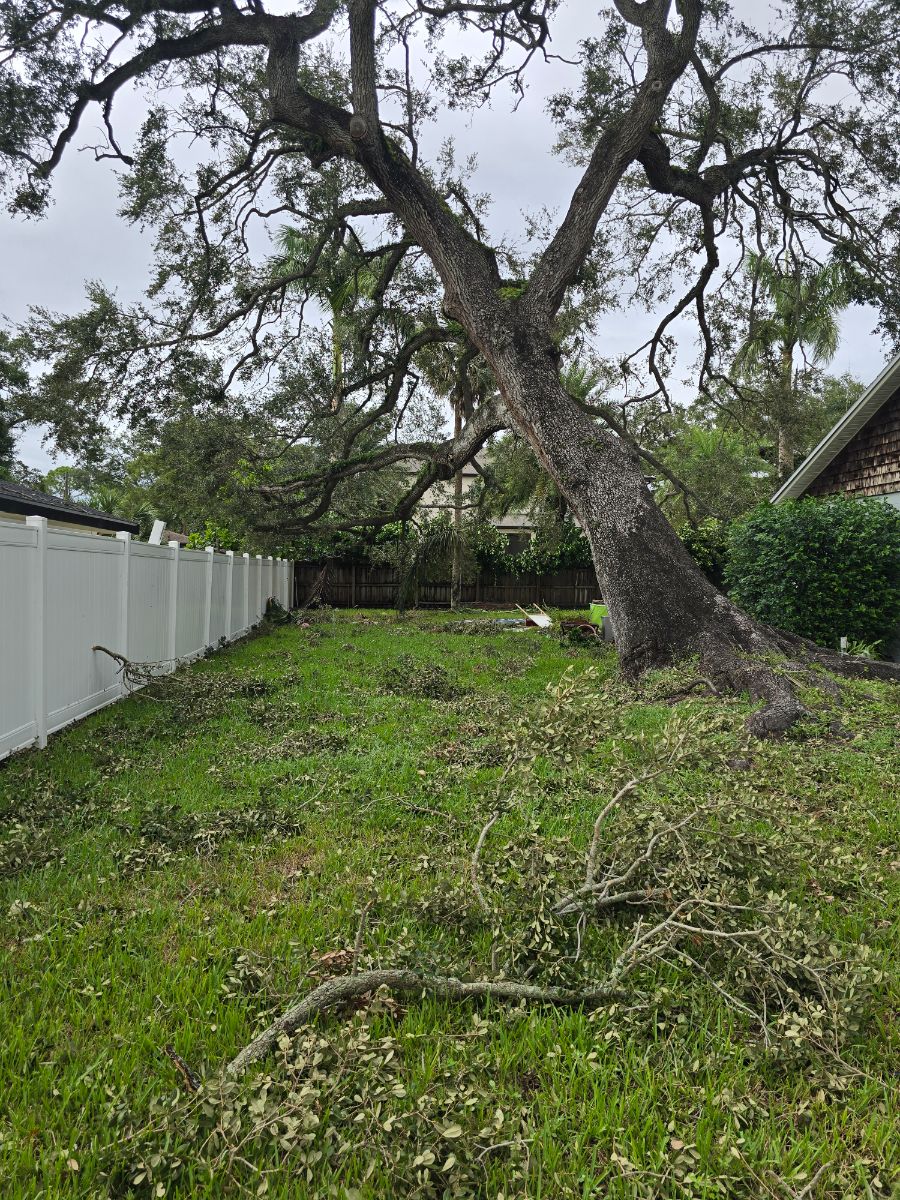
After Florence, Dorian, and Isaias, thousands of trees across New Hanover and Brunswick County took root damage that wasn't immediately visible — the tree kept its leaves, looked fine from the street, but internal decay was already underway. By the time a dead tree shows obvious signs from the ground, it has usually been structurally compromised for months. Missing leaf-out, bark peeling in sheets, and mushrooms at the base are the warnings most homeowners miss until the tree is already a falling risk.
Dead 65-ft Loblolly Pine — Ogden Neighborhood, Leaning Toward Fence
When Tree Removal Costs Jump Fast
| Situation | Why Cost Increases |
|---|---|
| Crane Required | Expensive equipment + setup time |
| Tree Near Power Lines | Additional safety complexity |
| Emergency Removal | Urgency + danger |
| Limited Access | Slower manual work |
| Storm-Damaged Tree | Higher climbing risk |
📊 Wilmington Pricing Quick Reference
Updated: June 2026 · Source: TreeQuotePro Cape Fear market data
Here's something most homeowners don't know: dead trees are more dangerous to remove than live trees. Not less. More.
I've been doing this work for over 20 years in Wilmington and coastal NC, and dead tree removals are the jobs where I slow down, not speed up. Dead wood is unpredictable. Brittle. It doesn't cut the way live wood cuts. A limb that should hold while we rig it can snap without warning. That unpredictability costs more — in time, in safety equipment, and in the care required to bring it down without it coming down on its own terms.
Here's what dead tree removal actually costs in Wilmington, and why waiting always makes it worse.
What Dead Tree Removal Costs in Wilmington NC
Expect to pay 20–40% more for a dead tree removal than a healthy tree of the same size. That premium reflects the additional rigging, slower cuts, and safety measures required when wood is no longer structurally predictable.
| Tree Size | Height Reference | Estimated Cost |
|---|---|---|
| Small dead tree | Under 30 ft — one-story house height | $300 – $650 |
| Medium dead tree | 30–60 ft — two to five stories | $650 – $1,300 |
| Large dead tree | 60–80 ft — taller than a telephone pole | $1,200 – $2,200 |
| Emergency (actively destabilizing) | Any size | $1,500 – $3,500+ |
If the tree has already started to fall or is in immediate danger of hitting a structure, you're in emergency removal territory — add 25–50% to standard rates.
Why Dead Trees Cost More to Remove Than Live Trees
Live wood behaves predictably under a chainsaw. A skilled climber knows how it will cut, how it will hold, how it will fall when rigged properly.
Dead wood doesn't follow those rules.
Brittle sections snap unexpectedly. A dead branch that looks solid can shatter under the vibration of a chainsaw or the tension of a rigging rope. We can't trust it the way we'd trust live wood. That means slower cuts, more rigging points, and more crew attention on every section.
The upper trunk is the most dangerous part. In a dead loblolly pine — the most common dead tree removal we do in Wilmington — the top of the tree is often the first section to lose structural integrity. That's also the section furthest from the ground and hardest to control. Getting it down safely without it coming off in an uncontrolled way takes experience and time.
Root failure happens without warning. A dead tree's root system continues to decay even after the tree dies. A tree that looked stable last month may have shifted significantly underground. We assess root integrity before climbing on every dead tree job — something we don't do on the same scale for healthy trees.
Insects and decay create hollow sections. Southern pine beetle damage, fungal decay, and moisture penetration can leave sections of the trunk hollow. A hollow section that looks like solid wood from the outside is a trap for an inexperienced crew.
How to Tell If Your Tree Is Dead
Not sure if your tree is actually dead or just stressed? Here's the fast version:
The scratch test. Find a small twig. Scratch through the outer bark with your fingernail. Green or white tissue underneath — alive. Brown, dry, crumbling — dead in that section. Test several spots throughout the tree.
No leaves when there should be. If your tree should be leafed out by late spring in Wilmington and it's showing nothing — or showing leaves only on a few isolated branches — that's a serious warning sign.
Bark peeling in sheets. Most trees don't shed bark. Peeling in large sections is a sign of significant stress or death.
Mushrooms at the base. By the time you see fungal growth at the base, internal decay is already well underway. This is an urgent situation.
For the complete guide to warning signs, read how to tell if a tree is dead or dying. If your tree is showing signs of decline but hasn't fully died, that guide will help you understand how much time you have.
The Wilmington Dead Tree Problem
Dead trees are more common in coastal NC than most homeowners realize — and the reason is specific to our region.
After Florence, Dorian, and Isaias, thousands of trees throughout New Hanover and Brunswick County experienced root damage, trunk stress, and moisture infiltration that wasn't immediately visible. The tree kept its leaves through the following season. Looked fine from the street. But internal decay was already underway.
I've seen trees die slowly over 3–4 years after a major storm without any visible external sign until a branch starts dropping. By the time a homeowner notices the tree is dead, it's often been dead — in parts — for longer than they know.
The southern pine beetle has also been active throughout coastal NC. A beetle-infested pine can go from healthy-looking to completely dead in a single growing season. The telltale signs are small boring holes in the bark and sawdust piles at the base — easy to miss if you're not looking for them.
What Changes Price Fastest — Dead Tree Snapshot
Real Wilmington Dead Tree Removal Jobs
Wilmington — dead 55-ft loblolly pine, open backyard, good equipment access: Tree had been dead approximately one year. Still structurally solid in the lower trunk. Quote range: $850–$1,100. Final cost: $950. Relatively straightforward for a dead tree job because decay hadn't progressed far.
Ogden — dead 70-ft pine, near fence line, beetle damage throughout: Beetle damage meant hollow sections in the upper trunk. Full rigging required top to bottom. Quote range: $1,400–$1,900. Final cost: $1,650. The beetle damage added significant complexity — couldn't trust any section without testing it first.
Porters Neck — dead water oak, 45 ft, partially uprooted after Dorian: Root ball had partially lifted on one side — tree was leaning toward the back fence at about 20 degrees. Emergency-adjacent situation. Final cost: $1,800. The partial uprooting meant ground conditions were unstable and approach had to be adjusted.
The Most Expensive Mistake Wilmington Homeowners Make With Dead Trees
Waiting to remove a dead tree because "it hasn't fallen yet." Every month a dead tree stands, the removal gets harder and more expensive. Decay progresses. Wood becomes more brittle. Root integrity degrades. What costs $900 to remove today costs $1,500 in 18 months.
And if it falls on its own — which it will, eventually — you're dealing with emergency removal costs plus whatever it damages. Your homeowner's insurance may not cover it if they determine you knew the tree was dead and failed to act.
Dead trees don't get better. They only get worse, more dangerous, and more expensive. Get the number now — it takes two minutes at treequote.pro.
Frequently Asked Questions
How much does dead tree removal cost in Wilmington NC? Dead tree removal in Wilmington typically costs 20–40% more than removing a healthy tree of the same size. A medium dead tree (30–60 ft) runs $650–$1,300. Large dead trees near structures can reach $2,200+. Emergency situations — actively falling or on a structure — run $1,500–$3,500+.
Why does dead tree removal cost more than live tree removal? Dead wood is structurally unpredictable. Brittle sections can snap unexpectedly under rigging tension. Upper trunk decay makes standard cut sequences dangerous. Root systems may be compromised. Crews work slower and use more rigging points — all of which adds time and cost.
How urgent is it to remove a dead tree in Wilmington? Very. Dead trees deteriorate continuously — each month that passes makes the removal harder, more expensive, and more dangerous. A dead tree near a structure should be addressed within weeks, not months. A dead tree in an open yard has more flexibility but should be scheduled within a season.
Will homeowners insurance cover dead tree removal in Wilmington? Only if the tree fell and caused structural damage to a covered structure. A standing dead tree — even one that's clearly hazardous — is considered homeowner maintenance and is typically not covered. If you knew the tree was dead and it falls and causes damage, your insurer may reduce or deny the claim.
Can a dead tree be left standing if it's not near anything? In some cases, yes — a dead tree far from any structure can be left as a wildlife habitat snag. But in coastal NC, where hurricane-force winds are a reality every season, even an isolated dead tree eventually becomes a projectile. Most tree professionals recommend removal within one to two seasons of confirmed death.
How do I know if my tree is dead or just dormant? The scratch test: scratch a small twig with your fingernail. Green tissue underneath means alive. Brown, dry material means dead in that section. Do this in several spots. A fully dormant tree will show green tissue somewhere. A dead tree won't. For more detail, see our guide on how to tell if a tree is dead or dying.
Follow us on Facebook for Wilmington tree pricing guides: TreeQuotePro on Facebook
Get an instant estimate for your dead tree: treequote.pro
TreeQuotePro — Connecting Wilmington homeowners with trusted local tree service. Serving Wilmington, Leland, Ogden, Hampstead, Castle Hayne, and Porters Neck.
More Tree Health Guides →
Know What Your Tree Project Should Cost
Upload a photo of your tree and get a local Wilmington price estimate in under 60 seconds.
✓ No phone calls required · ✓ Free for homeowners · ✓ 90 five-star Google reviews