Tree Near Power Lines in Wilmington NC — What It Costs and What to Do
Trees near power lines in Wilmington are the most complex and most expensive residential removal jobs in the market. Duke Energy coordination, safety setbacks, and the specialized rigging required when you can't drop anything in the direction of live lines can push costs well above a standard removal. Here's what to expect.
Average Tree Removal Pricing
Why Trees Near Power Lines Cost So Much More to Remove
The Duke Energy Process — What Wilmington Homeowners Need to Know
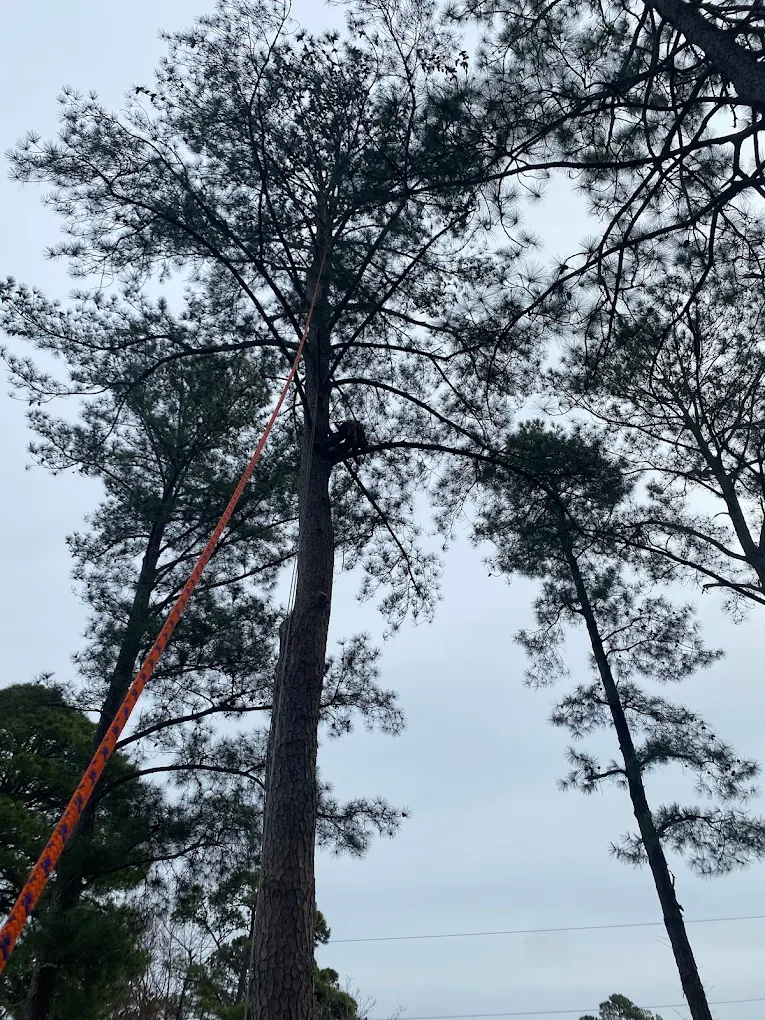
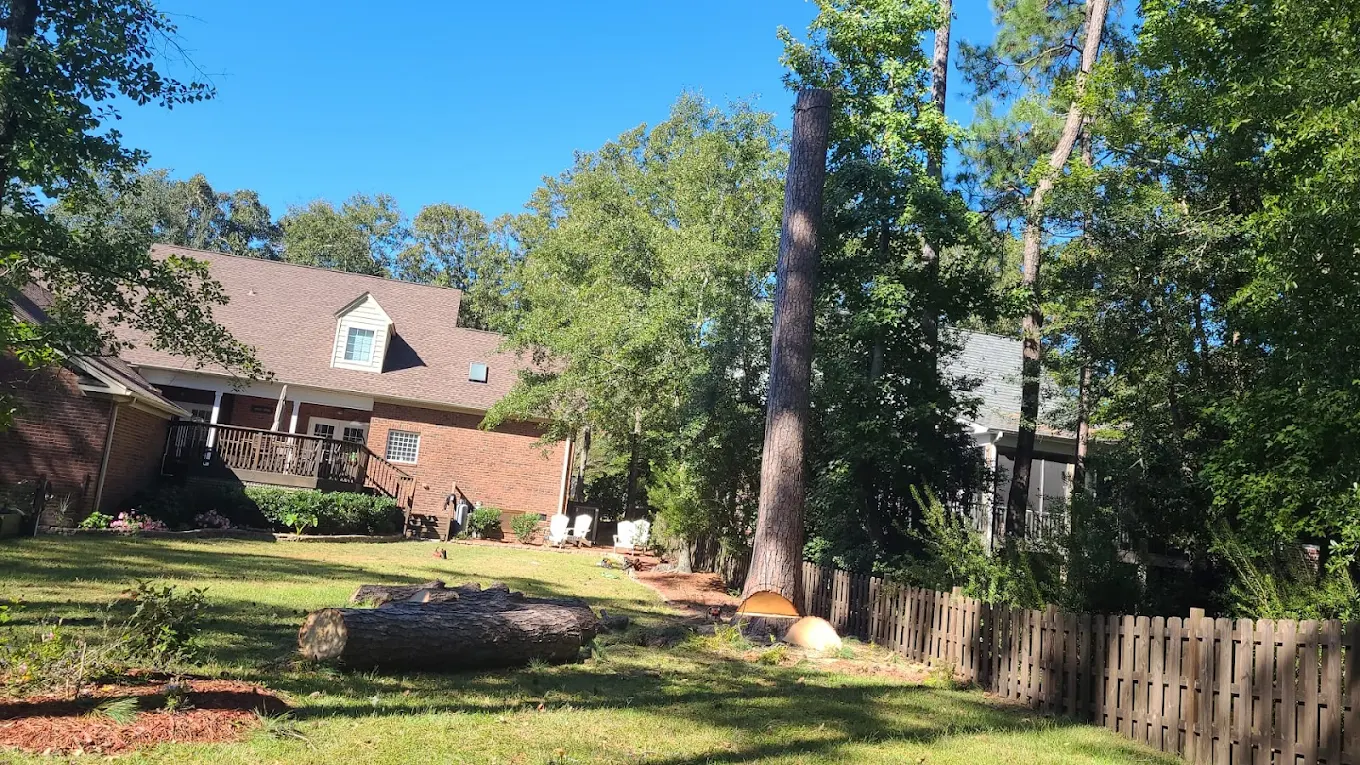
70-ft Pine Growing Into Distribution Lines — Ogden
When Tree Removal Costs Jump Fast
| Situation | Why Cost Increases |
|---|---|
| Crane Required | Expensive equipment + setup time |
| Tree Near Power Lines | Additional safety complexity |
| Emergency Removal | Urgency + danger |
| Limited Access | Slower manual work |
| Storm-Damaged Tree | Higher climbing risk |
📊 Wilmington Pricing Quick Reference
Updated: June 2026 · Source: TreeQuotePro Cape Fear market data
I want to be direct about something before anything else: if you have a tree touching or growing into power lines in Wilmington, do not attempt to deal with it yourself. No matter how comfortable you are with a chainsaw or how many trees you've dropped before. This is a different category of work entirely.
I've been doing this for over 20 years and I still treat power line jobs with more caution than any other removal. The risk isn't just falling — it's electrocution from contact with lines that may be energized even when they appear dead. A single mistake on a power line job can kill someone. That's why the process is different, the equipment is different, and the price is different.
Here's what you actually need to know as a Wilmington homeowner.
What Tree Removal Near Power Lines Costs in Wilmington NC
The price range on power line jobs is wider than any other category because the complexity varies enormously — a tree brushing a service drop is a fundamentally different job than a 90-foot pine growing into primary distribution lines.
| Situation | Estimated Cost |
|---|---|
| Tree trimming near secondary lines | $600 – $1,500 |
| Tree removal, service drop coordination only | $800 – $1,800 |
| Removal near secondary distribution lines | $1,200 – $2,800 |
| Removal near primary distribution lines | $2,000 – $4,500 |
| Emergency removal, lines already down | $3,000 – $7,000+ |
The crane guide covers crane removal costs in detail — many power line jobs end up requiring crane because the rigging constraints eliminate standard drop zones.
Why Trees Near Power Lines Cost So Much More
There are three specific things that drive cost on power line jobs that don't exist on standard removals.
One-directional rigging only. On a normal removal, a skilled crew has flexibility in how they rig and lower sections. Near power lines, one entire side of the tree is effectively off-limits for dropping anything. Every cut has to go away from the lines — which often means the only available drop zone is tight, awkward, or nonexistent. That constraint slows every cut and requires more rigging points throughout the entire job.
Slower, more deliberate work pace. On a standard job, once we've assessed the tree, we can work at a pace driven by efficiency. Near live lines, every cut is preceded by a deliberate assessment of what happens if this section moves unexpectedly. We work slower. We check twice. That's not inefficiency — it's the only responsible approach when a mistake has lethal consequences.
Duke Energy coordination adds time and scheduling complexity. Depending on the situation, work near primary lines requires either Duke Energy to de-energize the line or their crew to be present during removal. That coordination takes time — sometimes days, sometimes weeks depending on scheduling. Your tree removal project can't start until that's arranged.
Understanding the Lines on Your Property
Not all power lines are the same, and the type of line changes what's required.
Service drop — the lines that run from the utility pole to your house. These are the lines most homeowners see. They're lower voltage than distribution lines and typically insulated with a weather-resistant coating. Work near service drops is possible with proper precautions and doesn't always require Duke coordination, though we notify them on any job where our crew will be working in close proximity.
Secondary distribution lines — the mid-level lines running along streets and between poles. These carry more voltage than a service drop. Work near these requires notifying Duke Energy and following specific clearance protocols. In some cases they de-energize the line for the duration of the job.
Primary distribution lines — the top lines on the pole, often uninsulated, carrying the highest voltage. These are the lines responsible for the most serious accidents. No responsible tree crew works near primary lines without explicit coordination with Duke Energy. Duke Energy states clearly that no one should climb trees in the vicinity of power lines — this is non-negotiable regardless of how the lines appear.
Underground lines — not visible, but relevant if you're doing stump grinding after a line-adjacent removal. Always call 811 to have utilities marked before any ground work near where lines may be buried.
The Duke Energy Process for Wilmington Homeowners
If you have a tree that's growing into or threatening power lines, here's the process:
Step 1 — Submit a vegetation management request to Duke Energy. Duke has an online form specifically for this. For primary power lines, submit a request and Duke will follow up within 10 business days. For emergencies like fallen trees on primary lines, call by phone and they'll dispatch immediately.
Step 2 — Duke assesses the situation. They'll determine whether the tree qualifies for their vegetation management program, which covers trees that are a direct threat to their infrastructure. If it qualifies, they may trim or remove the threatening portion at no cost to you.
Step 3 — Coordinate your removal around Duke's timeline. If Duke handles the line-adjacent portion, your tree crew handles the remainder. If Duke isn't involved, your crew needs to work under the specific clearance protocols for the line type.
Important: Duke Energy's vegetation management covers trees that threaten their infrastructure — not necessarily the entire tree on your property. You may still need to hire a crew for the bulk of the removal after Duke addresses the line clearance.
What Changes Price Fastest — Power Line Snapshot
Real Wilmington Power Line Jobs
Ogden — 70-ft loblolly growing into distribution lines along back fence: Duke Energy notified, line assessment took 5 days. Crew worked from one side only — the line side was off limits throughout. Full day job for a 4-person crew. Final cost: $2,700. Without the line constraint this would have been a $1,400 job. The one-directional rigging requirement more than doubled the labor time.
Near Wrightsville Beach — large live oak, canopy growing over primary lines: This one required Duke Energy to de-energize the line for a 4-hour window. Coordinating that window took two weeks. Crew worked quickly once the window opened. Total cost including the coordination delay: $3,800. The tree itself was a 2-hour job — the coordination was the expensive part.
Masonboro — dead pine leaning toward service drop: Service drop situation — no Duke coordination required but standard precautions throughout. Tree was dead, which added the brittle-wood complexity on top of the line proximity. Final cost: $1,600. Manageable job because it was a service drop, not distribution lines.
The Most Dangerous Mistake Wilmington Homeowners Make
Every few years in this market I hear about a homeowner or a neighbor who tried to handle a line-adjacent tree themselves — either because they thought it looked manageable or because they got a quote and decided to DIY it. The outcomes range from property damage to fatalities.
Power lines that appear dead or insulated are not reliably safe to work near. Insulation degrades. Lines carry current from multiple directions. A tree branch conducting electricity doesn't announce itself before it kills someone.
If your tree is near lines, the cost of hiring a properly equipped crew with Duke Energy coordination is not optional overhead — it's what makes the job survivable. Upload a photo to treequote.pro to get a starting estimate, then be upfront with the provider that lines are involved when they follow up.
Frequently Asked Questions
How much does tree removal near power lines cost in Wilmington NC? Expect to pay 40–150% more than a standard removal of the same tree. Jobs near secondary distribution lines run $1,200–$2,800. Jobs requiring Duke Energy coordination for primary lines run $2,000–$4,500+. Emergency situations with lines already down can reach $7,000.
Will Duke Energy remove my tree for free if it's near power lines? Duke Energy will trim or remove vegetation that directly threatens their infrastructure at no cost to the property owner. However this covers the portion of the tree that threatens their lines — not necessarily the entire tree. You may still need to hire a crew for the rest of the removal.
Can I trim a tree near power lines myself in Wilmington NC? No. Duke Energy explicitly states that no one should climb trees in the vicinity of power lines regardless of appearance. Even service drops carry enough current to be lethal. Any work near power lines should be done by a professional crew with proper training and Duke Energy notification.
How do I contact Duke Energy about a tree near my power lines in Wilmington? Submit a vegetation management request through Duke Energy's online portal at duke-energy.com. For primary line threats, they follow up within 10 business days. For emergencies — fallen trees on lines — call their emergency line directly for immediate dispatch.
Does homeowners insurance cover tree removal near power lines in Wilmington? If the tree fell and caused structural damage to your home, standard homeowners insurance typically covers removal costs. If the tree is a standing hazard near lines but hasn't fallen, it's typically considered homeowner maintenance and is not covered. Document everything with photos and contact your insurer before any cleanup if a storm has caused the situation.
How close to power lines is too close for a tree in Wilmington? Duke Energy classifies any tree that could contact lines by growing or falling into them as a danger tree — regardless of its current health. A tree within falling distance of primary distribution lines is a danger tree. For secondary lines and service drops, the closer the canopy is to the lines, the more urgent the situation.
Follow us on Facebook for Wilmington tree pricing guides: TreeQuotePro on Facebook
Get an instant estimate for your tree: treequote.pro
TreeQuotePro — Connecting Wilmington homeowners with trusted local tree service. Serving Wilmington, Leland, Ogden, Hampstead, Castle Hayne, and Porters Neck.
More Dangerous Trees Guides →
Know What Your Tree Project Should Cost
Upload a photo of your tree and get a local Wilmington price estimate in under 60 seconds.
✓ No phone calls required · ✓ Free for homeowners · ✓ 90 five-star Google reviews