How Close Can a Tree Be to a House Before It Needs to Come Down?
The general rule is 20 feet for large trees, 6–10 feet for small trees. But in Wilmington, sandy coastal soil, hurricane exposure, and the sheer size of coastal loblolly pines and live oaks mean the real answer is more complicated than a single number. Here's how to think about it — and what it costs to fix.
Average Tree Removal Pricing
The 20-Foot Rule — And Why It Doesn't Tell the Whole Story in Wilmington
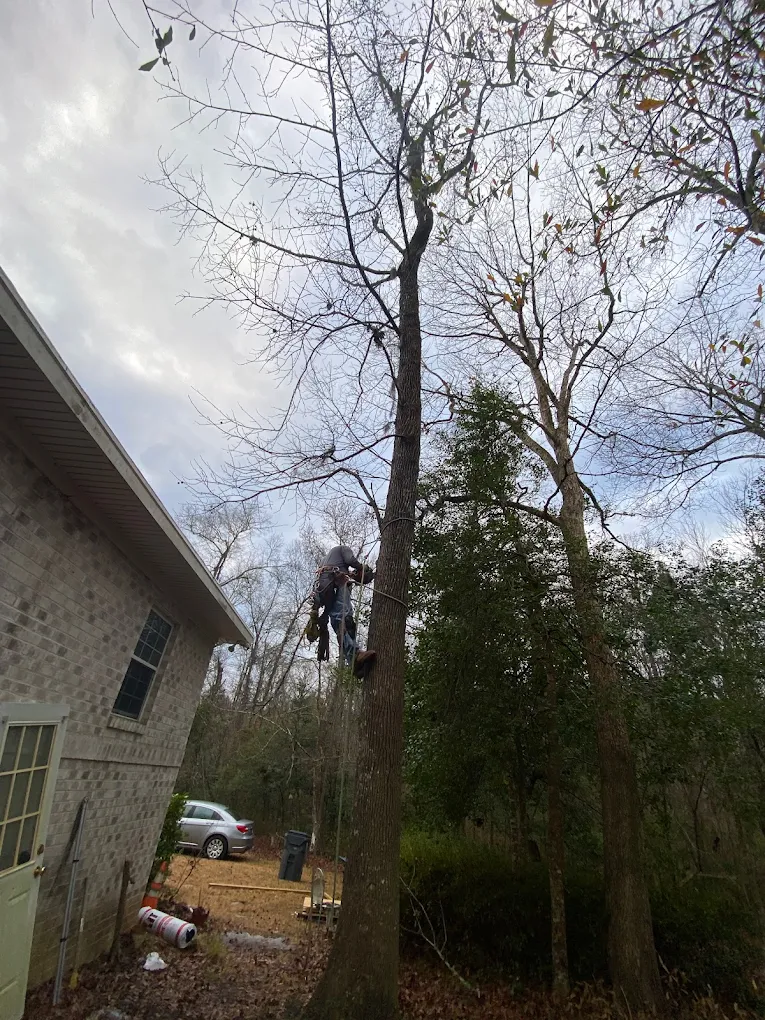
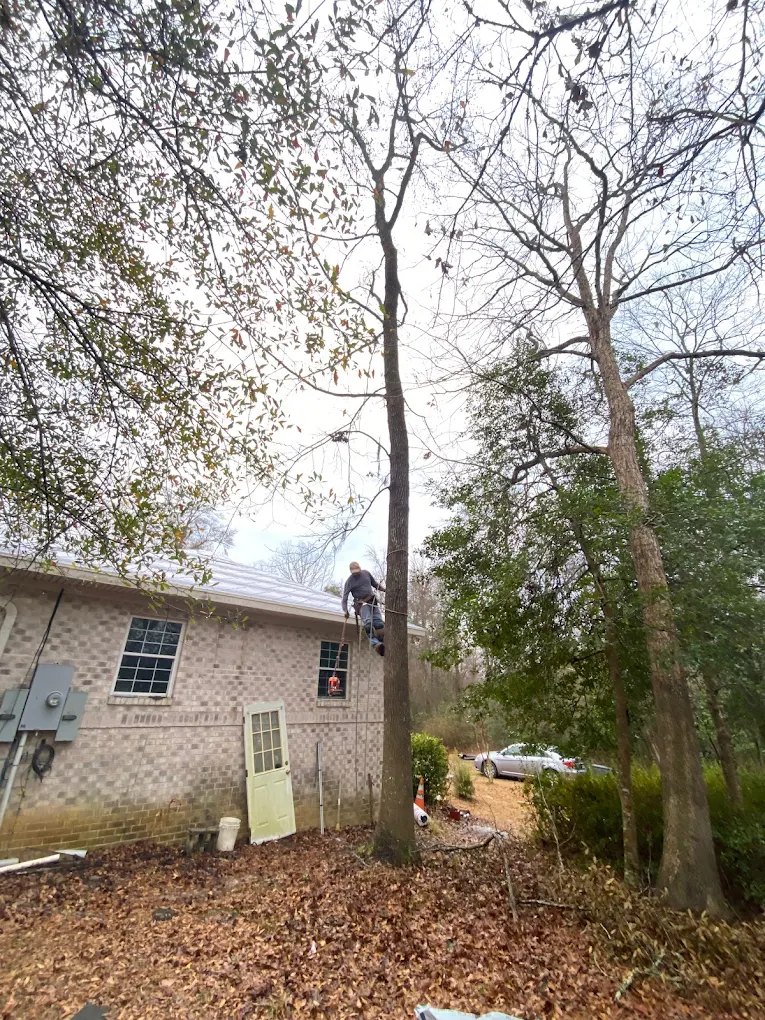
When Distance Doesn't Matter — The Trees That Are Dangerous Regardless
65-ft Loblolly Pine, 12 Feet From Back of House — Masonboro
When Tree Removal Costs Jump Fast
| Situation | Why Cost Increases |
|---|---|
| Crane Required | Expensive equipment + setup time |
| Tree Near Power Lines | Additional safety complexity |
| Emergency Removal | Urgency + danger |
| Limited Access | Slower manual work |
| Storm-Damaged Tree | Higher climbing risk |
📊 Wilmington Pricing Quick Reference
Updated: June 2026 · Source: TreeQuotePro Cape Fear market data
I've been asked this question more times than I can count over 20 years of doing tree work in Wilmington: "Is my tree too close to my house?"
The textbook answer is simple. Large trees should be at least 20 feet from your house. Small trees like dogwood can be as close as 6 feet.
But that answer was written for the average American yard — not for a coastal North Carolina property with a 75-foot loblolly pine in sandy soil that's been through three major hurricanes. In Wilmington, the distance question is more nuanced than any single number can capture.
Here's how I actually think about it when I'm standing in someone's backyard.
The Distance Guidelines — What They Actually Mean
These numbers come from arborists and university extension programs and they're a reasonable starting point:
| Tree Size | Minimum Safe Distance From House |
|---|---|
| Small tree (under 25 ft at maturity) | 6 – 10 feet |
| Medium tree (25–50 ft) | 15 – 20 feet |
| Large tree (50–80 ft) | 20 – 30 feet |
| Very large tree (80 ft+) | 30 – 50 feet |
These distances account for two things: where branches can reach, and how far a tree can fall. A 70-foot loblolly pine can fall 70 feet. If it's 20 feet from your house and falls toward it, it lands on your roof.
But here's what the guidelines don't account for: which direction the tree is likely to fall, how compromised the root system is, and what coastal NC conditions do to both of those variables.
The 20-Foot Rule — And Why Wilmington Changes the Math
The 20-foot rule assumes a tree with a healthy root system in stable soil. In Wilmington, neither of those assumptions holds consistently.
Sandy coastal soil gives roots less grip than clay. A loblolly pine 25 feet from your house in Raleigh clay soil is a different situation than the same tree 25 feet from your house in the sandy soil off Masonboro Loop Road. The Raleigh tree has better root anchoring. The Wilmington tree is more susceptible to root ball failure under storm load.
Hurricane exposure compounds over time. A tree that's been through Florence, Dorian, and Isaias has experienced cumulative root stress that doesn't show on the surface. The root ball may have partially shifted in each storm, re-anchoring in a slightly different position. The tree looks fine. But its effective resistance to the next storm is lower than it was five years ago.
Our trees grow taller than the guidelines assume. When the University of Maryland Extension says large trees should be 20 feet from your house, they're thinking about 50-foot maples. Wilmington's dominant species — loblolly pines — routinely hit 70 to 90 feet. The fall radius of a 90-foot pine is nearly three times that of the tree those guidelines were written for.
The Five Situations That Matter More Than Distance
Here's how I actually assess a tree's risk in relation to a house. Distance is one factor — these are the ones that matter more.
1. The lean direction. A 30-foot pine leaning directly toward your house is more dangerous than a 70-foot pine leaning away from it. The question isn't just how close — it's which way is it going when it comes down? Any new or worsening lean toward your house should be assessed immediately. See our leaning tree guide for warning signs.
2. Root system integrity. Soil heaving or cracking near the base, exposed roots on one side, or mushroom growth at the base are all signs the root system is compromised. A compromised root system on a tree that's 30 feet from your house is more urgent than a healthy tree at 15 feet.
3. Canopy overhang. Branches over your roofline are a problem regardless of where the trunk is. Branches rubbing shingles cause slow damage. Any branch in striking distance of your roof during high winds is a hazard. A tree that's 25 feet from your house at the trunk but has a canopy spreading over your roof is effectively closer than the trunk measurement suggests.
4. Dead wood in the canopy. A tree that appears alive but carries significant dead branches is a specific risk — dead branches fall without warning, in any wind condition, onto whatever is below them. If your tree is over your deck, your driveway, or your kids' play area, identifying dead wood is more important than measuring trunk distance.
5. Storm history. As I mentioned — if that tree went through Florence or Dorian without a professional assessment since, the distance question needs to be asked alongside the structural integrity question.
What It Costs to Fix — By Situation
Not every close tree needs to come down. Here's how the options break down:
Trimming for clearance — If the tree is healthy and structurally sound but branches are too close to your roofline, proper trimming can create safe clearance without removing the tree. This is usually the right answer for healthy trees that have grown into your space over time. Cost: $400–$1,500 depending on tree size.
Root pruning — For trees where roots are approaching your foundation but the tree itself is valuable, root pruning creates a barrier. This works best on younger trees with shallower root systems. Less effective on mature loblolly pines with deep, established root systems.
Removal — When the tree is within the danger zone, structurally compromised, dead, or when no amount of trimming creates adequate clearance, removal is the answer. Cost increases significantly the closer the tree is to the house because every section has to be rigged and lowered with more precision. For current tree removal cost in Wilmington, see our complete 2026 pricing guide.
What Changes Price Fastest — Proximity Snapshot
Real Wilmington Jobs — Proximity Scenarios
Ogden — pine 8 feet from back of house, healthy tree: Homeowner noticed the tree during a Memorial Day cookout. Tree was healthy but clearly too close. Trimming wasn't enough given the proximity. Removal quote: $1,450. Took one day. No structural issues during removal. Homeowner wished they'd done it two years earlier when the quote would have been $200 less and the tree was easier to work with.
Porters Neck — live oak, canopy over pool and roof, trunk 18 feet away: The trunk distance technically passed the 20-foot rule. The canopy didn't. Branches extending 25 feet from the trunk put sections directly over the pool enclosure and within 5 feet of the roofline. Full rigging job. Final cost: $2,200. This is why I tell homeowners to measure canopy reach, not just trunk distance.
Masonboro — before and after:
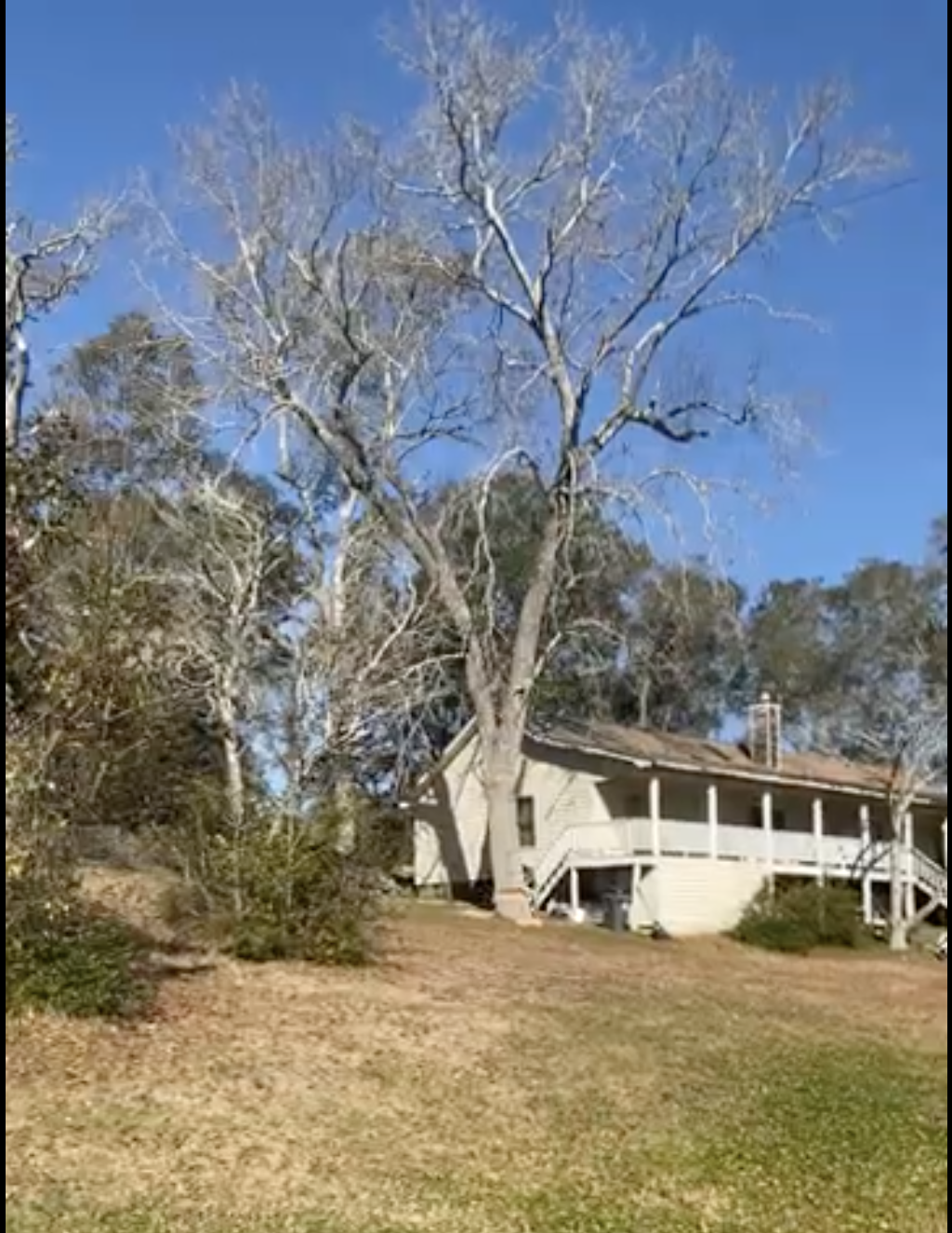
Before — tree within 12 ft of roofline
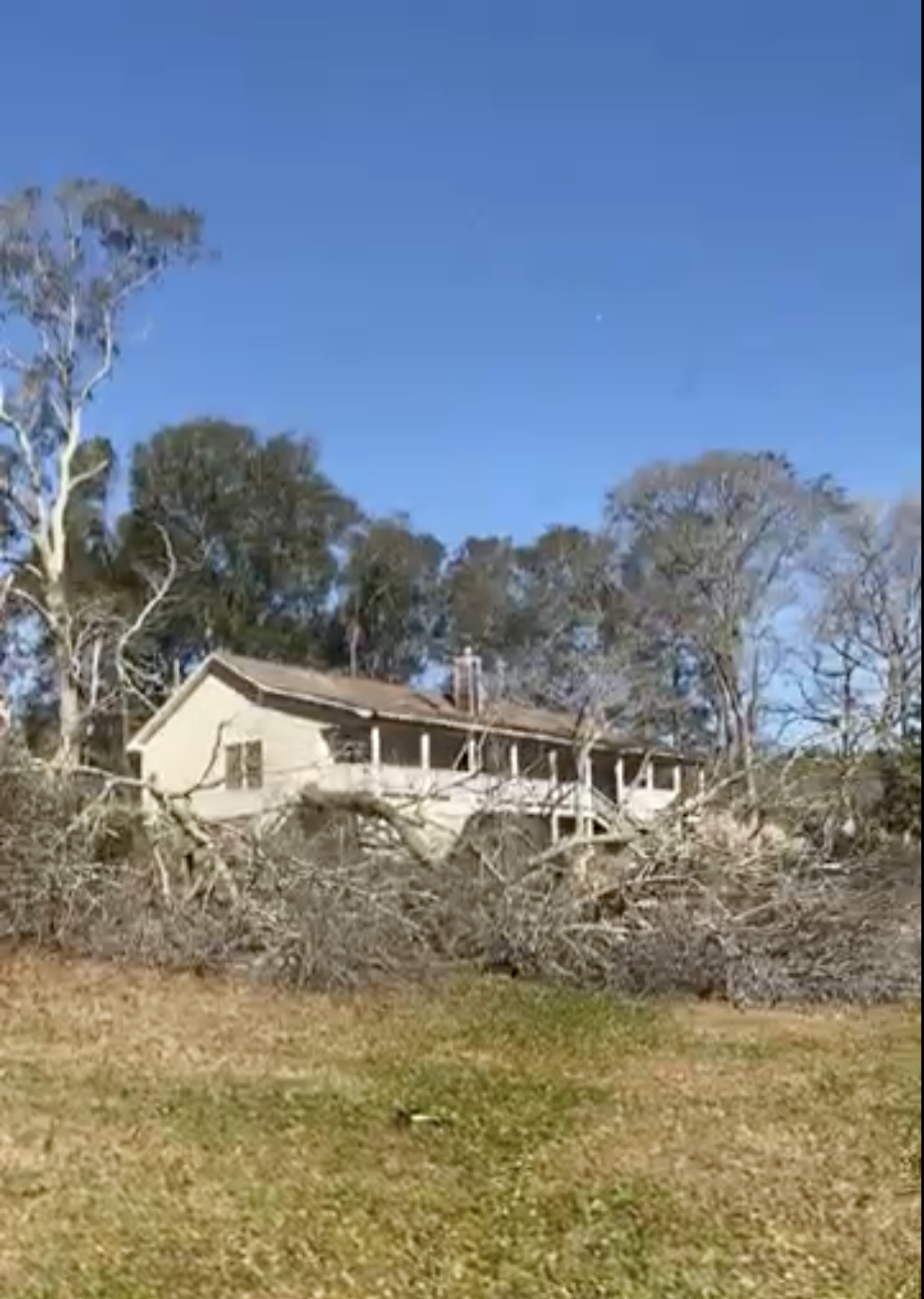
After — full removal, no structural damage
Two pines at 12 and 15 feet from the house post-Florence. Both showed root ball stress and subtle lean changes on assessment. One came down at $1,650. The other was assessed as manageable with annual monitoring. Not every close tree is an emergency — but both needed a professional opinion to make that call.
The Most Expensive Assumption Wilmington Homeowners Make
The most expensive assumption is "it's been this close for years and nothing's happened." That's not a safety assessment — it's survivorship bias. The tree has been close for years and nothing has happened yet. Florence was the third-most-costly hurricane in US history. Dorian came through the following year. Isaias the year after that. The tree that's survived all of them may be considerably weaker than it was before any of them.
Before hurricane season, if you have a tree within 20 feet of your house that's never been assessed since the last major storm — that's the conversation to have. Upload a photo to treequote.pro and get a starting number in two minutes. It's a lot less expensive than finding out after a storm.
Frequently Asked Questions
How close is too close for a tree to a house in Wilmington NC? The general guideline is 20 feet for large trees, 6–10 feet for small trees. In Wilmington, the more important factors are lean direction, root system integrity, canopy overhang over the roofline, and whether the tree has been assessed since a major hurricane. A healthy tree at 15 feet may be less urgent than a structurally compromised tree at 25 feet.
Can a tree too close to my house damage the foundation? Tree roots don't typically crack solid concrete foundations directly, but they can exploit existing cracks and cause heaving in older homes. Roots within 10 feet of a foundation, combined with visible cracking or moisture in your basement, warrants a professional assessment.
What's the cheapest fix for a tree that's too close to my house? If the tree is healthy and structurally sound, trimming branches back for clearance is the least expensive option — $400–$1,500 for most residential trees in Wilmington. If the tree itself poses a structural risk, trimming is temporary at best. Removal is the right answer when proximity plus structural compromise creates real risk.
How much does it cost to remove a tree that's right next to my house? Expect to pay 40–150% more than a standard removal of the same tree in an open yard. A tree within 10–20 feet of your house requires full section rigging — every cut has to be controlled and lowered. At under 10 feet, crane removal becomes a serious consideration. Most Wilmington jobs in this category run $1,400–$3,500.
Do I need a permit to remove a tree close to my house in Wilmington NC? For most residential lots in New Hanover County, no permit is required. If you're in a community with HOA oversight or the tree is near utility lines, additional coordination may be needed. Reputable tree services know local rules and will flag any permit requirements before starting work.
Follow us on Facebook for Wilmington tree pricing guides: TreeQuotePro on Facebook
Get an instant estimate for your tree: treequote.pro
TreeQuotePro — Connecting Wilmington homeowners with trusted local tree service. Serving Wilmington, Leland, Ogden, Hampstead, Castle Hayne, and Porters Neck.
More Dangerous Trees Guides →
Know What Your Tree Project Should Cost
Upload a photo of your tree and get a local Wilmington price estimate in under 60 seconds.
✓ No phone calls required · ✓ Free for homeowners · ✓ 90 five-star Google reviews