Tree Removal Near a Pool in Wilmington NC (2026 Cost Guide)
Tree removal near a pool in Wilmington typically runs $1,800–$4,500 — significantly above the market average. Zero drop zone in every direction, pool enclosure or screen at risk, and the cost of getting it wrong make pool-adjacent jobs the most complex and most expensive residential removals in the Cape Fear market.
Average Tree Removal Pricing
Why Pool Jobs Cost More Than Any Other Residential Removal in Wilmington
Hurricane Season and Pools — Why This Conversation Can't Wait
Large Live Oak Over Pool Enclosure — Porters Neck
When Tree Removal Costs Jump Fast
| Situation | Why Cost Increases |
|---|---|
| Crane Required | Expensive equipment + setup time |
| Tree Near Power Lines | Additional safety complexity |
| Emergency Removal | Urgency + danger |
| Limited Access | Slower manual work |
| Storm-Damaged Tree | Higher climbing risk |
📊 Wilmington Pricing Quick Reference
Updated: June 2026 · Source: TreeQuotePro Cape Fear market data
Of all the residential tree removal scenarios in Wilmington, trees over pools are the ones I think about most carefully before a single cut happens.
Not because the trees are always the largest. Not because the access is always the worst. But because the margin for error is zero. A section that lands four feet off-target in a standard backyard job is an inconvenience. A section that lands four feet off-target when there's a pool enclosure directly below it is a $6,000–$15,000 mistake.
I've been doing this work in Wilmington for over 20 years. Here's what tree removal near pools actually costs and how these jobs have to be approached.
What Tree Removal Near a Pool Costs in Wilmington NC
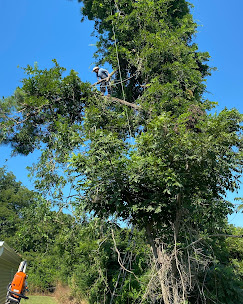
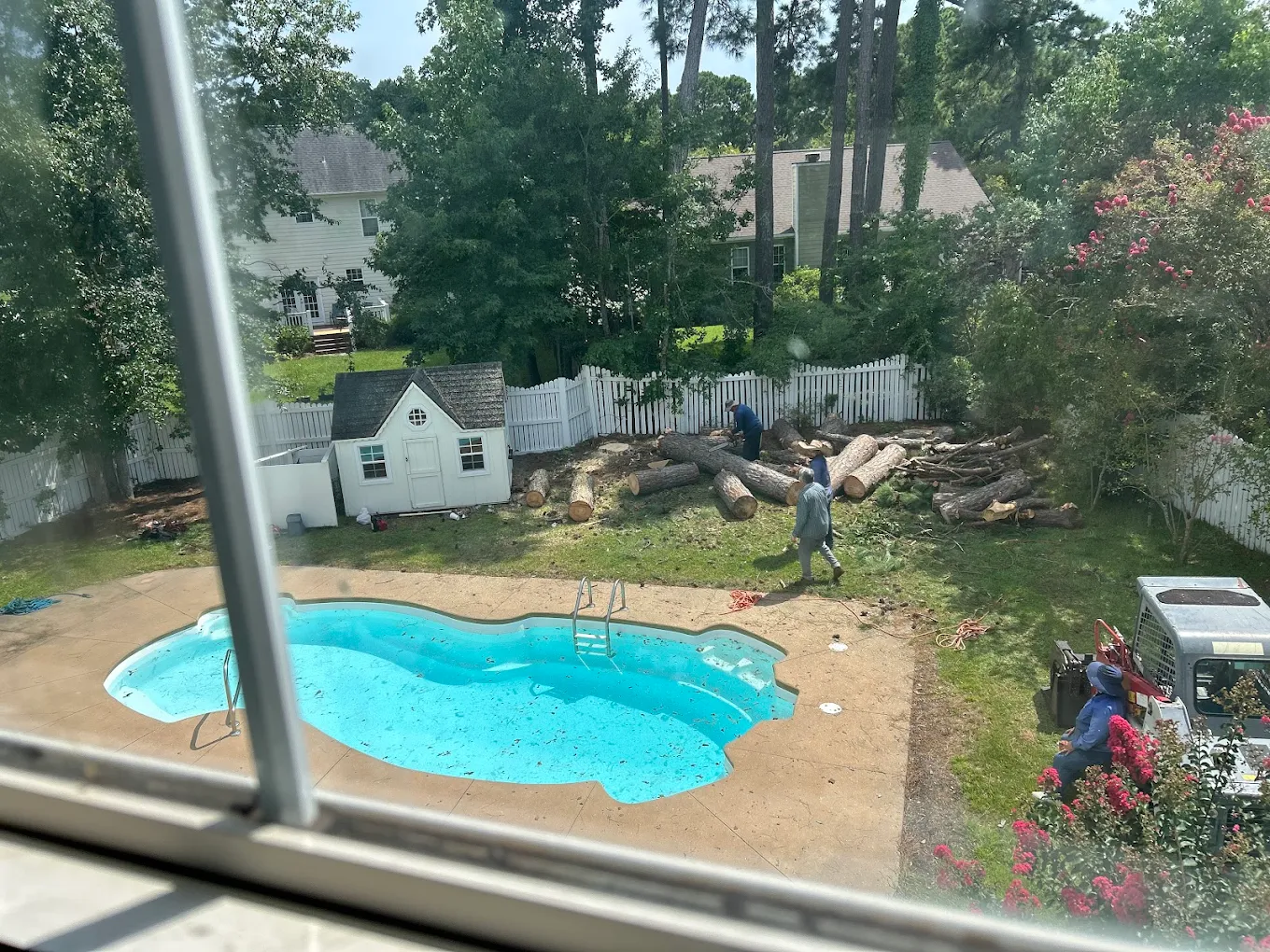
The pool itself isn't what drives the cost — it's the zero drop zone. A tree positioned over or next to a pool has nowhere to safely land any section in the natural fall direction. Every cut has to be rigged, controlled, and lowered by hand. That process takes 3–4 times longer than a standard removal of the same tree in an open yard.
| Situation | Estimated Cost |
|---|---|
| Tree near pool — open side available for drops | $1,200 – $2,200 |
| Tree over pool — full rigging, no drop zone | $1,800 – $3,800 |
| Tree over enclosed pool or screen room | $2,200 – $5,000+ |
| Crane required — zero drop zone in all directions | $3,500 – $7,000+ |
For context: the same tree in an open Wilmington backyard with no obstructions might cost $700–$1,400. The pool doesn't add a small premium — it can double or triple the job cost.
Why Pool Jobs Cost More Than Any Other Residential Removal
Zero drop zone means full rigging throughout. On a standard removal, a skilled crew identifies the natural fall direction and works with it. Large sections drop into clear space, the chipper processes them, and the job moves fast. With a pool below, there is no natural fall direction. Every section — from the first limb cut to the last trunk section — gets a rigging line attached before the cut is made, and gets lowered by hand before the cut is completed. One cut at a time. No shortcuts.
Screen enclosures are expensive and fragile. A standard pool screen enclosure replacement in Wilmington costs $3,000–$8,000 depending on size. An aluminum screen frame replacement after a section lands on it — more. When the stakes of a mistake are that high, crews work slower, use more rigging points, and charge accordingly.
Live oaks over pools are the worst-case combination. The most expensive jobs I see in Wilmington are almost always a mature live oak over a pool or screen enclosure — Porters Neck, Masonboro, Wrightsville Beach area. Dense wood, wide canopy spreading 50+ feet, and a pool in the drop zone. These jobs require crane consideration on every large specimen, and often end up as full crane removals regardless of whether the tree itself would otherwise need one.
Equipment can't always reach. Many Wilmington pool installations have fencing, landscaping, and hardscape that limits where equipment can stage. When the chipper truck has to stay on the street and debris gets hand-carried 80 feet through a gate, that labor cost accumulates fast.
Hurricane Season and Pools — Why This Conversation Can't Wait
Hurricane season opened June 1. If you have a large tree over or near your pool and you haven't had it assessed since the last major storm, that conversation needs to happen before the first named storm of the season — not after.
The pattern I see every year: homeowners notice a leaning pine or an overextended live oak canopy over the pool in spring, decide to deal with it after summer, and end up calling in September after a storm has already settled the matter for them.
The difference in outcome:
- Proactive removal before a storm: $1,800–$3,500 planned, scheduled at your convenience
- Emergency removal after a storm with tree in the pool or on the screen: $2,500–$5,000 removal plus $4,000–$15,000 in pool and screen repair
Your homeowners insurance covers pool enclosure damage from a fallen tree only if the tree was healthy and the fall was caused by a covered storm event. If the tree was visibly stressed or dead and you hadn't addressed it, insurers may deny the claim as negligence.
That's a expensive outcome that costs less than your deductible to prevent.
What Changes Price Most — Pool Removal Snapshot
Real Wilmington Pool Removal Jobs
Porters Neck — live oak, 55-ft canopy, over pool and neighbor fence: Full-day job, 4-person crew, every limb rigged. Crane was considered but ultimately not needed — open approach from the opposite side of the tree allowed overhead rigging. Final cost: $3,400. This is a typical high-end pool job in the Porters Neck market.
Masonboro — loblolly pine, 70 ft, over screened pool enclosure: Pine at full Wilmington height over a screened room. No room to drop anything without hitting the screen. Every section lowered individually. 6-hour job. Final cost: $2,100. Lower than the Porters Neck oak because pine sections are lighter and faster to rig than dense live oak limbs.
Wrightsville Beach area — two palms and a scrub oak, pool deck: Palms are actually the most manageable pool-adjacent removal — lighter, no wide canopy, easier to rig. Both palms came down in under 2 hours. The scrub oak was harder. Total for all three: $1,800. Having multiple trees done in one visit brings the per-tree cost down significantly.
Should You Remove the Tree or Just Trim It Back?
This is the right question to ask before committing to removal.
If the tree is healthy and structurally sound, a proper crown reduction — removing the branches that extend over the pool while preserving the tree — can eliminate the immediate hazard. Cost: $800–$2,000 for most live oaks with pool-adjacent canopy. This makes sense when the tree adds significant value to the property and the pool-facing growth is the only concern.
Removal is the right answer when: the tree is dead or in structural decline, the canopy is so extensive that meaningful trimming would leave an unbalanced tree prone to further failure, or the tree is within 15 feet of the pool structure and growing in a direction that makes future proximity worse regardless of trimming.
When in doubt — get an assessment first. A professional can tell you within 30 minutes whether you're looking at a trim or a removal conversation.
The Most Expensive Pool Mistake in Wilmington
The most expensive mistake on pool jobs is hiring the cheapest bid. On a simple pine in an open yard, the cheapest reasonable bid is usually fine. On a live oak over your pool enclosure, the cheapest bid is the highest risk. The crew that underbid didn't account for full rigging throughout. They're planning to work faster than the job requires. And when something lands wrong, it's your screen, your pool, and your claim — not theirs.
Know the fair price range before anyone shows up. Upload a photo of your tree and pool to treequote.pro — get an AI-powered Wilmington estimate in 60 seconds before you call anyone.
Frequently Asked Questions
How much does tree removal cost near a pool in Wilmington NC? Tree removal near a pool in Wilmington runs $1,200–$2,200 when there's an open side for controlled drops, $1,800–$3,800 when the tree is directly over the pool with no drop zone, and $2,200–$5,000+ for trees over enclosed pool or screen rooms. Crane jobs for the most complex situations reach $3,500–$7,000+.
Why is tree removal over a pool so much more expensive in Wilmington? Zero drop zone means every section must be rigged and lowered by hand throughout the entire removal. No natural falls, no shortcuts. The process takes 3–4 times longer than the same tree in an open yard, and the consequences of an error — screen enclosure damage, pool damage — are expensive enough to warrant extreme care throughout.
Should I remove a tree near my pool before hurricane season? Yes — if the tree is over or within striking distance of your pool and you haven't had it assessed since a major storm. Hurricane season runs June 1 through November 30 in coastal NC. A proactive removal costs $1,800–$3,500 for most pool-adjacent jobs. Emergency removal after a storm, plus pool and screen repair, can reach $15,000–$20,000 in total costs.
Can I just trim the tree instead of removing it near my pool? Sometimes yes. If the tree is healthy and structurally sound, a crown reduction removing pool-facing branches can eliminate the immediate hazard without full removal. Cost: $800–$2,000 for most live oaks. Removal is the right answer when the tree is declining, when the canopy is too extensive to trim meaningfully, or when the tree is within 15 feet of the pool structure with no safe growth direction.
Who is responsible if a neighbor's tree falls on my pool? If the neighbor's tree was healthy and fell due to a storm, your homeowners insurance covers your structure. If the neighbor knew the tree was a hazard and failed to address it, they may be liable for the damage. See our full neighbor tree liability guide for Wilmington.
Get an instant estimate for your pool-adjacent tree: treequote.pro
Follow us on Facebook: TreeQuotePro on Facebook
TreeQuotePro — Connecting Wilmington homeowners with trusted local tree service. Serving Wilmington, Leland, Ogden, Hampstead, Castle Hayne, and Porters Neck.
More Cost Guides Guides →
See What YOUR Tree Costs
Upload a photo and get an instant estimate based on these exact pricing ranges.
✓ No phone calls required · ✓ Free for homeowners · ✓ 90 five-star Google reviews