Tree Thinning vs Removal — How to Decide in Wilmington NC
Thinning runs $450–$1,400 and preserves the tree. Removal runs $650–$2,500 and ends the question permanently. The right answer depends on one thing: whether the problem is in the canopy or in the structure. Canopy problems can be thinned. Structural problems cannot. Here's the decision framework.
Average Tree Removal Pricing
The One Question That Decides It

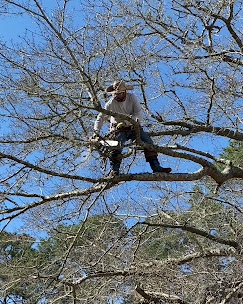
What Thinning Actually Does — and What It Can't Do
Live Oak Over Pool — Thinned Instead of Removed, Masonboro
When Tree Removal Costs Jump Fast
| Situation | Why Cost Increases |
|---|---|
| Crane Required | Expensive equipment + setup time |
| Tree Near Power Lines | Additional safety complexity |
| Emergency Removal | Urgency + danger |
| Limited Access | Slower manual work |
| Storm-Damaged Tree | Higher climbing risk |
📊 Wilmington Pricing Quick Reference
Updated: June 2026 · Source: TreeQuotePro Cape Fear market data
Some of the best money I've seen Wilmington homeowners spend is on thinning a tree someone else told them to remove. Some of the worst is on thinning a tree that needed to come out — paying twice when the storm finishes the job.
The decision between thinning and removal isn't about how the tree looks. It's about one question.
The One Question That Decides It
Is the problem in the canopy, or in the structure?
Canopy problems — too much density, deadwood throughout the crown, branches over the roof or pool, excessive wind sail — live in the part of the tree that can be selectively cut. These problems can be thinned, reduced, or pruned away while the tree stays.
Structural problems — root ball movement, trunk decay, fungal growth at the base, a progressive lean, major cracks at branch unions — live in the part of the tree that holds everything else up. No amount of canopy work fixes a failing foundation. Thinning a structurally compromised tree just means the storm takes down a lighter tree.
That's the whole framework. Everything else is detail.
What Thinning Actually Does — and What It Can't Do
What thinning does well in coastal NC:
Reduces wind load. This is the big one for hurricane country. A dense canopy acts like a sail. Selective thinning lets wind pass through the crown instead of pushing against it — meaningfully reducing the force on the trunk and roots in a storm. For a healthy tree in Wilmington, pre-season thinning is one of the highest-value preventive jobs available.
Removes deadwood before it removes itself. Dead limbs come out in a thinning, which means they don't come down on their own schedule.
Buys clearance. Crown reduction and elevation pull branches off rooflines, away from pools, and up from driveways — addressing the specific overhang without taking the tree.
Extends the life of valuable trees. A mature live oak adds more to a Wilmington property than almost any improvement you can buy. When the tree is sound, thinning protects that asset. See how trees affect property value in Wilmington.
What thinning cannot do:
It cannot fix a moving root ball, reverse internal trunk decay, correct a progressive lean, or make a tree with structural warning signs safe. If any of those are present, thinning is money spent delaying a removal that's coming anyway — usually at emergency rates.
The Decision Table
| What You're Seeing | Thinning or Removal? |
|---|---|
| Dense, healthy canopy — worried about hurricane wind load | Thin |
| Branches over roof or pool, tree otherwise sound | Thin / crown reduction |
| Deadwood scattered through an otherwise healthy crown | Thin |
| More than 50% of canopy dead | Remove |
| Mushrooms or fungal growth at the base | Remove |
| Lean that's gotten worse over the past 1–2 seasons | Remove |
| Soil heaving or root movement at the base | Remove |
| Tree within 15 ft of structure, growing closer every year | Usually remove — thinning is a recurring cost with no endpoint |
| Healthy tree, homeowner just nervous after a storm | Assess first — many of these are thinning candidates |
What Each Option Costs in Wilmington
| Service | Typical Range |
|---|---|
| Canopy thinning — medium tree (30–60 ft) | $450 – $850 |
| Canopy thinning — large tree (60 ft+) | $800 – $1,400 |
| Crown reduction (pool/roof clearance) | $600 – $1,600 |
| Full removal — medium tree | $650 – $1,200 |
| Full removal — large tree | $1,200 – $2,500 |
One honest note on the economics: a tree that needs thinning every 3–4 years near a structure costs $2,500–$4,000 per decade in maintenance. Sometimes removal at $1,500 is the cheaper ten-year answer even for a healthy tree — particularly fast-growing pines tight against newer construction. Run both numbers before deciding. Upload a photo to treequote.pro and get estimates for both options in 60 seconds.
Hurricane Season Changes the Math
From June through November, an unresolved "thin or remove" question is a question the next storm answers for you. A structurally sound tree that needed thinning rides out the season fine either way. A compromised tree that got thinned instead of removed becomes an emergency removal at +25–50% — plus whatever it landed on.
If you're unsure which side of the line your tree is on, get it assessed before the first named storm, not after.
Frequently Asked Questions
Should I thin or remove my tree in Wilmington NC? Thin when the problem is in the canopy (density, deadwood, overhang) and the structure is sound. Remove when the problem is structural — root movement, trunk decay, fungal growth at the base, or a progressive lean. Canopy problems can be cut away; structural problems cannot.
Does thinning a tree help in a hurricane? Yes — significantly, for healthy trees. A dense canopy acts as a sail; selective thinning lets wind pass through the crown, reducing force on the trunk and roots. Pre-season thinning is one of the most effective preventive measures for sound trees in coastal NC. It does not make a structurally compromised tree storm-safe.
How much does tree thinning cost in Wilmington NC? Canopy thinning runs $450–$850 for medium trees and $800–$1,400 for large trees. Crown reductions for roof or pool clearance run $600–$1,600. For comparison, full removal runs $650–$2,500 for most residential trees.
Is it cheaper to thin a tree or remove it? Thinning is cheaper per job, but it recurs every 3–4 years. For a healthy, valuable tree set back from structures, thinning is the better long-term answer. For a fast-growing pine within 15 feet of a structure, removal is often the cheaper ten-year decision. Get both numbers before choosing.
Can thinning save a dying tree in Wilmington NC? No. Thinning removes deadwood and reduces load on a healthy tree — it does not reverse decline. A tree with more than 50% canopy dieback, basal fungal growth, or root movement is a removal candidate regardless of how much canopy work is done.
Get estimates for both options before deciding: treequote.pro
TreeQuotePro — Connecting Wilmington homeowners with trusted local tree service. Serving Wilmington, Leland, Ogden, Hampstead, Castle Hayne, and Porters Neck.
More Tree Care Tips Guides →
Know What Your Tree Project Should Cost
Upload a photo of your tree and get a local Wilmington price estimate in under 60 seconds.
✓ No phone calls required · ✓ Free for homeowners · ✓ 90 five-star Google reviews