Cost of Tree Removal After a Storm in NC (2026 Guide)
Post-storm tree removal in Wilmington and coastal NC typically runs $800 – $4,500 depending on size, hazard, and debris volume. Insurance may cover some costs — but only if you document damage correctly and hire the right crew.
Average Tree Removal Pricing
Why Post-Storm Tree Removal Costs More Than Standard Removal
After a major storm, fallen and hanging trees can't be felled the same way a standing tree can — crews work around compromised root systems, tension in split trunks, and debris piles that slow every step. In coastal NC, sandy soil adds another layer: uprooted root balls in our barrier island-adjacent neighborhoods shift unpredictably, and structural contact with roofs or fences requires slow, section-by-section work that drives hourly labor up fast.
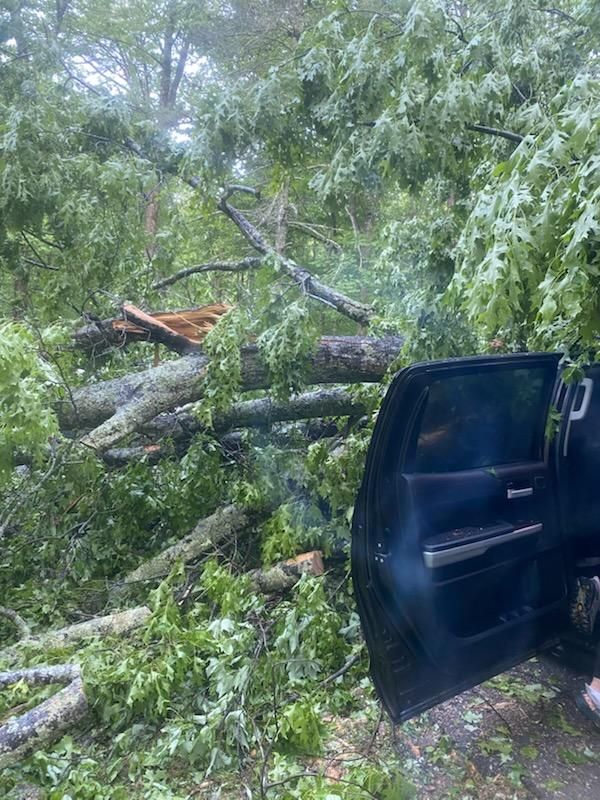
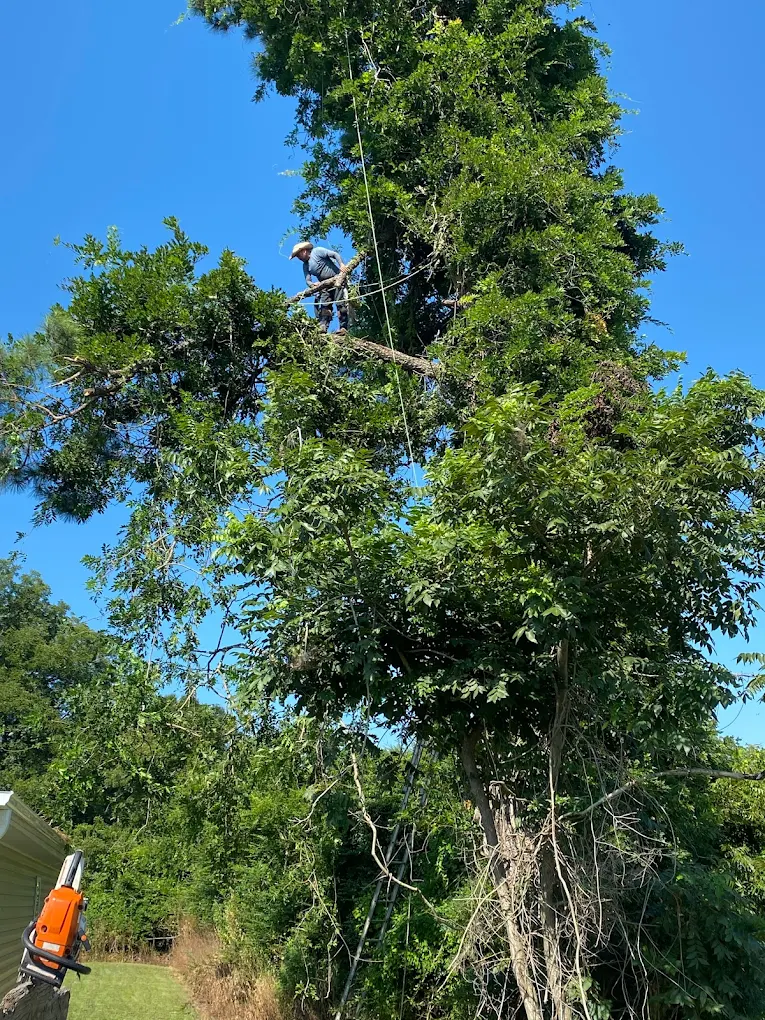
Storm Season and Coastal Risk in the Cape Fear Region
The Cape Fear coast sits squarely in hurricane corridor territory, and when a named storm tracks up the Brunswick or New Hanover county line, the call volume for post-storm tree removal spikes within hours. Sandy coastal soil — common across Ogden, Porters Neck, and the barrier islands — gives tree roots very little lateral grip, meaning even well-maintained oaks and pines can topple in 60 mph gusts. That surge in demand, combined with the hazard premium that comes with storm work, is exactly why post-storm pricing climbs above standard market rates.
65-ft water oak across roof — Landfall, Wilmington
When Tree Removal Costs Jump Fast
| Situation | Why Cost Increases |
|---|---|
| Crane Required | Expensive equipment + setup time |
| Tree Near Power Lines | Additional safety complexity |
| Emergency Removal | Urgency + danger |
| Limited Access | Slower manual work |
| Storm-Damaged Tree | Higher climbing risk |
📊 Wilmington Pricing Quick Reference
Updated: June 2026 · Source: TreeQuotePro Cape Fear market data
Cost of Tree Removal After a Storm in NC (2026 Guide)
The cost of tree removal after a storm in NC is not the same number you'd get on a calm Tuesday for a healthy standing tree. I've been doing this work with Ramon and Miguel for over 20 years along the Cape Fear coast, and I can tell you the post-storm market operates by a completely different set of variables — hazard, urgency, debris volume, and whether your neighbor's oak just punched through your living room ceiling.
Here's a realistic look at what you're facing in 2026.
2026 Post-Storm Tree Removal Pricing in Wilmington and Coastal NC
| Scenario | Estimated Cost Range |
|---|---|
| Small fallen tree, no structure contact | $400 – $900 |
| Medium tree on fence or landscaping | $800 – $1,800 |
| Large tree on roof or structure | $1,800 – $4,500 |
| Emergency after-hours response | Add $300 – $700 |
| Stump grinding (post-storm) | $150 – $400 |
These ranges reflect real conditions on the ground in Wilmington, Leland, Ogden, and Hampstead — not national averages. For a deeper breakdown of storm-specific pricing factors, see our full guide on storm damage tree removal cost in NC.
Why the Cost of Tree Removal After a Storm Runs Higher
When a tree is still standing, a crew can plan the fall, set rigging, and work efficiently. After a storm, that calculus changes completely.
Storm-damaged trees are under tension. Split trunks, partially uprooted root balls, and widow-makers caught in the canopy all slow the job and raise the risk. Ramon and Miguel price this honestly — not as a markup, but because storm work genuinely takes longer and requires more hands.
Here's what specifically drives costs up after a Cape Fear storm:
- Structural contact — A tree on a roof requires section-by-section removal from above. One wrong cut drops a thousand pounds through your rafters.
- Sandy soil root systems — In neighborhoods like Porters Neck and Ogden, uprooted root balls sit unstable in loose coastal soil. They have to be blocked and braced before anyone goes near them.
- Debris volume — A post-storm tree isn't just a trunk. It's a canopy full of broken branches, waterlogged leaves, and often a second or third tree it took down with it.
- Demand surge — After a named storm, every crew in southeastern NC is booked within 48 hours. Emergency pricing is real and legitimate.
What Homeowners Insurance Covers — and What It Doesn't
This is where most Wilmington homeowners get surprised. Homeowners insurance typically covers tree removal when a tree damages a covered structure — your roof, your fence, your detached garage. If the tree lands cleanly in your yard without hitting anything, most policies won't pay for removal.
Key things to understand:
Document before you clear anything. Take timestamped photos and video from multiple angles before any crew touches the debris. Your adjuster needs to see the damage as it was, not after it was cleaned up.
Your neighbor's tree is a shared problem — sometimes. If a healthy tree from next door fell on your house, your policy typically covers your structure. If that tree was visibly dead and they ignored it, you may have a negligence claim — but that's a conversation for an attorney, not a tree crew.
Stump removal is almost never covered. Most policies cover debris removal associated with structure damage, not cosmetic stump grinding.
For a full breakdown of what policies typically cover and how to file correctly, read our post on homeowners insurance and tree removal in NC.
How to Document Storm Damage Correctly
Before Ramon and Miguel — or any crew — arrive, do this:
- Take photos and video from multiple angles, including wide shots showing the full tree position
- Photograph the point of structural contact specifically — roof penetration, fence crush, slab damage
- Note the date and time on each photo (most smartphones do this automatically)
- Do not move debris until your insurance company has been notified and ideally an adjuster has visited or approved photo documentation
If a tree fell on your house and you're unsure about immediate safety, our guide on what to do when a tree falls on your house in Wilmington walks through that process step by step.
How to Avoid Getting Overcharged After a Storm
Post-storm price gouging is real, and it's a pattern I see every hurricane season in the Cape Fear area. Here's how to protect yourself:
Be skeptical of door-knockers. Out-of-state crews flood the market after major storms. They may quote aggressively low to get on the property, then present a much higher final number once the work starts.
Get a written scope before any work begins. What's included? Debris hauling? Stump grinding? Log splitting? Get it in writing.
Check reviews before you commit. Ramon and Miguel carry 90 five-star Google reviews built over 20+ years of work in this community. That track record matters — especially when you're stressed after a storm and need someone you can trust.
Ask about debris removal explicitly. Some post-storm quotes cover felling only. Hauling the debris off your property can be a separate line item that doubles the total.
The Cost of Tree Removal After a Storm: What to Expect Timeline-Wise
The first 48–72 hours after a major storm are the most expensive. Emergency rates apply, crews are stretched, and getting anyone on your property quickly commands a premium. If the damage is severe but not an immediate safety hazard — tree down in the yard, not on the structure — waiting 5 to 7 days can bring pricing back toward normal market rates.
Frequently Asked Questions
Does homeowners insurance cover the cost of tree removal after a storm in NC? Generally yes, if the tree damaged a covered structure like your roof or fence. If the tree fell in the yard without hitting anything, most standard policies won't cover removal. Always document everything before debris is cleared and contact your insurer before work begins.
Why is post-storm tree removal more expensive than regular tree removal? Storm-damaged trees present hazards that standing trees don't — tension in split trunks, unstable root systems, and structural contact that requires slow, section-by-section work. Add the surge in demand after a named storm, and crews operating in emergency conditions legitimately charge more.
How do I avoid price gouging after a storm in Wilmington or the Cape Fear area? Stick with local crews who have verifiable reviews and years of community history. Get a written scope of work before anything starts. Be cautious of door-to-door solicitors from out of state who show up immediately after a storm.
What if the tree that fell on my house belongs to my neighbor? Your homeowners insurance typically covers your structure regardless of where the tree originated. If your neighbor's tree was visibly dead or diseased and they failed to address it, you may have a negligence claim — consult an attorney. Your first call should still be to your own insurer.
Is stump removal included in post-storm insurance claims? Rarely. Most policies cover debris removal tied to structural damage, not stump grinding. Stump removal is typically an out-of-pocket cost running $150 – $400 depending on size and access.
When you're ready to get a real quote from a crew with 90 five-star Google reviews and 20+ years of Cape Fear experience, start at treequote.pro. Ramon and Miguel serve Wilmington, Leland, Ogden, Hampstead, Castle Hayne, and Porters Neck — and they'll give you an honest post-storm assessment, not a door-knocker number.
TreeQuotePro — Connecting Wilmington homeowners with trusted local tree service. Serving Wilmington, Leland, Ogden, Hampstead, Castle Hayne, and Porters Neck.
More Cost Guides Guides →
See What YOUR Tree Costs
Upload a photo and get an instant estimate based on these exact pricing ranges.
✓ No phone calls required · ✓ Free for homeowners · ✓ 90 five-star Google reviews