Before Hurricane Season: 5 Tree Problems Wilmington Homeowners Shouldn't Ignore This Memorial Day Weekend
Every year, Memorial Day weekend is when Wilmington homeowners finally go outside, look up, and notice things they've been ignoring since fall. Dead limbs over the deck. A pine that's leaning a little more than it used to. Branches rubbing the roof. Hurricane season starts June 1. What you notice this weekend is cheaper to fix now than after the first storm.
Average Tree Removal Pricing
Why Memorial Day Weekend Is the Right Time to Look at Your Trees
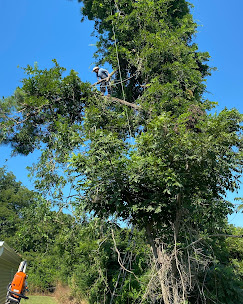
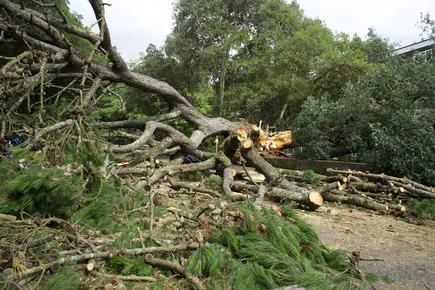
What Happens to Tree Removal Prices Once Hurricane Season Starts
Homeowner in Masonboro — Noticed Leaning Pine During Memorial Day Cookout
When Tree Removal Costs Jump Fast
| Situation | Why Cost Increases |
|---|---|
| Crane Required | Expensive equipment + setup time |
| Tree Near Power Lines | Additional safety complexity |
| Emergency Removal | Urgency + danger |
| Limited Access | Slower manual work |
| Storm-Damaged Tree | Higher climbing risk |
📊 Wilmington Pricing Quick Reference
Updated: June 2026 · Source: TreeQuotePro Cape Fear market data
Every Memorial Day weekend I get the same thing — homeowners who've been inside all winter finally fire up the grill, sit on the back deck, look up, and realize something's been going on with their trees that they haven't been paying attention to.
That's not a criticism. Life is busy. But here's the thing about coastal NC: hurricane season starts June 1. What you notice this weekend has about a week to be addressed at normal, planned pricing. After that, you're competing with everyone else who waited, and the math changes.
I've been doing this work in Wilmington for over 20 years. Here are the five tree problems I see homeowners catch during Memorial Day weekend — and what each one costs to fix now versus after a storm.
Why Memorial Day Is the Moment
It's not just coincidence. Memorial Day is the first major outdoor weekend of the year in coastal NC. You're outside. You're looking up. And you're seeing your yard for the first time since the weather got cold.
What you're also doing is hosting people — family, neighbors, friends. There's a deck or patio involved. There's almost always a tree over it.
And June 1 is one week away.
That combination — first sustained outdoor time, people you care about underneath your trees, hurricane season a week out — creates exactly the right psychological moment to actually do something about the tree you've been meaning to get checked for two years.
Here's what to look for.
Problem 1 — Dead Limbs Over Decks, Patios, and Seating Areas
This is the one I see most. A branch that looks fine in the winter — no leaves to weigh it down, no wind to test it — reveals itself during a spring storm or a sustained wind event. By Memorial Day, if you've had any significant weather since February, dead limbs have usually announced themselves by dropping smaller branches.
Walk under every large tree that's over your deck, patio, or any area where people sit or walk. Look for:
- Branches with no leaves when surrounding branches are leafed out
- Bark that's peeling or detached along the branch
- A branch that's hanging at an odd angle — it may have partially broken already
- A visible crack where the branch meets the trunk
What it costs now: Dead limb removal runs $150–$400 per limb depending on height and access. A full trimming to remove all deadwood before hurricane season runs $400–$1,500 for most residential trees.
What it costs after a storm: If that limb comes down on your deck during a storm, you're looking at debris removal plus deck repair. Insurance typically covers structural damage from falling limbs — but only if the limb was part of a healthy tree. If your insurer determines the limb was dead and you knew it, the claim gets complicated.
Problem 2 — Pines Leaning More Than They Did Last Fall
Coastal NC sandy soil doesn't give root systems the grip that clay-based inland soil does. After a wet winter and spring — which we almost always have — sandy soil stays saturated longer, and saturated soil holds roots less firmly.
A pine that was perfectly vertical last October may have shifted during this past winter's storms. Compare what you're seeing now to how you remember it. Look at the base: is there soil heaving or cracking on one side? Are roots becoming more visible on the opposite side of the lean?
The leaning tree guide covers warning signs in detail. But the short version for Memorial Day weekend: if it looks different than it did in the fall, get eyes on it before June 1.
What it costs now: Proactive removal of a leaning pine runs $600–$1,900 depending on size and access. Address it this week and you can schedule at your convenience.
What it costs after a storm: Emergency tree removal in Wilmington averages $794 — before accounting for anything the tree hits. And it will hit something. That's why you're concerned about it.
Problem 3 — Branches Touching or Rubbing Your Roof
This one is slower-moving than the others, which is why it's easy to ignore. A branch rubbing your shingles isn't going to cause a dramatic problem this weekend. But it has been causing slow damage every time the wind moves, every time it rains, every time that branch scrapes against your roof.
Branches in contact with a roof also create a pathway for moisture, insects, and rot. Algae and moss grow where shingles stay damp under overhanging branches. What looks like a minor annoyance is a slow deterioration of your roof's lifespan.
Before hurricane season, any branch within 10 feet of your roof — not touching, within 10 feet — should be trimmed back. In a 70+ mph wind event, a branch that's currently 8 feet away from your roof isn't going to stay 8 feet away.
What it costs now: Trimming branches away from roof clearance is usually part of a standard trimming job — $400–$800 for most residential trees.
What it costs after a storm: A branch through your roof is a homeowner's insurance claim, a roofing contractor visit, potential interior water damage, and several weeks of your life managing the repair process.
Problem 4 — Trees That Survived Florence or Dorian But Were Never Assessed
This is the one most Wilmington homeowners don't think about until it's too late.
Florence hit in 2018. Dorian in 2019. Isaias in 2020. Every tree that went through those storms experienced some degree of root stress, canopy damage, or internal trunk stress. Trees that kept their leaves and "survived" aren't necessarily structurally sound — they're just still standing.
Root ball shifting is the silent killer. A tree's roots partially uproot during a major storm, then re-anchor in a compromised position. The tree looks normal for 2–4 years. Then the next significant storm — one that would have been a non-event for a healthy tree — finishes what Florence started.
This pattern shows up all over Wilmington. I've seen it in Ogden particularly — older lots with mature pines that went through multiple storms without ever being properly assessed afterward.
If you have a large tree that's been through a hurricane and has never been looked at by a professional since, Memorial Day weekend is the moment to schedule that conversation.
What it costs now: An assessment costs nothing at treequote.pro. Upload a photo and get a price range in two minutes.
What it costs after a storm: See Problem 2.
Problem 5 — The Last-Minute Pricing Spike You Don't Want to Be Caught In
This one isn't about a specific tree problem. It's about what happens to pricing and availability once June 1 hits.
Every tree company in Wilmington sees the same thing every year: the phone starts ringing hard in late May, bookings fill through June, and by mid-June the wait time for non-emergency work is 2–3 weeks. By the time the first named storm of the season gets everyone's attention, emergency slots are gone entirely.
During hurricane season, rates jump 15–20% due to high demand, and emergency removal costs 40–60% more than standard removal. That's not price gouging — that's market reality. After Florence, a Florida tree company paid $38,000 in restitution to Wilmington homeowners for actual price-gouging during the state of emergency. Knowing the fair price before you need emergency work is the only protection against that.
The homeowners who call this week get scheduled at normal rates with normal wait times. The homeowners who call in July after the first storm get emergency rates if they can get anyone at all.
The math is simple: A tree removal that costs $1,200 in the last week of May costs $1,500–$2,000 in late June after hurricane season demand kicks in and $2,500–$4,000 if it becomes an emergency removal.
What Changes Price Fastest — Hurricane Season Snapshot
The Most Expensive Decision Wilmington Homeowners Make
The most expensive decision I see homeowners make every year isn't hiring the wrong company or paying too much for a job. It's waiting. Seeing a problem, knowing it's a problem, and deciding to deal with it after the summer.
In coastal NC, there is no after the summer. Summer is hurricane season. The tree you're going to deal with in September is the tree that's going to test every storm that comes through between June and November. Some of them pass that test. Some of them don't.
This Memorial Day weekend, take 10 minutes and walk your property. Look up. If something looks wrong, get a number before June 1. It takes two minutes at treequote.pro — upload a photo and find out what it should cost before you call anyone.
Frequently Asked Questions
When should I have my trees checked before hurricane season in Wilmington? The window is now — late May, before June 1. Reputable Wilmington tree companies book up fast once hurricane season demand starts. Getting an assessment and scheduling work before June 1 means planned pricing and your choice of timing. After June 1, both pricing and availability tighten.
What tree problems are most dangerous heading into hurricane season in Wilmington? Dead limbs over occupied areas, pines with a new or worsening lean, branches touching your roof, and any large tree that went through Florence, Dorian, or Isaias without a professional assessment since. These are the situations that become emergency removals after a storm.
Does homeowners insurance cover tree removal in Wilmington? Only if the tree fell and caused structural damage to a covered structure. A standing hazardous tree — even one you know is a problem — is homeowner maintenance and typically not covered. If you knew the tree was hazardous and it falls during a storm, your insurer may reduce or deny the claim.
How much more does tree removal cost during hurricane season? Demand drives prices up 15–20% once hurricane season starts. Emergency removal after a storm runs 40–60% more than planned removal. The homeowners who act before June 1 pay the lowest rates of the year.
What should I look for when inspecting my trees this Memorial Day weekend? Dead branches when other branches are leafed out, a lean that looks worse than last fall, soil heaving at the base, branches touching or within 10 feet of your roof, mushroom or fungal growth at the base, and any large tree that went through a major storm without a professional assessment since.
Follow us on Facebook for Wilmington tree pricing guides and seasonal alerts: TreeQuotePro on Facebook
Know what it costs before June 1: treequote.pro
TreeQuotePro — Connecting Wilmington homeowners with trusted local tree service. Serving Wilmington, Leland, Ogden, Hampstead, Castle Hayne, and Porters Neck.
More Storm & Emergency Guides →
Is Your Tree Storm-Ready?
Get a free assessment estimate before hurricane season.
✓ No phone calls required · ✓ Free for homeowners · ✓ 90 five-star Google reviews