Tree Leaning After a Storm? Here's What to Do in Wilmington NC
A tree leaning after a storm is one of the most misread situations in tree work. Some leaning trees are ticking emergencies that need same-day response. Others are stable enough to wait for a proper assessment and planned removal. Knowing which is which protects your property and your wallet. Here's how to read the situation — and what to do next in Wilmington and the Cape Fear region.
Average Tree Removal Pricing
How to Read a Leaning Tree After a Storm
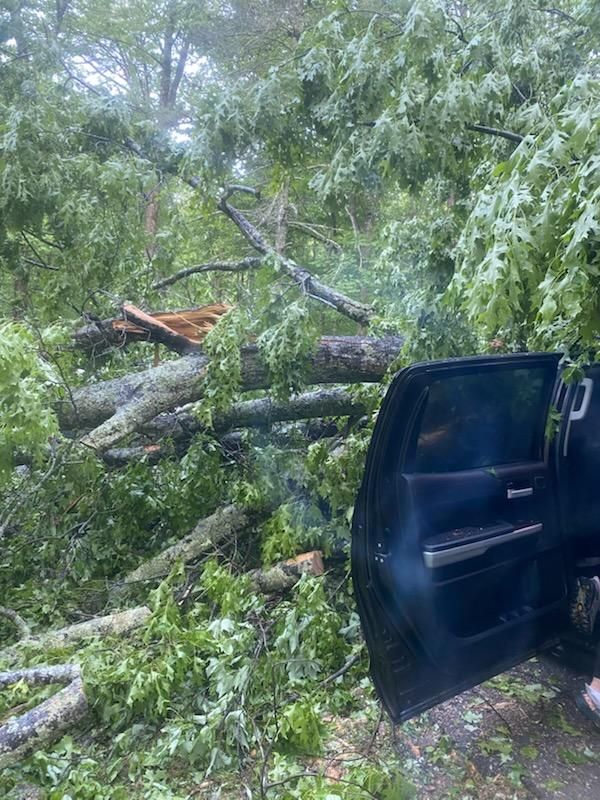
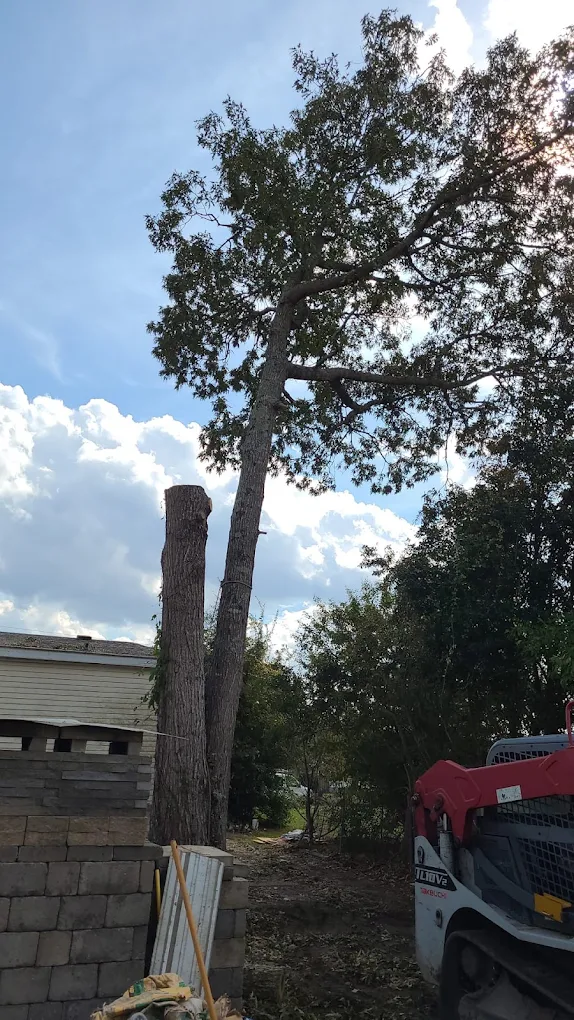
Emergency vs Non-Emergency: What Determines the Difference
50-ft Loblolly Pine — Ogden NC, Leaning 30° After Hurricane Idalia
When Tree Removal Costs Jump Fast
| Situation | Why Cost Increases |
|---|---|
| Crane Required | Expensive equipment + setup time |
| Tree Near Power Lines | Additional safety complexity |
| Emergency Removal | Urgency + danger |
| Limited Access | Slower manual work |
| Storm-Damaged Tree | Higher climbing risk |
📊 Wilmington Pricing Quick Reference
Updated: June 2026 · Source: TreeQuotePro Cape Fear market data
A storm passed through and your tree is leaning. Before you call anyone, take 60 seconds to assess what you're actually dealing with — because not all leaning trees are the same problem.
How to Read a Leaning Tree After a Storm
A tree that shifted during a storm is telling you something about its root system, its structural integrity, or both. Here's how to read it from a safe distance.
Check the base and root zone first. Walk around the tree — not under it — and look at the ground around the base. Is the soil mounded or cracked on the opposite side of the lean? Is the root ball visibly heaving out of the ground? A heaved root ball means the tree has already started to uproot. That is an emergency, regardless of lean angle.
Look at the lean direction. A tree leaning away from your house, fence, and anything that can be damaged is a different situation than a tree leaning toward any of them. Lean direction determines urgency and cost.
Estimate the lean angle. Trees naturally lean somewhat — this is normal. A lean that increased noticeably during the storm, particularly if the base moved, is structurally different from a tree that's been gradually leaning for years. If you can see the lean angle changed overnight, treat it as structurally compromised.
Look for what it would hit. Mark the fall zone mentally: where would this tree land if it came down right now? House, fence, car, neighbor's property, open yard? The answer determines whether this is a same-day call or a scheduled assessment.
Emergency vs Non-Emergency: What Determines the Difference
Call immediately — same-day response needed:
- Root ball is visibly heaving or soil is mounded/cracked at the base
- Tree is leaning over your roof, a parked car, or a structure with people in it
- You can hear cracking from the trunk or root zone
- The lean increased rapidly during the storm (more than 10–15 degrees)
- Any large overhanging limbs broke and are hanging — widow-makers are an independent hazard
Can wait for a scheduled assessment (days, not hours):
- Lean increased modestly during storm, root zone appears intact
- Fall zone is clear yard with no structures in the path
- Tree has been a gradual leaner for years and this storm didn't significantly change it
- No cracking sounds, root zone stable
The Cape Fear region's Atlantic storm exposure means most homeowners will encounter a leaning tree situation at some point. The triage above is the difference between a $1,400 planned removal and a $3,500 emergency extraction. See our full breakdown of storm damage tree removal cost to know what's fair before anyone quotes you.
What an Arborist Assessment Covers
Before committing to removal, a professional assessment is worth the $150–$350 investment on trees you're uncertain about. A qualified arborist will check:
- Root system integrity and whether partial uprooting has occurred
- Trunk lean vs root ball movement (different structural problems)
- Wood decay at the lean point — often the reason a tree couldn't hold in wind
- Whether cabling or bracing is structurally viable
- Whether the tree can be safe to leave under monitoring
In Wilmington's Cape Fear climate, lean caused by root rot or structural decay is common in older pines and larger hardwoods. A tree that looks stable from the outside may have a compromised interior that the storm merely revealed. An ISA-certified arborist can see what a visual check can't.
What Cabling and Bracing Can and Can't Do
For trees that leaned but retained root integrity — particularly younger hardwoods and ornamental specimens — structural cabling can sometimes stabilize a tree. Cabling installs a high-tension cable in the upper crown to redistribute load away from the lean direction.
What cabling is appropriate for:
- Trees with intact root systems that shifted in saturated soil
- Ornamental specimens in otherwise good condition
- Trees where root anchoring is intact but lean is cosmetically concerning
What cabling won't fix:
- Root ball that has heaved or partially uprooted
- Structural decay at the lean point
- Trees leaning toward structures — cabling failure under load is a worse outcome than planned removal
- Lean angles beyond 15–20 degrees from vertical
Most Cape Fear arborists will be direct about when cabling is the right call vs when removal is the only safe option.
What Removal Costs After Storm Lean in Wilmington
A tree leaning away from structures in a clear fall zone is the most efficient removal job — controlled drops into open space keep cost down. A tree leaning toward your house or fence requires rigging, section-by-section removal, and more crew time.
Expect the toward-structure premium to run 40–80% above a clear-fall equivalent. Trees with visible root ball heave add emergency dispatch cost if same-day response is warranted.
After a named storm hitting the Cape Fear region, market-wide demand increases pricing 15–30% as crews book out within 24–48 hours. Trees that can wait 1–2 weeks see market rates return to normal.
Get a baseline estimate before calling anyone: upload a photo at treequote.pro and see what the Cape Fear market says about your specific situation.
Frequently Asked Questions
Is a leaning tree always dangerous? Not always. A tree that has gradually leaned over years without root ball movement and is currently stable is a different risk profile than a tree that shifted suddenly during a storm. Sudden storm-caused lean — especially with visible root zone disturbance — is significantly higher risk. When in doubt, get an assessment rather than making the call yourself.
Can a leaning tree be straightened? For young trees (under 4–5 inches diameter) with intact roots that shifted in saturated soil, straightening and staking can sometimes work. For established trees — anything over 6 inches diameter — the root and trunk structure that caused or allowed the lean typically cannot be reversed. An arborist assessment determines what's viable.
What if my tree is leaning toward my neighbor's property? Under North Carolina law, a property owner has a duty to address trees on their property that present a known hazard to neighboring properties. A tree visibly leaning toward a neighbor's structure after a storm is a documented known hazard — address it promptly. Your homeowners insurance may cover removal costs if storm damage caused the lean.
How much does it cost to remove a leaning tree in Wilmington NC? Tree removal cost for a leaning tree in Wilmington depends on where it's leaning. A tree leaning toward open yard costs $500–$1,400 for most sizes. A tree leaning toward a structure with rigging required runs $1,200–$3,500+. Emergency same-day response adds 25–50%.
What should I do first when I see a tree leaning after a storm? Keep everyone away from the tree and its fall zone. Document with photos before touching anything. Check the root zone for heaving. If you can mark the fall zone, do so. Then call for an assessment — don't wait on a tree that's actively leaning over your house.
Get an instant estimate on your leaning tree: treequote.pro
TreeQuotePro — Connecting Wilmington homeowners with trusted local tree service. Serving Wilmington, Leland, Ogden, Hampstead, Castle Hayne, and Porters Neck.
More Storm & Emergency Guides →
Is Your Tree Storm-Ready?
Get a free assessment estimate before hurricane season.
✓ No phone calls required · ✓ Free for homeowners · ✓ 90 five-star Google reviews