Storm Damage Tree Removal on the Cape Fear Coast — What It Costs and What to Do First
Storm damage tree removal on the Cape Fear Coast is different from standard removal in almost every way — the urgency is higher, the complexity is greater, and the pricing is harder to predict without seeing the situation. The right sequence of steps in the first 24 to 48 hours after a storm can mean the difference between an insurance claim that gets paid and one that doesn't. Here's what you need to know.
Average Tree Removal Pricing
The 24-Hour Window That Determines Your Insurance Claim
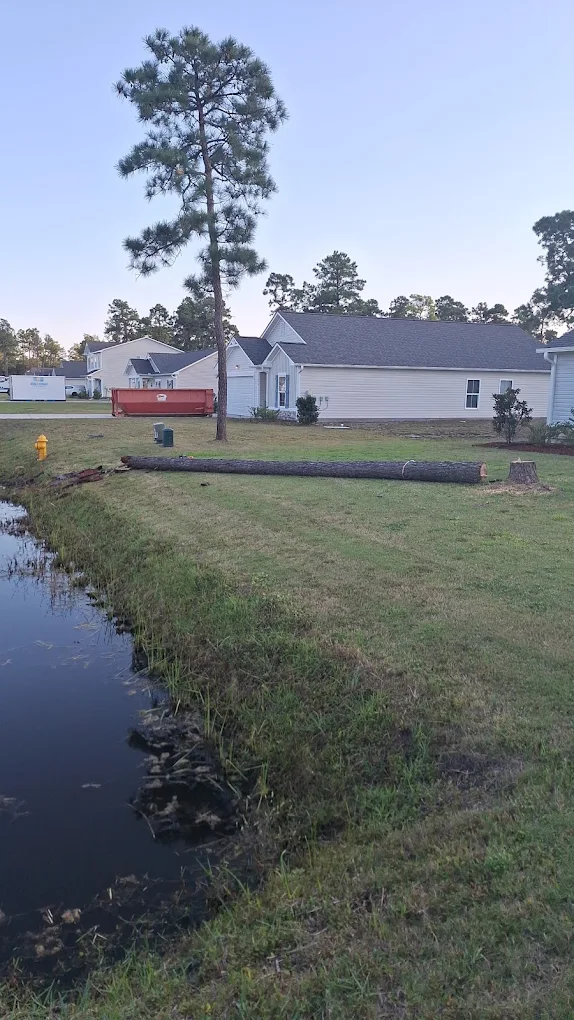
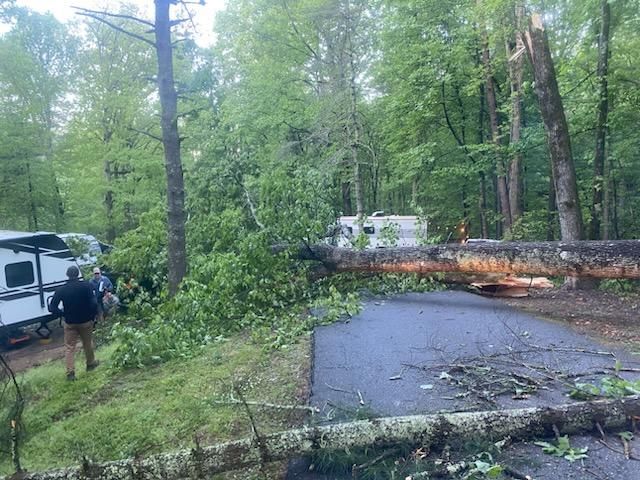
How Storm Pricing Works — and How to Avoid Getting Burned
Leland Homeowner — 65-ft Pine on Roof After Severe Thunderstorm
When Tree Removal Costs Jump Fast
| Situation | Why Cost Increases |
|---|---|
| Crane Required | Expensive equipment + setup time |
| Tree Near Power Lines | Additional safety complexity |
| Emergency Removal | Urgency + danger |
| Limited Access | Slower manual work |
| Storm-Damaged Tree | Higher climbing risk |
📊 Wilmington Pricing Quick Reference
Updated: June 2026 · Source: TreeQuotePro Cape Fear market data
After 20 years of doing this work in the Cape Fear market, I can tell you with certainty: what you do in the first 24 hours after a storm determines most of what happens next. The homeowners who move through the right sequence end up with paid insurance claims and cleared properties. The homeowners who skip steps — or move too fast without documentation — end up paying out of pocket for things that should have been covered.
Here's the process, the pricing, and what to watch out for.
The 24-Hour Window That Determines Your Insurance Claim
Before you call a tree crew, before you start moving anything, do this:
Document everything. Photograph from every angle — the fallen tree, the point of impact, the damage to any structure, and the surrounding yard. Photograph the tree's root system if it uprooted. Photograph the stump. If the tree came from a neighbor's property, photograph that too and note the direction it fell.
This documentation is the basis of your insurance claim. Adjusters work from what was documented before cleanup, not from what crews describe afterward. If you start moving debris before the adjuster can assess, or before you have thorough photographs, you've made your own claim harder to pay.
Call your insurance company before calling anyone else. Open a claim before any cleanup begins. Ask specifically whether your policy requires a damage assessment before tree removal can start. Some policies require an adjuster to visit before cleanup; most allow you to proceed with documentation in hand. Your agent can tell you the rule for your specific policy.
Check for power lines. If the tree is near or touching any lines, do not approach it and do not let anyone else approach it. Call Duke Energy before any crew comes out. This is not optional. A tree on a service drop or distribution line is a Duke Energy coordination situation first, tree removal situation second.
Once you've documented, filed, and checked for line contact — then call for the tree crew.
How Storm Damage Pricing Works on the Cape Fear Coast
Storm removal is priced differently than standard removal in three specific ways.
Emergency premium. After a named storm or widespread severe weather event, demand for tree crews in New Hanover and Brunswick County spikes dramatically. Every crew in the market is fielding calls simultaneously. Emergency same-day or next-day removal commands a premium — typically 40 to 60% above standard removal rates for the same tree.
This is not price gouging. It's market reality. After Florence, Florida tree companies came into Wilmington charging $8,000 to $15,000 for jobs worth $1,200 to $2,500. One Florida contractor paid $38,000 in restitution to Wilmington homeowners. The protection against that is knowing the fair rate before a storm ever hits — which is what treequote.pro is for. Our complete guide to tree removal in Wilmington NC covers what standard residential removal should cost across all Cape Fear neighborhoods.
Complexity premium. A tree on the ground in an open yard is a straightforward job. A tree on a roof, over a fence, partially suspended, or in contact with another tree that's also compromised is not. Every constraint adds labor time. A tree that landed in a position where it can't be cut from below — because it would roll or shift into a structure — requires rigging from above and a much more deliberate sequence of cuts.
Debris volume. After a storm, you're often dealing with multiple trees or multiple large limbs. Hauling volume compounds fast. Factor $400–$1,200 for debris hauling if the crew is dealing with significant material.
What Storm Damage Removal Actually Costs in This Market
| Situation | Typical Cost |
|---|---|
| Tree down, open yard, under 40 ft | $600 – $1,200 |
| Tree down, open yard, 40–70 ft | $900 – $1,800 |
| Tree on fence, under 50 ft | $1,000 – $2,200 |
| Tree on outbuilding or detached structure | $1,200 – $2,800 |
| Tree on roof, under 50 ft | $1,500 – $3,200 |
| Tree on roof, 50 ft+ or complex position | $2,800 – $5,500+ |
| Multiple trees, same property | Negotiated by scope |
| Emergency same-day, active hazard | Add 40–60% to above |
These are fair-market rates for the Wilmington / Brunswick County area. If a quote you receive is 2 to 3 times these figures, ask why — and get a second quote.
Trees Down From a Neighbor's Property
This is one of the most common questions I get after a storm: a neighbor's tree fell onto my property. Who pays?
North Carolina follows the same general rule as most of the Southeast: if a tree falls due to an act of nature — storm, wind, lightning — the owner of the property where the tree landed is typically responsible for cleanup and damage costs on their property, regardless of where the tree originated.
Your neighbor is responsible for cleanup on their side of the property line. You are responsible on your side.
The exception is negligence. If your neighbor's tree was visibly dead, clearly diseased, or leaning dangerously — and you notified them in writing before the storm — that prior notice may shift liability. This is a legal question, not a tree removal question. Consult an attorney if that's the situation you're in.
For purposes of your insurance claim, it doesn't matter where the tree came from. Your homeowners policy covers damage to your insured structures regardless of origin, subject to your deductible.
The Post-Storm Scam to Watch For
After every named storm that touches the Cape Fear Coast, out-of-state contractors flood the market. After Florence and Dorian, Wilmington was full of them within 48 hours.
The pattern is consistent: they knock on doors, show up in unmarked trucks, claim emergency availability, and quote prices that are dramatically above market. They often demand large cash deposits upfront. In some cases, they collect deposits and disappear.
How to protect yourself:
Verify NC Contractor Licensing Board registration before signing anything. Any tree company doing work in NC above $30,000 needs a general contractor license. Below that threshold, there's no licensing requirement for tree work specifically — which means you're relying on vetting.
Ask for proof of general liability insurance and workers' compensation. Uninsured contractors working on your property after a storm can create liability exposure for you if someone is injured.
Check Google reviews and ask for local references. Out-of-state crews have no local reviews and no local accountability. Local companies have neighbors as customers.
Do not pay more than 10 to 20% upfront for work that isn't completed. Any contractor asking for 50% or 100% upfront before starting work is a significant risk.
The Storm Season Pattern on the Cape Fear Coast
Cape Fear isn't just geographically exposed — it's historically exposed. The area has taken more direct hurricane hits than almost any coastal market in the continental US. Florence in 2018 was catastrophic. Dorian in 2019 caused significant tree loss. Isaias in 2020. Each one leaves behind compromised trees that look like they survived.
The trees I worry about most aren't the ones that fell in the last storm. They're the ones that didn't fall but took a hit. Root ball shifting is silent. A tree that partially uprooted in Florence and re-anchored in a compromised position may have looked fine for six growing seasons. Then an August squall line that would have been a non-event for a healthy tree finishes what Florence started.
If you have large trees on your property that went through any of those storms and haven't been professionally assessed since, upload a photo at treequote.pro. Not because you need to spend money today — because knowing the status of your trees before next hurricane season is the cheapest version of this conversation you'll have.
What Changes Price Fastest — Storm Removal Snapshot
What Prepared Looks Like vs What Reactive Costs
There are two types of homeowners after every Cape Fear storm. The first type photographed everything before calling anyone, filed with their insurer within 24 hours, had documentation ready when the adjuster visited, and got reimbursed for most of the removal and structural repair. They dealt with a hard situation well.
The second type started cleanup before calling the insurance company, had no photographs of the tree's original position, used an out-of-state crew that charged three times the fair rate, and paid most of the cost out of pocket.
Preparation looks like this: know what your trees are worth removing before a storm forces the issue. Upload a photo at treequote.pro this week and get a baseline estimate. If you already know the hazard trees on your property, you can act on that information now — at planned rates, on your timeline — instead of paying emergency rates after the storm makes the decision for you.
Frequently Asked Questions
How much does storm damage tree removal cost in Wilmington NC? A tree down in an open yard with no structure contact runs $600–$1,800. A tree on a roof runs $1,500–$5,000+ depending on size and position. Emergency same-day removal during widespread storm events adds 40–60% to standard rates. Upload a photo at treequote.pro for a specific estimate.
Does homeowners insurance cover storm damage tree removal in NC? If a tree fell on an insured structure — your house, attached garage, or covered fence — standard NC homeowners insurance typically covers both the structural damage and the cost of removing the tree. If the tree fell in the yard without hitting a structure, coverage varies by policy. Document everything before cleanup and call your insurer before any work begins.
Who is responsible when a neighbor's tree falls on my property in NC? In North Carolina, each property owner is generally responsible for damage on their side of the property line from trees felled by natural causes. Your homeowners insurance covers damage to your structures regardless of where the tree originated. If you believe your neighbor's tree was negligently maintained — visibly dead or previously reported — consult an attorney about liability.
How do I find a legitimate tree company after a storm near Wilmington? Use a company with documented local presence, verifiable Google reviews, and proof of general liability insurance and workers' comp. Avoid out-of-state crews that show up door-to-door after storms. Ask for references from within New Hanover or Brunswick County. Local companies have local accountability.
What should I do first when a tree falls on my house during a storm? Ensure everyone is safe and away from the structure. Check for power line contact — if any lines are down or touched, call Duke Energy before anything else. Document everything with photographs before any cleanup begins. Call your insurance company to open a claim. Then call a tree crew.
Can I get an estimate before a storm so I know what removal would cost? Yes — that's exactly what treequote.pro is for. Upload a photo of your tree now and get a price range. Knowing your hazard trees' removal cost before a storm means you can make informed decisions about proactive removal, and you know the fair price if emergency removal becomes necessary.
Follow us on Facebook for Cape Fear storm season updates and pricing guides: TreeQuotePro on Facebook
Know what it costs before the storm: treequote.pro
TreeQuotePro — Connecting Wilmington homeowners with trusted local tree service. Serving Wilmington, Leland, Ogden, Hampstead, Castle Hayne, and Porters Neck.
More Storm & Emergency Guides →
Is Your Tree Storm-Ready?
Get a free assessment estimate before hurricane season.
✓ No phone calls required · ✓ Free for homeowners · ✓ 90 five-star Google reviews