Tree Removal Wilmington NC — 2026 Complete Local Guide
Tree removal in Wilmington NC typically costs $532–$1,800 for standard residential jobs. Live oaks, large loblolly pines near structures, and post-storm emergency removals push significantly higher. This guide covers everything — real local pricing, how the process works, when to remove vs trim, and how to find a crew you can trust in the Cape Fear market.
Average Tree Removal Pricing
What Tree Removal Costs in Wilmington NC in 2026
When Tree Removal Is the Right Call in Coastal NC
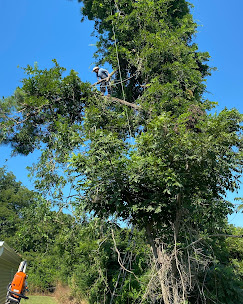
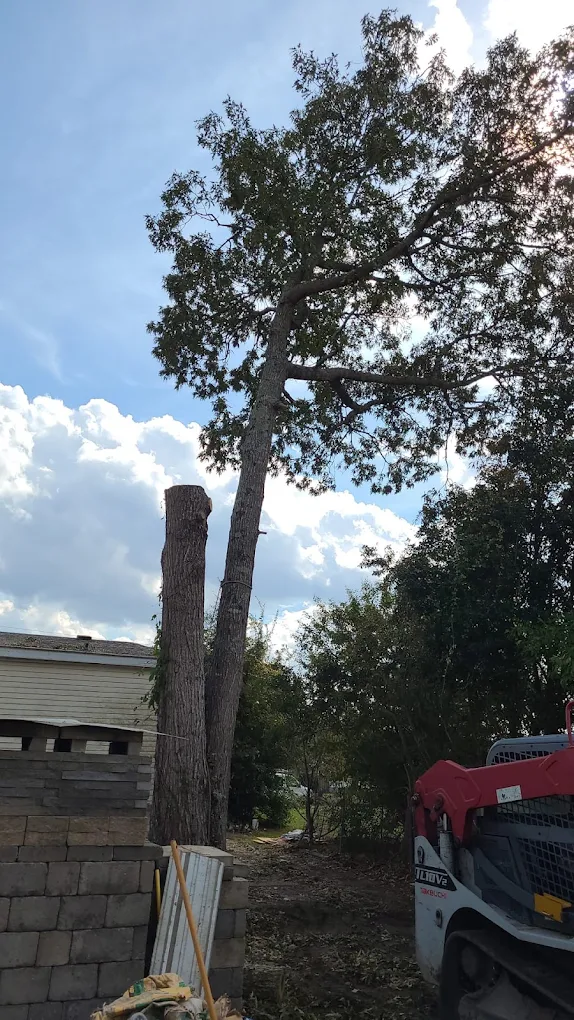
65-ft Loblolly Pine — Masonboro Neighborhood, Near Screened Porch
When Tree Removal Costs Jump Fast
| Situation | Why Cost Increases |
|---|---|
| Crane Required | Expensive equipment + setup time |
| Tree Near Power Lines | Additional safety complexity |
| Emergency Removal | Urgency + danger |
| Limited Access | Slower manual work |
| Storm-Damaged Tree | Higher climbing risk |
📊 Wilmington Pricing Quick Reference
Updated: June 2026 · Source: TreeQuotePro Cape Fear market data
Tree removal in Wilmington NC is not a commodity service. The same 70-foot loblolly pine costs $850 in an open Castle Hayne lot and $2,100 in a tight Masonboro backyard with a screened porch in the drop zone. The tree is identical. The job is completely different.
I've been doing this work in Wilmington and the Cape Fear region for over 20 years. Here is everything you need to know before you call anyone.
What Tree Removal Costs in Wilmington NC in 2026
The Wilmington market average for residential tree removal is $532 for a small job to $1,800 for a standard mid-sized removal. Complex jobs near structures, large live oaks, and emergency situations run significantly higher.
| Tree Size | Height Reference | Wilmington 2026 Range |
|---|---|---|
| Small | Under 30 ft — as tall as a one-story house | $300 – $700 |
| Medium | 30–60 ft — two to five stories | $700 – $1,400 |
| Large | 60–80 ft — taller than a telephone pole | $1,200 – $2,200 |
| Very Large | 80 ft+ — eight stories or taller | $2,000 – $4,500+ |
| Emergency | Post-storm, same-day response | $800 – $4,500+ |
These are Wilmington-specific numbers based on real jobs in the Cape Fear market — not national averages that underestimate what coastal NC actually costs.
What Drives Tree Removal Cost in Wilmington
Four variables move the price more than anything else:
Tree height. A 30-foot tree and an 80-foot tree of the same species are not the same job. Height determines how many sections come down, how much rigging is required, and how long the job takes.
Proximity to structures. A tree within 15–20 feet of your house, pool, fence, or neighbor's property requires full section rigging throughout — every cut controlled and lowered by hand. That adds 40–60% to base price. A tree in an open yard with room to drop sections is a completely different job.
Species. A live oak costs 50–100% more than a loblolly pine at identical height. Live oak wood is extraordinarily dense, the canopy spreads wider than the tree is tall, and almost every live oak in Wilmington is growing over something valuable. Dead trees cost 20–40% more than healthy trees of the same size — brittle wood is unpredictable and requires more care.
Equipment access. Can a chipper truck reach within 30 feet of the tree? If not, every piece of debris gets hand-carried out. That labor cost adds up fast on large jobs.
Tree Removal Pricing by Wilmington Neighborhood
Pricing varies significantly across the Cape Fear region — not because companies charge different rates by neighborhood, but because the tree characteristics, lot access, and job complexity differ.
| Neighborhood | Typical Range | Why |
|---|---|---|
| Wrightsville Beach area | $1,500 – $6,000 | Live oaks, premium lots, tight access |
| Porters Neck | $1,200 – $4,500 | Mature canopy, large lots, ICWW salt exposure |
| Masonboro | $1,000 – $4,200 | Older lots, pond-adjacent, tight side yards |
| Ogden | $900 – $3,800 | Tall pines, established lots, Smith Creek drainage |
| Hampstead | $850 – $3,600 | Longleaf pine premium, HOA scheduling |
| Castle Hayne | $700 – $3,200 | Open lots, good access — often below average |
| Leland | $650 – $2,800 | Younger tree stock, below Wilmington average |
For a full neighborhood breakdown, see the Wilmington Tree Intelligence Map.
When Tree Removal Is the Right Call
Not every tree problem requires removal. Here's how to think about it.
Remove the tree when:
The tree is dead or dying and cannot be saved. A dead tree deteriorates continuously — the longer it stands, the more expensive and dangerous the removal becomes. Get it down while the wood still has structural integrity.
The tree is within 15 feet of your house and leaning toward it. Distance combined with lean is the most urgent combination in coastal NC. Sandy soil gives roots less grip than inland NC — a leaning tree here is more dangerous than the same lean in Raleigh.
The tree is near power lines and growing into them. Power line removals require Duke Energy coordination and are the most complex residential jobs in the market. Address these before hurricane season, not during.
Root damage is lifting your driveway or approaching your foundation. Once roots have lifted concrete, removal is almost always the right answer. See our full guide on tree roots lifting driveways in Wilmington.
Consider trimming instead when:
The tree is structurally healthy and the problem is branch proximity — overhanging limbs near the roofline, deadwood in the canopy, or branches that are too close to your fence. A proper crown reduction can eliminate the hazard without removing the tree. See our tree trimming guide for Wilmington for what that costs.
The Wilmington Tree Removal Process — What to Expect
For most residential jobs in Wilmington, the process works like this:
Assessment and quote. A crew visits and evaluates the tree — height, lean, species, access, proximity to structures, power lines, and the approach that makes the most sense. You get a written quote before any work begins.
Permitting. For most residential lots in New Hanover County, no permit is required. Confirm with New Hanover County Development Services for any questions about protected trees. Hampstead falls under Pender County with different regulations.
Removal day. The crew arrives with a chipper truck, climbing equipment, and rigging gear. Sections come down in a controlled sequence from top to bottom. The chipper runs continuously — by the time the last section is down, most of the debris is already processed.
Stump grinding. Usually a separate service — confirm whether it's included before signing anything. Stump grinding in Wilmington runs $150–$400 for most residential stumps.
Cleanup. Professional crews leave your yard clean. Confirm debris hauling is included — some quotes exclude it and leave a chip pile.
What Insurance Covers for Tree Removal in Wilmington
This is the question I get most after a storm. The short version:
Your NC homeowners insurance (HO-3) covers removal costs up to $500 per tree / $1,000 total when a tree falls due to a covered peril like wind and damages a covered structure. A tree that falls in your yard without hitting anything is not covered. Preventative removal is never covered.
If you knew a tree was dead or hazardous and it falls and causes damage, your insurer may deny the claim as negligence.
For the full breakdown, read our NC homeowners insurance guide for tree removal.
What Changes Price Most — Wilmington Snapshot
How to Find a Trustworthy Tree Removal Company in Wilmington
The Wilmington market has excellent local crews and some that shouldn't be working on complex jobs. Before hiring anyone:
Ask for proof of insurance. General liability plus workers' compensation. If someone is injured on your property and the company lacks workers' comp, you may be liable. Reputable companies produce certificates without hesitation.
Get a written quote. Always before any work starts. The scope should specify which tree, what's included (debris removal? stump grinding?), and the price.
Ask specifically about your job type. "Have you done removals in this neighborhood?" and "What equipment will you bring?" reveal whether they've thought through your specific job.
Know the fair price range before anyone arrives. Upload a photo at treequote.pro and get an AI-powered estimate in under 60 seconds — so when the first company shows up with a quote, you already know if it's in the right range.
The Most Expensive Mistake Wilmington Homeowners Make
The most expensive mistake is waiting until a storm is approaching to deal with a tree you've known was a problem. Once a named storm is in the forecast, every reputable crew in Wilmington is fully booked. You're dealing with emergency rates — or you're dealing with it after the storm at whatever cost the damage adds.
Hurricane season runs June 1 through November 30. The best time to address a hazardous tree is before June 1 at planned rates. Upload a photo to treequote.pro and get a starting estimate in two minutes — before you call anyone.
Frequently Asked Questions About Tree Removal in Wilmington NC
How much does tree removal cost in Wilmington NC? Tree removal in Wilmington NC averages $532–$1,800 for standard residential jobs in 2026. Small trees under 30 feet run $300–$700. Large trees over 60 feet run $1,200–$2,200. Live oaks, trees near structures, and emergency removals push significantly higher. Get an instant estimate at treequote.pro.
Do I need a permit for tree removal in Wilmington NC? For most residential lots in New Hanover County, no permit is required for standard tree removal on private property. The City of Wilmington has a tree preservation ordinance that may apply to heritage or specimen trees. Hampstead falls under Pender County with different rules. Confirm with your county's development services department for any questions about your specific property.
Who is the best tree removal company in Wilmington NC? Look for companies with proven local experience, 50+ Google reviews, proof of general liability and workers' compensation insurance, and written estimates before work begins. Ramon and Miguel — TreeQuotePro's vetted Wilmington provider — bring 20+ years of experience in the Cape Fear market and 90 five-star Google reviews. Get a quote at treequote.pro.
How long does tree removal take in Wilmington? Most standard residential removals take 2–6 hours for a professional crew. Large live oaks over structures can take a full day or two. Emergency situations depend on complexity and access. Stump grinding is typically done same day or scheduled separately.
What is the cheapest way to get tree removal in Wilmington NC? Schedule in advance rather than emergency, have multiple trees done in one visit (crews discount for efficiency), ensure good equipment access to the tree, and avoid peak hurricane season demand (June–November) when pricing and wait times increase. Get an accurate estimate before calling anyone at treequote.pro.
Does homeowners insurance cover tree removal in Wilmington NC? Only in specific situations — when a tree falls due to a covered peril like wind and damages a covered structure. Trees that fall in the yard without hitting anything are not covered. Preventative removal is never covered. See our full NC insurance guide.
What trees are most commonly removed in Wilmington NC? Loblolly pine is by far the most common removal in the Cape Fear market — tall, fast-growing, and vulnerable to storm damage in sandy coastal soil. Live oak removals are the most expensive. Water oak and sweet gum are also frequent, particularly in lower-lying neighborhoods near the Cape Fear River and ICWW.
Is tree removal more expensive in Wilmington than other NC cities? Generally yes — Wilmington pricing runs above state averages due to mature coastal trees, hurricane prep demand, sandy soil that complicates root systems, salt air that accelerates canopy stress, and the high proportion of live oaks which are expensive in any market.
TreeQuotePro — Connecting Wilmington homeowners with trusted local tree service. Serving Wilmington, Leland, Ogden, Hampstead, Castle Hayne, and Porters Neck.
Get an instant estimate before you call anyone: treequote.pro
More Cost Guides Guides →
See What YOUR Tree Costs
Upload a photo and get an instant estimate based on these exact pricing ranges.
✓ No phone calls required · ✓ Free for homeowners · ✓ 90 five-star Google reviews