The Tree Removal Process in Wilmington NC: Step by Step (2026)
Tree removal in Wilmington NC typically runs $400 – $2,500 depending on tree size, access, and debris volume. Understanding each step helps you know exactly what you're paying for.
Average Tree Removal Pricing
Why the Tree Removal Process Costs What It Does in Wilmington
Wilmington's mix of mature water oaks, longleaf pines, and sprawling live oaks means no two removals are identical. Tight lot lines in neighborhoods like Masonboro and Monkey Junction limit equipment access, and sandy coastal soil often makes root systems unpredictable — both factors that add time and labor to the job.
Storm Season and Coastal Risk in the Cape Fear Region
Hurricane season pushes demand for tree removal in Wilmington NC sharply upward between June and November, which affects scheduling and sometimes pricing. Sandy soil loosened by heavy rain can destabilize root plates overnight, turning a routine removal into a hazard job that requires different rigging and a more cautious step-by-step approach.
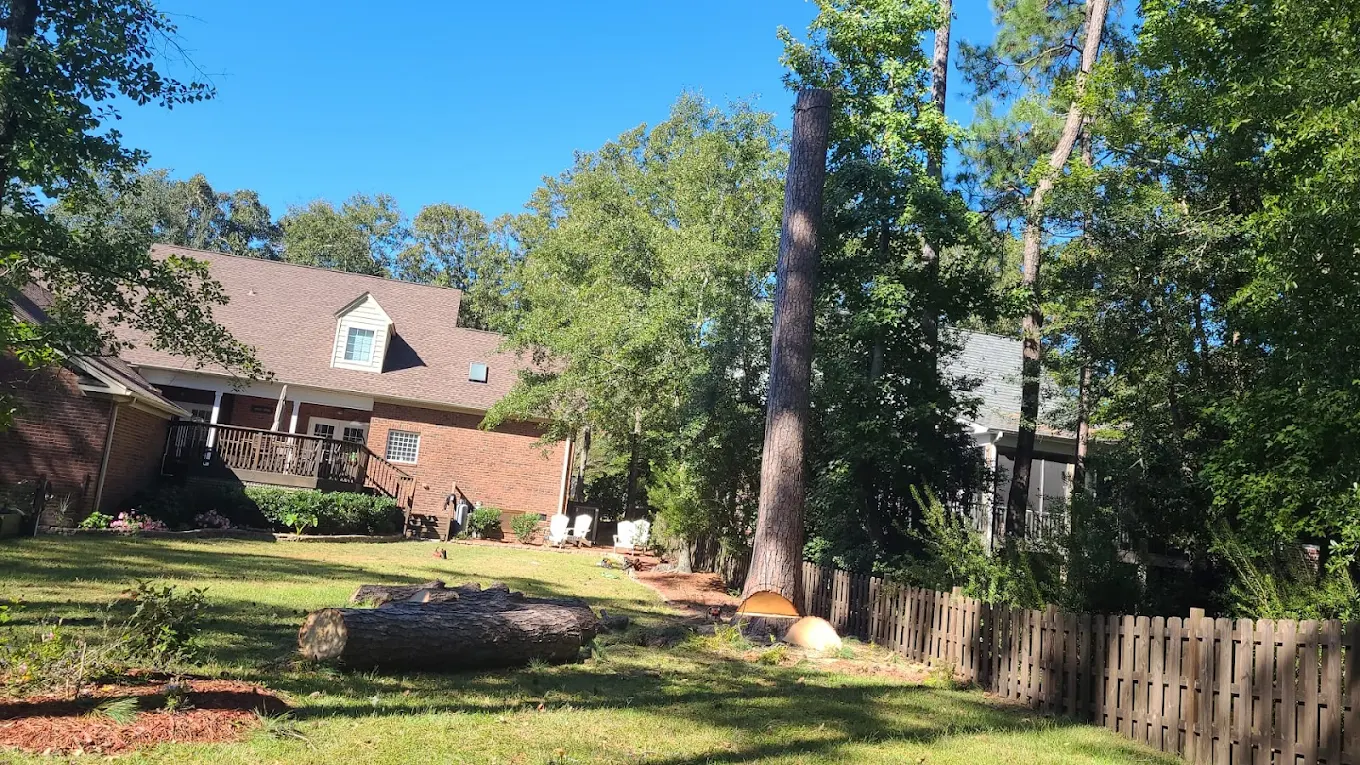
Large water oak removal — Landfall subdivision
When Tree Removal Costs Jump Fast
| Situation | Why Cost Increases |
|---|---|
| Crane Required | Expensive equipment + setup time |
| Tree Near Power Lines | Additional safety complexity |
| Emergency Removal | Urgency + danger |
| Limited Access | Slower manual work |
| Storm-Damaged Tree | Higher climbing risk |
📊 Wilmington Pricing Quick Reference
Updated: June 2026 · Source: TreeQuotePro Cape Fear market data
Tree Removal Process Wilmington NC: Step by Step (2026)
If you've never hired a tree crew before, the tree removal process in Wilmington NC can feel like a black box. You call, someone shows up, the tree disappears — but you're not sure what you paid for or why it cost what it did. After 20+ years working the Cape Fear region with my partner Miguel, I want to walk you through every step so there are no surprises on job day.
What This Process Typically Costs
| Tree Size or Service | Typical Range |
|---|---|
| Small tree (under 30 ft) | $400 – $750 |
| Medium tree (30–60 ft) | $750 – $1,400 |
| Large tree (60–80 ft) | $1,400 – $2,200 |
| Hazard or crane-assisted removal | $1,800 – $3,500 |
| Stump grinding (add-on) | $150 – $400 |
For a deeper look at general pricing, see our Wilmington tree removal cost guide.
Step 1: Initial Assessment
The tree removal process in Wilmington NC starts before a single saw is fired up. Ramon and Miguel walk the property to evaluate tree height, canopy spread, lean direction, proximity to structures, and ground conditions. In neighborhoods like Porters Neck and Ogden, lot lines are tight and fences are everywhere — that changes the plan before we even pull equipment off the truck.
Sandy coastal soil is a real factor here. A tree that looks stable from the street may have a compromised root plate after a wet spring. We probe the soil around the base, check for fungal growth at the trunk, and note any overhead utilities that will affect our cutting angles.
Step 2: The Quote and Scheduling
Once we've assessed the site, we put together a range-based estimate accounting for crew size, equipment needs, debris volume, and access. We never throw out a single number as a promise — conditions on job day can shift, and we'd rather give you an honest range than a number we can't honor.
Scheduling follows the quote. During peak hurricane prep season — roughly July through October — Ramon and Miguel book out faster. If your tree is showing stress signs after a storm, don't wait. Leaning trees over sandy soil can fail quickly, especially in Castle Hayne and low-lying parts of Leland where water tables are high.
Step 3: Crew Arrival and Equipment Setup
On job day, the crew arrives, walks the property again with the homeowner, and sets up a safety perimeter. Equipment positioning is one of the most underappreciated parts of the tree removal process in Wilmington NC. Tight driveways in Masonboro or a brick-edged garden bed in Landfall can mean the difference between a straightforward job and one that requires hand-carry on every piece of wood.
The chipper and truck get positioned for the most efficient debris flow. When ground access is severely limited, a crane removal may be the right call to protect structures and landscaping below.
Step 4: Sectional Cutting
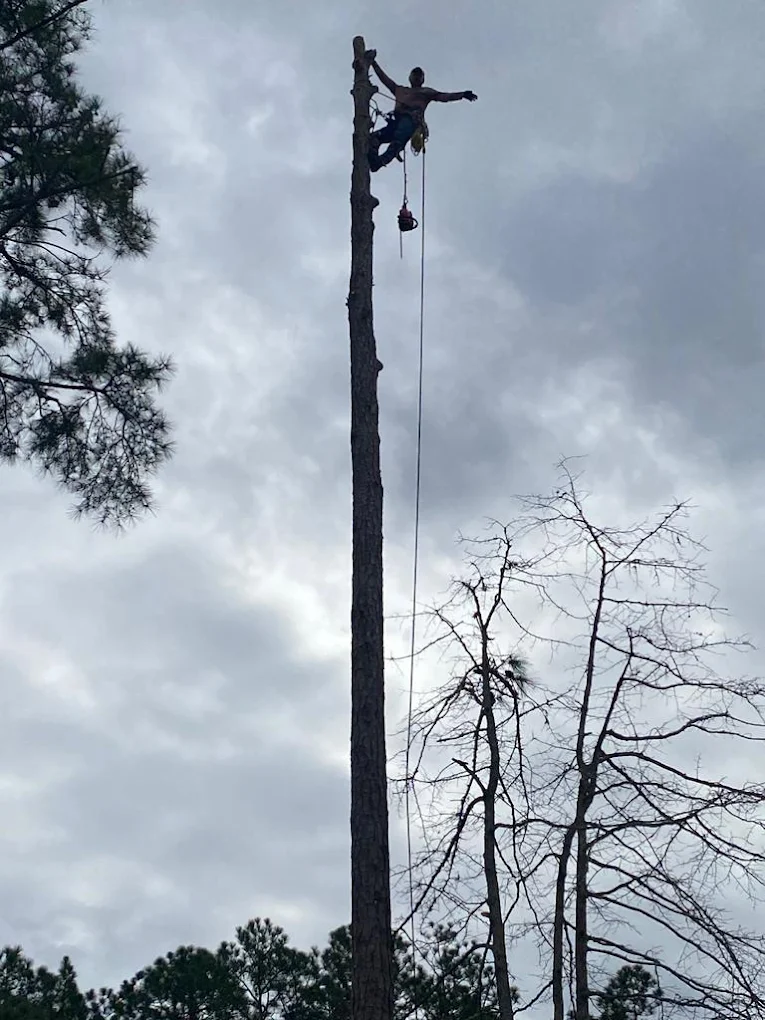
This is the core of the job. Rather than dropping a tree whole — which almost never works safely on a residential lot in Wilmington — we work in sections from the top down. Each section is either rigged and lowered by rope or dropped into a designated clear zone we've identified during setup.
Live oaks are dense and slow to work through. Longleaf pines in Hampstead lots can be surprisingly tall and whippy at the top. Water oaks in Ogden go fast but often hide rot at the trunk that changes the cutting sequence. Knowing your species matters on every cut.
Want to know what to expect when the crew is on-site? Our tree removal day guide covers the full experience from a homeowner's perspective.
Step 5: Debris Management
As sections come down, the crew chips brush and loads rounds continuously. This keeps the work zone clear and the job moving. Most homeowners in the Cape Fear area want everything hauled — but if you want firewood rounds kept, tell us before we start chipping.
Step 6: Stump Grinding
Stump grinding is almost always a separate line item, and it's one worth adding. A surface-level stump left behind can be a tripping hazard, a pest harborage, and a mowing obstacle for years. Ramon and Miguel use a commercial grinder to reduce the stump to below grade — typically 6 to 10 inches down. Costs for this step run $150 – $400 depending on stump diameter and root spread. See our stump grinding cost guide for a full breakdown.
Step 7: Cleanup and Final Walkthrough
The tree removal process in Wilmington NC ends with a full cleanup — rake of chips, blow-down of the driveway and walkway, and a walk of the property with the homeowner. We point out anything we noticed during the job: secondary trees showing stress, root zones worth watching, or soil movement near the stump. After 90 five-star Google reviews and 20+ years on Cape Fear properties, this final conversation is where a lot of future problems get caught early.
Frequently Asked Questions
How long does the tree removal process in Wilmington NC take from first call to cleanup? For a straightforward medium-sized tree, you're typically looking at two to four days from initial call to completed job — one day for the assessment and quote, a day or two for scheduling, and a half to full day for the actual removal and cleanup. Larger or more complex jobs, especially crane-assisted ones, can take longer to schedule during busy season.
Does the tree removal process differ for storm-damaged trees? Yes, significantly. A storm-damaged tree may have unpredictable stress fractures, split leaders, or a destabilized root plate — all of which require slower, more deliberate sectional cutting. That extra caution adds time and sometimes cost, but it's the right call on sandy Cape Fear soil where root systems can shift without visible warning.
Is stump grinding always included in tree removal quotes? Not automatically. Ramon and Miguel quote stump grinding as a separate add-on, which lets homeowners choose based on their plans for the area. If you're replanting, landscaping, or pouring a patio, grinding is worth it. If the stump is in a back corner and out of the way, some homeowners pass on it.
What affects whether equipment can access my yard for tree removal? Gate width, overhead lines, soil condition, and proximity to structures all factor in. Many Wilmington lots — especially in older neighborhoods near Monkey Junction or tight subdivisions in Leland — have limited access that requires hand-carry or rigging instead of mechanical assist. This is assessed during the initial walkthrough and reflected in the quote range.
Ready to get a clear, range-based quote for your tree removal? TreeQuotePro connects Wilmington homeowners with Ramon and Miguel — 20+ years of Cape Fear experience and 90 five-star Google reviews behind every job. Visit treequote.pro to get started.
TreeQuotePro — Connecting Wilmington homeowners with trusted local tree service. Serving Wilmington, Leland, Ogden, Hampstead, Castle Hayne, and Porters Neck.
More Cost Guides Guides →
See What YOUR Tree Costs
Upload a photo and get an instant estimate based on these exact pricing ranges.
✓ No phone calls required · ✓ Free for homeowners · ✓ 90 five-star Google reviews