Tree Health Assessment in Wilmington NC: What to Check (2026 Guide)
A professional tree health assessment in Wilmington NC typically runs $75 – $300 depending on tree count and property size. Catching problems early almost always costs less than emergency removal after a storm.
Average Tree Removal Pricing
Why Tree Health Assessment Costs What It Does in Wilmington
Wilmington's mix of water oaks, loblolly pines, and sweetgums grow fast in our coastal climate — and decline fast too. Sandy soil near the Cape Fear River drains quickly, stressing roots during dry stretches and saturating them after heavy rain. A thorough tree inspection here requires reading species-specific signals that a general handyman simply won't recognize.
Storm Season and Coastal Risk in the Cape Fear Region
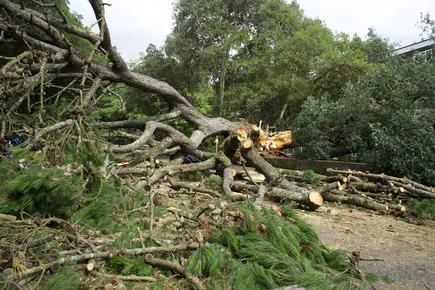
Hurricane season runs June through November in the Cape Fear region, and the window for a proactive tree assessment is narrow. Sandy coastal soil means root plates shift more than homeowners realize, leaving trees that look healthy structurally compromised. Getting eyes on your trees before July and again in September gives you the clearest picture of actual risk.
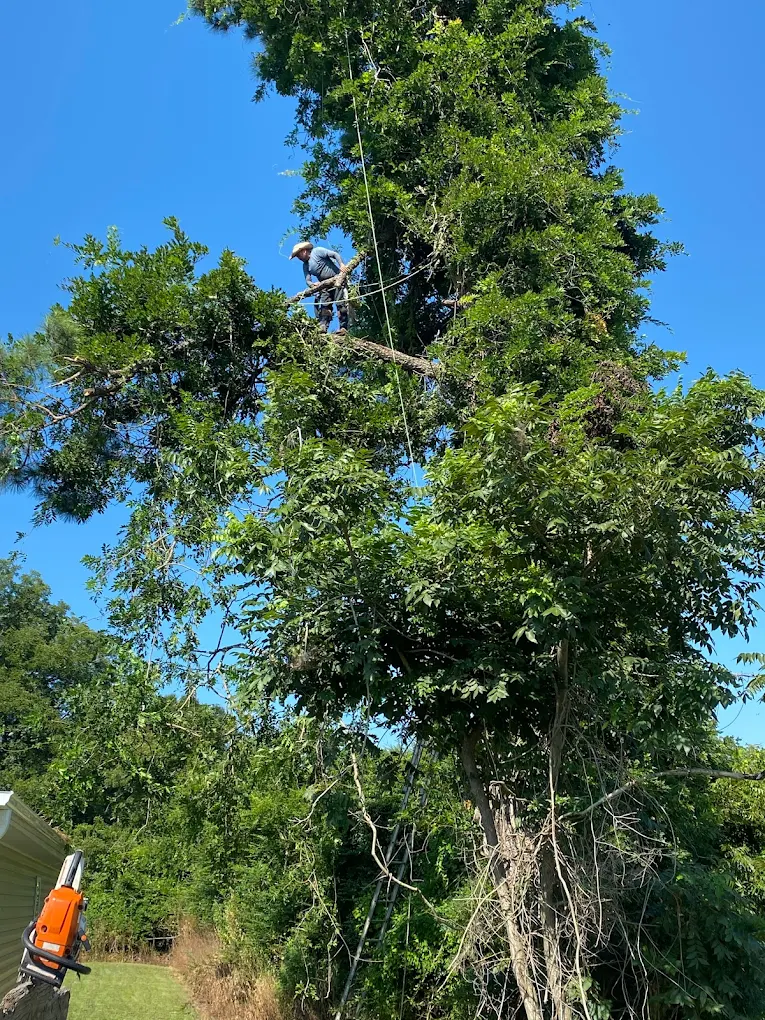
Three large water oaks flagged during routine inspection — Landfall
When Tree Removal Costs Jump Fast
| Situation | Why Cost Increases |
|---|---|
| Crane Required | Expensive equipment + setup time |
| Tree Near Power Lines | Additional safety complexity |
| Emergency Removal | Urgency + danger |
| Limited Access | Slower manual work |
| Storm-Damaged Tree | Higher climbing risk |
📊 Wilmington Pricing Quick Reference
Updated: June 2026 · Source: TreeQuotePro Cape Fear market data
Tree Health Assessment Wilmington NC: What to Check (2026 Guide)
A proper tree health assessment in Wilmington NC is the single best thing you can do before hurricane season peaks. I'm part of the team at TreeQuotePro's Wilmington provider, Ramon and Miguel, and after 20+ years working Cape Fear properties from Ogden to Leland, I've developed a ground-up inspection routine that catches problems most homeowners walk past every day. This guide walks you through exactly what we check — and how to know when a photo estimate is the right first move.
Tree Health Assessment Wilmington NC: What Professional Inspections Cost
Before we get into technique, here's what a professional tree health assessment typically runs in the Wilmington market:
| Service | Typical Range |
|---|---|
| Single-tree visual assessment (ground level) | $75 – $150 |
| Multi-tree property inspection (3–6 trees) | $150 – $300 |
| Full arborist report with written documentation | $200 – $450 |
| Emergency post-storm assessment | $100 – $250 |
These are ranges — actual cost depends on tree count, access, and whether you need a written report for an HOA or insurance claim.
Start at the Root Flare — Not the Canopy
Most homeowners look up first. I always look down. The root flare is where the trunk meets the soil, and it tells you more about a tree's health than anything above your shoulders.
What to look for at the base:
- Soil mounding or depression around the trunk — often a sign of root movement or past disturbance
- Mushrooms or fungal conks growing from the base (this is serious — read more about how to tell if a tree is dead or dying)
- Girdling roots — roots that circle and choke the trunk instead of spreading outward
- Bark separation or soft spots at the root flare — probe gently with a screwdriver
In Landfall and Porters Neck, I see a lot of fill dirt piled against trunks during landscaping jobs. That buries the root flare and suffocates the tree slowly over years. It looks fine from the street until it doesn't.
Moving Up: Bark, Trunk, and Branch Structure
Once the base checks out, work your way up the trunk looking for:
- Cracks or splits running vertically — especially after a wind event
- Cavities or hollows — note their size and depth
- Carpenter ant activity — frass (sawdust-like material) at the base paired with ant trails often signals internal decay
- Leaning that wasn't there before — even a few degrees of new lean after a rain event is a red flag
In our experience doing tree assessment in Cape Fear NC, pines lean and nobody thinks twice. But a loblolly that has shifted lean after a wet spring in Castle Hayne or Masonboro deserves immediate attention. See our full breakdown on dangerous pine tree warning signs in Wilmington.
The Canopy: What Dead Wood Is Telling You
Canopy dieback is what gets homeowners calling us — but by the time you see it clearly from the ground, the problem has usually been building for a season or two.
Look for:
- Deadwood clusters — isolated dead branches are normal; clustered dieback on one side suggests disease or root stress
- Leaf size and color — undersized leaves or off-season yellowing in live oaks and water oaks often indicates root compromise
- Epicormic sprouting — stress shoots growing directly from the trunk or major limbs signal the tree is struggling
- Hanging or broken limbs — what arborists call "widowmakers"
Photograph anything you see from multiple angles. Our 90 five-star Google reviews consistently mention that homeowners who submitted photos through TreeQuotePro got faster, more accurate estimates than those who tried to describe problems by phone.
Tree Health Assessment Wilmington NC: When to Call vs. When to Submit Photos
Not every concern requires an in-person visit as the first step. Here's a simple framework:
Submit photos first if:
- You see canopy thinning but no immediate hazard
- You want a cost range before committing to an in-person visit
- The tree is not over a structure or power line
Call for an in-person tree inspection in Wilmington NC immediately if:
- The tree is leaning toward a house, fence, or vehicle
- You see large cracks, split unions, or fresh bark loss after a storm
- There are active fungal conks or significant cavities at the base
For the full checklist of removal warning signs, our post on signs a tree needs to be removed in Wilmington NC walks through every scenario.
Before Hurricane Season: The Pre-Storm Walk
Every June I recommend homeowners do their own informal walk of the property before calling anyone. Our complete hurricane season tree checklist for Wilmington NC gives you a printable version. The short version: check every tree within striking distance of your roof, fence, and vehicles. Photograph anything questionable from multiple angles.
Ramon and Miguel have worked Cape Fear properties through multiple named storms. The trees that failed were almost never surprises — they showed warning signs that were visible months earlier.
Frequently Asked Questions
What does a tree health assessment in Wilmington NC include? A standard assessment covers the root flare, trunk, bark condition, branch structure, and canopy health. A professional will also evaluate the tree's proximity to structures and assess lean relative to the soil conditions on your property.
How often should I get a tree inspection in Wilmington NC? Most properties benefit from a full walk once a year, ideally in late spring before hurricane season. If you had significant storm activity or a wet winter, an additional check in early fall is worth the cost.
Can I do my own tree health assessment at home? You can do a useful ground-level check using the steps in this guide. Photograph anything that concerns you — cracks, fungal growth, deadwood, or new lean — and submit those images through TreeQuotePro for a professional second opinion before committing to any work.
What's the difference between a visual assessment and a full arborist report? A visual assessment gives you a professional opinion on health and risk — it's the right starting point for most homeowners. A full arborist report includes written documentation, often required by HOAs, insurance companies, or municipalities before permitted removal work can begin. Expect to pay $200 – $450 for a documented report versus $75 – $150 for a standard visit.
Ready to get a professional set of eyes on your trees before the next storm? Submit photos of any trees that concern you at treequote.pro and Ramon and Miguel will respond with a honest assessment and a price range — no pressure, no obligation. With 90 five-star Google reviews and 20+ years working Cape Fear properties, they know exactly what to look for.
TreeQuotePro — Connecting Wilmington homeowners with trusted local tree service. Serving Wilmington, Leland, Ogden, Hampstead, Castle Hayne, and Porters Neck.
More Cost Guides Guides →
See What YOUR Tree Costs
Upload a photo and get an instant estimate based on these exact pricing ranges.
✓ No phone calls required · ✓ Free for homeowners · ✓ 90 five-star Google reviews